Property Management
Starting an STR Business
Short-Term Rental Strategy: A Step-by-Step Guide
Short-term rental strategy may offer higher rental income and return for investors than traditional rentals. Find out what to do to succeed.

The difference between a short-term rental strategy that pays for itself and one that bleeds money every month usually comes down to decisions made before the first guest arrives. Which property you buy, how you price it, whether you automate or do everything manually, and how you handle taxes can swing your annual return by tens of thousands of dollars. This guide walks through each of those decisions in order, from choosing a location to connecting an AI agent to your business.
Set Your Goals
A key element of short-term rental success is creating a solid business strategy. It’s crucial to specify the goals you’d like your property to reach. Are you aiming for steady passive income and cash flow, or is your goal long-term property appreciation? Are you planning to grow your portfolio, and if so, what’s your timeline? Defining your objectives will help shape your vacation rental investment strategy and determine the type of property and location to target.
You should also think about whether you want to hire a property manager for your short-term rental, delegate some tasks to a co-host, or prefer to go a DIY route to keep costs low and have full control. If you choose to self-manage your property, short-term rental software like Hospitable can help you automate almost all routine hosting tasks and save a lot of time.
Choose an Attractive Location and Research Local STR Laws
Choosing the right location for your property is one of the most important decisions you'll make because your short-term rental's location will determine its profitability. The best places to look for properties are areas with high demand for short-term rentals. These typically include places that attract many visitors, such as popular travel destinations, business hubs, and regions with special attractions like ski resorts, national parks, and annual events.
Other important factors include affordability, nearby recreational activities, amenities like restaurants, shops, and nightclubs, and proximity to transportation hubs. These factors can affect a property’s desirability and will determine occupancy rates and expected vacation rental ROI.
Consider seasonality because the demand for short-term rentals can fluctuate throughout the year. For example, properties in beach towns may peak in summer months and struggle in slow season. Understanding seasonal patterns can help you set realistic occupancy expectations and plan pricing strategies to attract different types of guests and fill gaps.
You also need to research local STR regulations and confirm that short-term rentals are actually allowed in the city of your choice. Short-term rental regulations can vary by city, neighborhood, or zoning district. Some places restrict how many days a property can be rented, and some allow rentals only in certain zones. Additionally, you may be required to obtain a permit or a short-term rental license.
Violating city laws can result in hefty fines, so before you buy a property, make sure you understand local regulations and zoning laws governing short-term rentals, HOA or condo rules, and local enforcement trends.
Run the Numbers
Once you’ve found a property that fits your preferences, analyze it before you commit to purchase to see whether it makes financial sense. First, you need to account for all costs and expenses associated with owning short-term rentals, including OTA fees, mortgage payments (if you get financing), insurance, utilities, cleaning, maintenance, software subscriptions, and taxes.
Then, research comparable properties in your area to estimate average nightly rates and occupancy rates. These vacation rental metrics can help you understand what your property could earn and how those earnings compare to your costs.
Apply the 50% rule as a quick check to ensure your property will generate positive cash flow (operating expenses typically amount to about 50% of rental income). Remember that if a property doesn't generate enough cash flow, it might not be a worthwhile investment, even if its location seems perfect.
There's a financial upside to all these expenses that many new hosts miss. Most of the costs you just calculated, including mortgage interest, insurance, utilities, cleaning, maintenance, platform fees, and software subscriptions, are tax-deductible against your rental income. And if your average guest stay is 7 days or fewer and you're actively involved in managing the property, your STR may qualify for non-passive tax treatment. That means rental losses from depreciation can offset your W-2 or other ordinary income, not just your rental earnings. It's one of the most powerful tax advantages in real estate, and it's available specifically to short-term rental owners. We covered the details in our podcast.
You should also budget carefully. Take into account all your regular sources of income, ongoing expenses, and savings. Calculate how much you can allocate for the down payment and closing costs. Budget separately for expenses to prepare the property for short-term rental—fully furnish, decorate, and stock the home with amenities to attract guests.
Prepare Your Property for STR Guests
After you have found and purchased a property in a profitable location, don’t list it on sites like Airbnb just yet. Modern travelers have high expectations and choose short-term rentals for their homey feel.
So, make your property traveler-friendly to attract potential guests. If you’ve bought a house that is old or in poor condition, you should consider repairs and renovations to make it suitable for short-term rental guests.
Decorate and furnish your property
To stand out in a highly competitive STR market, your property needs to offer comfort, quality amenities, and visual appeal. So, think about the type of guests you want to attract, for example, solo travelers, couples, families with children, business professionals, digital nomads, or larger groups.
Understanding your target audience and their needs and preferences helps you design, furnish, and market your vacation rental property to maximize bookings and revenue. Create a homely, inviting atmosphere with tasteful décor that appeals to your ideal guests, and invest in stylish, durable short-term rental furniture that can withstand frequent use.
Equip your short-term rental property with amenities to ensure a comfortable stay:
Keep in mind that short-term rental guests expect essential amenities, such as quality bedding, pillows, towels, toiletries, and a well-stocked kitchen, to feel comfortable.
Consider providing such popular amenities as WiFi, free parking, a washer and a dryer, air conditioning, a pool, or a hot tub because guests often filter their search results to find them.
Offer something special to appeal to the types of travelers you want to attract, for example, kid-friendly amenities like high chairs, cribs, strollers, child-safe tableware, and a dedicated indoor playroom with toys, books, and board games.
Consider adding luxury amenities such as a high-quality coffee maker, premium bath products, or smart home devices to elevate the guest experience.
Install smart locks to offer self-check-in
Today’s travelers prefer the flexibility and convenience of self-check-in and often look for this amenity when booking on travel websites. With a smart lock, you can provide a unique, time-limited access code for your guests, and they can arrive on their schedule without worrying about physical keys.
You never have to wait around for guests because they can access your property independently. You can generate, activate, and change door codes remotely using your smartphone and have full control over who can access your home. And the best thing is that smart locks integrate with property management systems like Hospitable, making it easy for hosts to automate the entire check-in process.
If you connect compatible smart locks to your Hospitable account, our system will automatically generate a unique access code for each reservation and send it to your guests shortly before check-in. While most PMS offer smart lock management as a paid add-on, Hospitable includes smart device automation in the price starting with the Professional plan.

Minimize safety risks to guests
Set up safety measures to protect your guests and your property, and give them peace of mind.
Equip your rental space with essential safety features like carbon monoxide detectors, smoke detectors, and fire extinguishers.
Provide a first aid kit so that guests can have the necessary tools if an accident happens during their stay.
Create an emergency plan for your home—it should include fire escape routes, the contact information for local emergency services, and the address of the nearest hospital.
Stock emergency supplies: flashlights and batteries, bottled water, candles, and matches.
You may want to check out our blog article, where we provide a vacation rental checklist to find more tips on how to turn your property into a short-term rental and create an inviting atmosphere for guests.
Find Reliable Cleaners
When guests book short-term rentals, they want hotel-level cleanliness with the comfort of a private home. Vacation rental turnover cleaning is much more extensive than regular home cleaning—it involves more tasks, more efficiency, and more attention to detail. That’s why doing it yourself only makes sense if you live locally and can afford to treat your short-term rental as a full-time job.
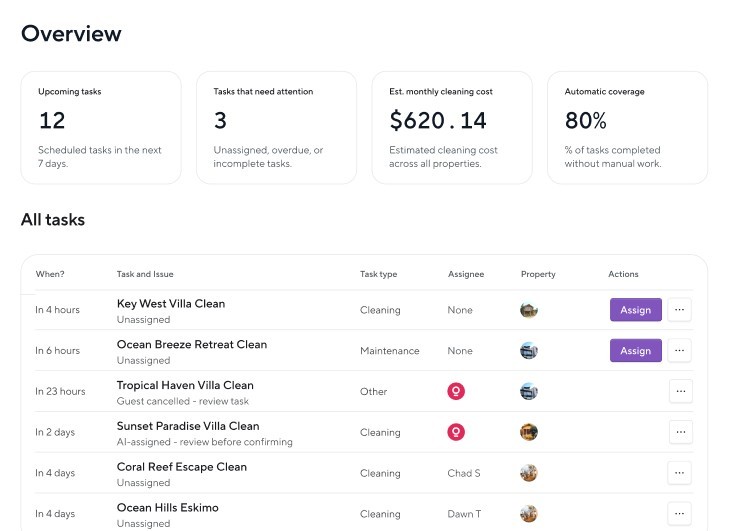
A better alternative is to outsource this task to professional cleaners and give them a comprehensive cleaning checklist to follow so your space is spotless for every guest’s stay. Coordinating turnover cleanings will be easier if you streamline this process with Hospitable. With Hospitable Tasks, you can assign jobs automatically, track progress in real time, and pay your cleaners when their job’s done.
Get Your Pricing Right
Setting and adjusting nightly rates for your short-term rental can be a challenge, and it’s not just about following your gut. Set your rate too high, and your calendar stays empty. Set your price too low, and you’re leaving money on the table.
Getting your pricing right means finding the sweet spot between covering your STR costs, making a profit, and staying attractive to potential guests. Your pricing strategy should reflect market trends, guest behavior, what makes your property stand out, and what guests expect from a stay.
To set the right price for your rental, consider your property's location, type, and size; the amenities you offer; your target guests; demand shifts; and seasonality. You should also consider your costs and what other Airbnb hosts in your area are charging for STR properties similar to yours. This information will help you set a competitive rate that lets you earn a profit and attract guests.
The easiest way to optimize your pricing is to use a dynamic pricing tool, which allows you to automate the rate-setting process and ensure that your prices are always up to date. You can choose from several options.
Airbnb and Vrbo provide free pricing tools, but these tools work only within platforms and prioritize occupancy over host income, so they may underprice your property to attract more bookings.
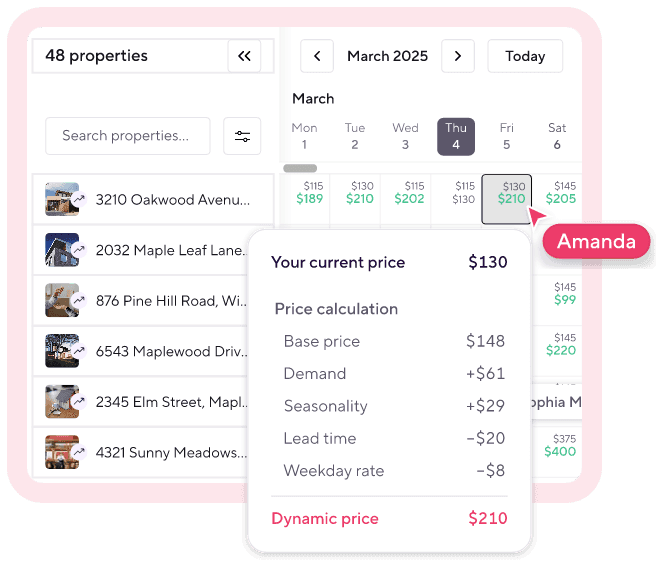
Third-party short-term rental pricing tools that integrate with multiple OTA platforms and property management systems, including Hospitable, use more powerful algorithms to analyze market data. These tools automatically adjust nightly rates based on real-time signals to help hosts capture the maximum revenue for every booking, but they all come with a subscription cost.
Many property management systems come with built-in dynamic pricing tools and typically offer them as paid add-ons. Hospitable is the only PMS on the market that offers its dynamic pricing solution at no extra cost (for users on Host, Professional, and Mogul plans).
List Your Property on Multiple Channels
The short-term rental market is an increasingly competitive space, so listing your property on a single booking platform like Airbnb or Vrbo is too risky. OTAs’ algorithms shift, guest preferences evolve, and sudden changes in platform policies can affect your property’s visibility and revenue.
Listing on multiple booking channels, including major OTAs, niche sites, and building your own direct booking website to drive repeat direct bookings, is essential for running a profitable short-term rental business. Cross-listing allows you to diversify traveler audiences, increase booking volume, and protect your income stream against the whims of a single platform’s algorithm or policy restrictions.
Just keep in mind that you’ll need a solid short-term rental channel manager to sync your calendar and pricing; otherwise, you risk double bookings, inconsistent pricing, and operational chaos. Choose a reliable software solution, recognized by the OTA platforms you plan to use.
For example, Hospitable has native API connections with major travel platforms, such as Airbnb, Vrbo, Booking.com, Agoda, and Google Vacation Rentals. Our STR super app is a top-tier partner with Airbnb (Preferred+ status) and Booking.com (Premier Plus Partner).
Reduce the Risk of Dealing with Bad Guests
Running a short-term rental means opening your home to strangers, so take preventive measures to reduce the risk of bad guests and protect your property and income. There are some effective ways to filter out high-risk bookings:
Clearly outline your house rules in your listings to set clear expectations
Screen your guests carefully to spot red flags before arrival
Charge a refundable security deposit to deter unwanted behavior
Ask your guests to sign a short-term rental agreement.
Implementing preventative measures doesn’t necessarily mean doing more admin work. Hospitable can help you protect your property without extra work by automating such tasks.
You can add an automated security deposit to your property, and Hospitable will automatically charge guests 2 days before check-in and refund them 2 days after checkout.
You can request ad hoc verification for any guest who booked your property to confirm their identity as a registration task they need to complete in their guest portal.
You can create a rental agreement template, and our system will generate a rental agreement for each unique reservation, populating it with guest and booking data. You can ask your guests to sign their contract digitally after ID checks.

Ensure Clear Communication with Your Guests
Your success as a short-term rental host depends on a combination of strategy, attention to detail, operational efficiency, and most importantly, on a guest-centric approach. It’s about crafting genuine, thoughtful hospitality to make every guest happy with their stay.
That’s why you need to ensure clear, timely, and personalized communication with your guests at all stages of their journey to build trust and make them feel welcome and valued. Best practices include responding to booking inquiries within 1 hour and creating a personalized message flow for every guest who booked your rental.
This message flow should include several essential messages that share important stay information in small, digestible chunks, including booking confirmations, check-in instructions, checkout reminders, and thank-you messages with review requests. You should also be willing to answer guest questions and address their concerns as fast as possible.
Guest messaging is one of the most time-consuming aspects of hosting, and modern guests expect instant replies. But if you opt for Hospitable, you’ll be able to automate communication processes and run everything on autopilot.
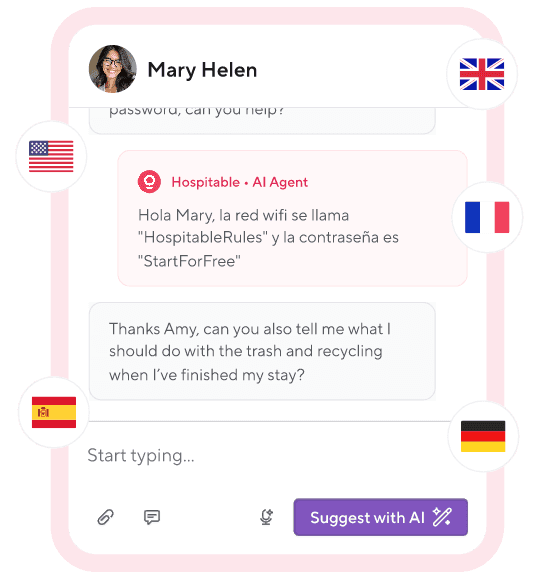
With Hospitable, you can also take advantage of Inbox AI to communicate more efficiently.
Use AI to quickly draft detailed personalized responses to tricky guest questions based on available data sources, including information that you’ve added to the property’s Knowledge Hub.
Use AI to rewrite your messages, fix grammar and awkward phrasing, and improve clarity and tone.
Enable AI Auto Reply to automatically respond to guest messages without your review when you’re not online. The Issue Alerts feature will notify you when a guest message requires your attention.
Make More Money with Upsells
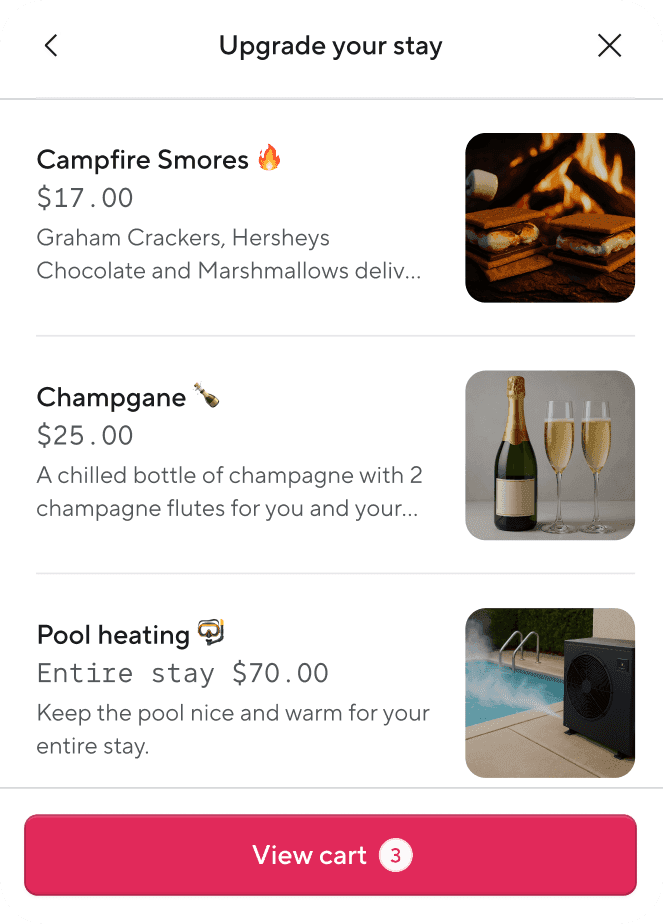
If you are serious about making more money with your short-term rental, consider offering your guests additional services, amenities, or experiences that enhance and personalize their stay. You can offer your guests paid add-ons, such as early check-in/late checkout, luggage storage, mid-stay cleaning for longer stays, grocery pre-stocking, equipment rentals, local guided tours and experiences, personal chef services, and more.
Think outside the box and partner with local vendors to expand what you can offer and delight your guests. When done thoughtfully, upsells increase revenue per booking, help make guest stays more enjoyable, and can lead to better reviews.
Hospitable can help you simplify the upselling process and avoid being pushy. Hospitable has an Upsell feature that allows you to offer paid upsells through the Guest Portal without manual work. You only need to create a catalog of your offerings and send your guests the link to their guest portal.
Automate Your Business
Once you are up and running, use automation software to stay organized. All-in-one short-term rental property management software like Hospitable makes it easier to automate guest communication, manage bookings on multiple platforms, implement dynamic pricing, coordinate cleanings without burning out, and much more. As a result, you have more time to focus on the bigger picture, creating an effective short-term rental strategy, and growing a sustainable business.
With Hospitable, you can also easily track the performance of your short-term rentals using the Metrics Dashboard. Monitoring and analyzing vacation rental metrics can help you understand how your business is doing, spot trends, identify areas for improvement, and adapt your short-term rental strategy to maximize revenue.
Depending on your subscription, you can explore the pre-built dashboards for quick insights, create your own fully custom dashboards, add pre-built widgets from the library, and apply filters to focus on a specific slice of your data.
Hospitable gives you access to Copilot, your personal AI assistant. You can ask Copilot questions in plain English, and it will analyze your Hospitable account data to provide you with quick insights, helping you understand what is working and what is not. You can ask Copilot questions about bookings, guests, reviews, tasks, and more, and it will provide you with answers that match your actual business.
Hospitable comes with a wealth of advanced features and AI-powered tools and can help you simplify key operations and automate 90% of repetitive tasks. But Hospitable MCP server allows you to bring your own AI and extend our system’s features and capabilities.
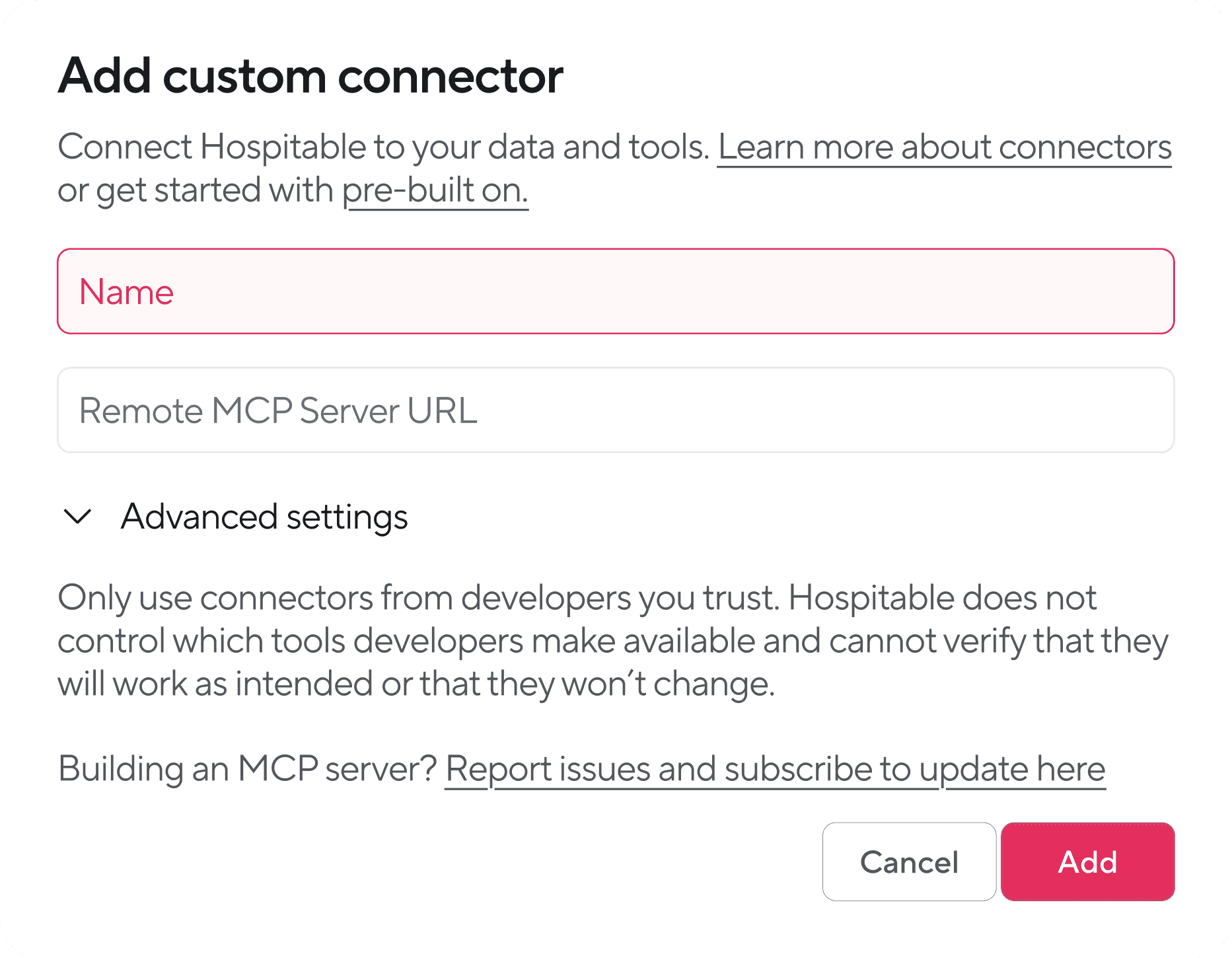
With Hospitable MCP, you can securely connect a supported AI agent, for example, Claude or ChatGPT, to your Hospitable account and give it authorized access to real-time operational and financial data from all your connected channels. Once connected, an AI agent can operate within your Hospitable data environment and act on your data using available MCP tools.
The AI can handle complex, multi-step tasks without supervision, and you can use it to automate any aspect of short-term rental management the way you like, managing your business with simple prompts. Just describe what you want in plain English, and it will do it for you. That’s the power of agentic automation for vacation rentals: reap the benefits of a short-term rental strategy with minimal effort.
Check out our article to learn more about using AI for property management and see examples of how Hospitable users leverage the MCP server to build automated workflows that solve their unique hosting challenges.



Table of contents
Set Your Goals
Choose an Attractive Location and Research Local STR Laws
Run the Numbers
Prepare Your Property for STR Guests
Find Reliable Cleaners
Get Your Pricing Right
List Your Property on Multiple Channels
Reduce the Risk of Dealing with Bad Guests
Ensure Clear Communication with Your Guests
Make More Money with Upsells
Automate Your Business
Common questions
What is a short-term rental strategy?
A short-term rental strategy is a plan for how you will choose, operate, position, and grow a short-term rental property to meet specific financial and business goals. It should connect your objectives with decisions about location, property type, management approach, pricing, distribution, guest experience, risk management, and ongoing performance.
What should a short-term rental strategy include?
A short-term rental strategy should include clear financial goals, market and location research, local regulatory checks, property-level financial analysis, preparation of the home for target guests, pricing, multichannel distribution, guest protection measures, communication standards, revenue opportunities such as upsells, and a system for tracking and improving performance over time.
How do you build a profitable short-term rental strategy?
Start by defining your goals, choosing a location with strong demand, confirming that local rules allow short-term rentals, and analyzing the property’s expected revenue and operating costs before buying. Then prepare the property for your target guests, use dynamic pricing, list across multiple channels, control operating risks, and monitor performance so you can adjust the strategy as market conditions change.
How can hosts reduce risk in a short-term rental strategy?
Hosts can reduce risk by researching STR laws and zoning before investing, using realistic financial assumptions, avoiding dependence on a single booking platform, and protecting the property with clear house rules, guest screening, security deposits, and rental agreements. You can also reduce operational risks with reliable calendar synchronization, professional cleaning, safety measures, and consistent guest communication.
How can automation support a short-term rental strategy?
Automation can reduce the manual work involved in guest messaging, booking management, pricing, cleaning coordination, multichannel distribution, access control, and performance tracking. Hospitable can automate most repetitive hosting tasks, while Metrics and Copilot help hosts analyze performance, and Hospitable MCP can connect AI agents such as ChatGPT or Claude to real-time operational and financial data for more customized workflows.