Property Management
Short-Term Rental Calendar: Choosing the Best Option
What it is, why it matters, and why a channel manager that offers real-time API sync is the best option.

Syncing your short-term rental calendar across Airbnb, Vrbo, and Booking.com used to mean picking your poison. Do it by hand and risk double bookings. Use a free app that updates on a delay and still risk double bookings. Or pay for software that actually works in real time.
That trade-off doesn’t exist anymore. There’s now a way to get instant, reliable calendar sync, the kind that used to require a paid subscription, for free. We’ll explain how it works, what makes it different from the free tools you’ve probably already tried, and what else it can do for you.
What Is a Short-Term Rental Calendar?
A short-term rental calendar is a visual tool that displays the bookings and availability of your property over a specific period. A consolidated calendar is an important tool for anyone who is operating a short-term rental property. It helps you spot gaps, manage bookings, block off dates, and sync availability across various platforms.
A short-term rental calendar provides a consolidated view of all your reservations, making it easy to stay in control of when your short-term rental is available for guests. You can scroll through one page and quickly see which dates are booked, available, or blocked.
An accurate availability calendar helps prevent double bookings, optimize occupancy rates, schedule turnover cleanings, and improve the guest experience. So, what are your options?
Google Calendar can give you a basic overview of your bookings in one place. It’s free and familiar, but you’ll need to block dates manually after each booking. It’s possible to semi-automate via iCal, which is not reliable.
Short-term rental calendar apps are usually free, but they offer limited cross-platform sync through iCal, which isn’t instant. There’s usually a delay, which can lead to double bookings if you get reservations back-to-back.
A property management system (PMS) with a short-term rental channel manager is the only option that syncs in real time through official channel APIs rather than iCal and comes with built-in automation. Usually, you need to pay a subscription fee, but now it has a free tier too.
Why Short-term Rental Calendar Apps Fail
Updating a short-term rental calendar manually in Google Calendar is tedious. Plus, manual management carries an almost guaranteed risk of double bookings, so a dedicated calendar app is a step up. These online tools are usually free, and if you manage a single listing or two, they can be enough.
However, almost all calendar apps rely on iCal, which is slow, and updates are delayed (sometimes by hours). Relying on iCal sync causes operational risk because that delay leaves a window where two guests can book the same dates on different platforms before iCal refreshes.
Calendar apps also can’t provide official, certified connections with the major OTA platforms. Hence, their sync stays basic (it only shows blocked vs. available dates), which is not sustainable for a growing business. The reliable alternative is short-term rental property management software like Hospitable, which syncs calendar data in real time through official channel APIs.
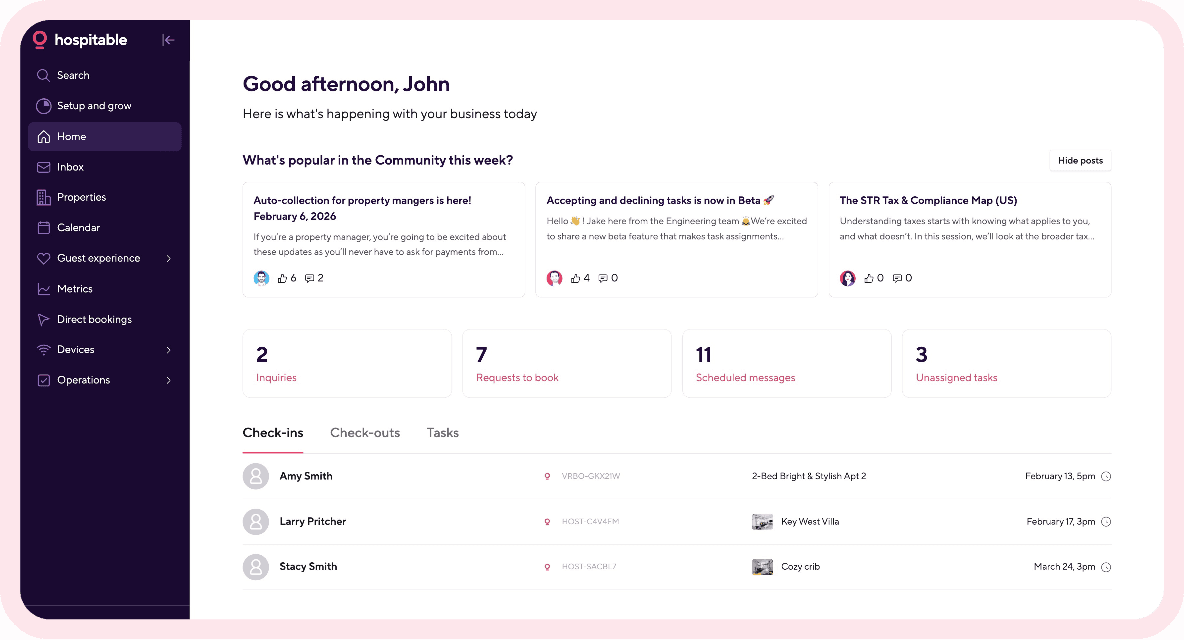
The good news is that now, Hospitable’s Essentials plan gives you that real-time sync for free, plus core functionality needed to run your listings efficiently. You pay only if you enable optional add-ons.
How Short-Term Rental Calendar Sync Works
Short-term rental calendar sync connects calendars across multiple booking channels to ensure all listings reflect real-time availability. When someone books a stay on one platform, the system automatically blocks those dates everywhere else, preventing double bookings.
There are two primary methods to sync calendars:
iCal sync involves exporting and importing booked or closed dates between platforms to synchronize calendar availability. This option is free, but iCal updates are slow, creating a high risk of double bookings during peak or last-minute demand.
API sync connects platforms through a direct, real-time, two-way data exchange, delivering updates automatically everywhere that matters. Channel managers and property management systems, like Hospitable, use this method to update calendars across different booking channels in seconds.
While iCal only blocks calendar dates, API sync transfers comprehensive information, including rates, minimum stays, guest details, and messages. This real-time connection lets you automate dynamic pricing, trigger automated messages tailored to the guest, and assign cleaning and maintenance tasks based on check-ins and checkouts.
Still, choose your software provider wisely and opt for a channel manager that offers advanced tools and syncs more features with major OTA platforms. For example, Hospitable offers advanced automation features and AI-powered tools to simplify short-term rental management, making it easy to manage all your listings simultaneously in one convenient dashboard.
So what makes Hospitable a good choice as a channel manager for short-term rental properties?
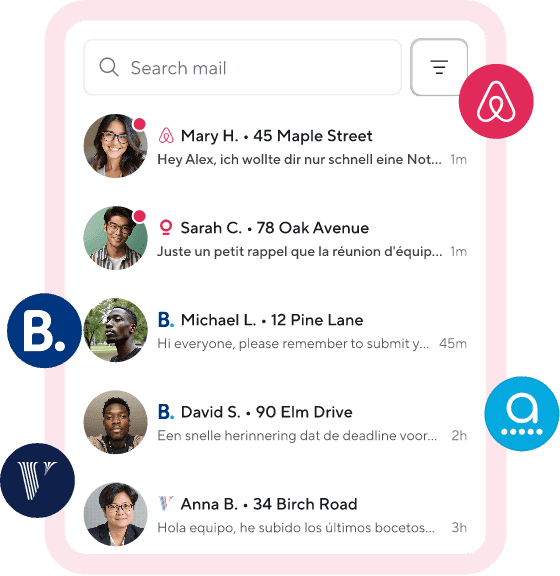
Hospitable has official API connections with major OTAs, such as Airbnb, Booking.com, Vrbo, Agoda Homes, and Google Vacation Rentals. These global platforms generate most bookings for most STR properties.
As a channel manager and a PMS, Hospitable is an Airbnb Preferred+ Partner and has been officially recognized as a Booking.com Premier Plus Partner, the highest new tier in the Booking.com Connectivity Partner Program.
Our STR super app supports iCal imports from various niche booking sites, including Houfy, Expedia, Hopper, and HipCamp. Hospitable checks connected iCal feeds for any updates every 20 minutes to sync new bookings automatically.
On top of channel management, Hospitable offers AI-powered guest messaging automation, team management and payouts, dynamic pricing included in the subscription plans, custom workflows for agentic tasks through the MCP server, and so much more.
Final Thought
An organized short-term rental calendar is important for your success as a host. iCal is the simplest way to connect calendars, but it comes with delays, leaving gaps where double bookings can creep in.
The more reliable solution is to use a PMS with a channel manager that offers real-time API sync and comes with solid automation features that can help you improve efficiency and grow your business faster. With Hospitable, you get real-time, API-based calendar sync for free, so there is no reason to settle for an iCal app.



Table of contents
Common questions
What is a short-term rental calendar?
A short-term rental calendar is a tool that displays a property's bookings, available dates, and blocked dates in one place. It helps hosts manage reservations, identify availability gaps, schedule turnovers, and coordinate bookings across multiple platforms such as Airbnb, Vrbo, and Booking.com.
Why do you need a short-term rental calendar?
A short-term rental calendar helps hosts keep availability accurate, prevent double bookings, identify opportunities to improve occupancy, and coordinate cleaning between guest stays. A consolidated calendar also eliminates the need to check each booking platform separately to understand which dates are booked or available.
Are free short-term rental calendar apps reliable?
Free calendar apps can be sufficient for basic booking management, but most rely on iCal synchronization, which is not instant and can experience delays of several hours. This creates a risk of double bookings when reservations arrive close together on different platforms. For more reliable multichannel management, look for software with official API connections that synchronize availability in real time.
Can you get real-time short-term rental calendar sync for free?
Yes. Hospitable's free Essentials plan includes real-time calendar synchronization through official API connections with major booking platforms, including Airbnb, Vrbo, and Booking.com. Unlike basic free calendar apps that rely on delayed iCal updates, Hospitable automatically synchronizes availability across connected channels without requiring a paid subscription. Optional add-ons are available for hosts who need additional functionality.