Beginner's Guides
OTAs
Short-Term Rental Agreement: Should You Have It for Your Business?
There are many ways to safeguard your short-term rental business, for example, screening guests, installing security devices, getting additional vacation rental insurance, to name a few. Another smart move to minimize your risks is having a short-term rental agreement in place.

Renting out your home or apartment short-term on Vrbo, Booking.com or Airbnb is a great way to earn passive income or build a successful vacation rental business. But you should also protect your property and ensure that everything runs smoothly. There are many ways to do it, such as screening guests, installing security devices, and getting additional vacation rental insurance, to name a few.
Another smart move to minimize your risk when dealing with guests who may not respect your house rules for Airbnb and Vrbo is to have a short-term rental agreement in place. Read on to find out why such an agreement is essential and what key points you should include.
What Is a Short-Term Rental Agreement?
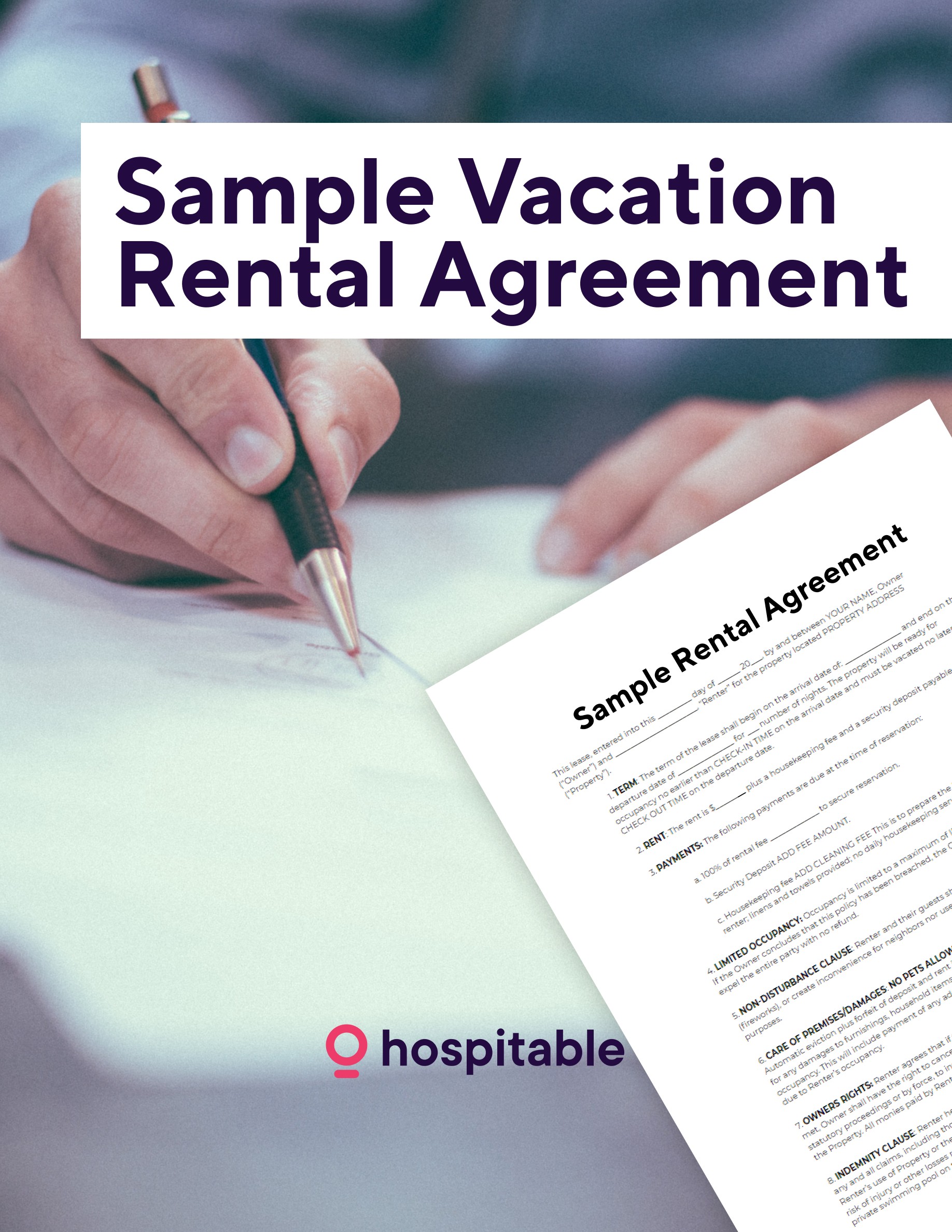
A short-term rental agreement is a legal contract between a property owner (host) and a renter (guest) that outlines the terms and conditions of a stay at a rental property. This document, also known as a vacation rental agreement, is typically used for a short rental period (1 to 30 days).
A rental agreement clearly defines the property owner’s and guests’ expectations and protects both parties in the event of damage or cancellation. This document spells out the house rules for guests and explains the penalties for breaking them.
A short-term rental agreement can help ensure that you and your guests are on the same page. This contract will give you peace of mind, knowing that you and your property are protected in unexpected situations, so you can focus on growing your STR business. You’ll be able to scale faster by streamlining your daily operations and making your business more efficient with short-term rental software like Hospitable.
Do OTAs allow rental agreements?
Airbnb hosts are covered in most scenarios under the Airbnb Standard Agreement, which every guest must adhere to. However, the platform also allows hosts to ask their guests to sign a contract before staying in their place.
Remember that you must disclose the actual contract terms before booking. If you ask your Airbnb guests to sign a rental agreement without notifying them before booking, they can decline and request a cancellation.
Airbnb recommends mentioning the short-term rental agreement in your Airbnb listing’s description. You should also include the full terms in your message flow with the guests after they make a reservation.
Vrbo doesn’t require hosts to have a vacation rental agreement, but they consider it helpful in some cases. So, the platform makes it easy for hosts to upload their short-term rental agreements to their profiles and save them as PDFs. This way, Vrbo guests can review rental agreements before they make a reservation. Vrbo also encourages hosts to provide their Vrbo house rules directly on their website.
Vacation Rental Agreement: Key Things to Include
Every vacation rental property is different, so the terms you should cover in your short-term rental agreement will depend on your specific situation. Still, essential things should be present in each vacation rental agreement. Here are some basic points you will want to include in your contract:
Rental property details
Provide the rental’s house number, street address, city or town, and area code. Describe your rental space (type of property, number of bedrooms, and bathrooms). Mention a garden, a swimming pool, and other areas your guests can access. Include a list of amenities you offer.
Information about both parties
State the host and primary guest’s legal names and their contact information. If multiple guests will be staying at your property during the rental period, include their full names. Some hosts also ask for ID to confirm who’s booking.
Rental period
Include the arrival and departure dates and specify the check-in and checkout times to set clear expectations for the stay. Detail any charges for late checkouts to encourage guests adhere to checkout time.
Maximum occupancy
State the maximum number of guests allowed to stay at your rental in compliance with local regulations. If you allow additional visitors, specify the rules and any potential fees for extra guests.
Rate, additional fees, and payment terms
Outline everything related to payment. Outline the rental rate and any variations, for example, higher weekend or holiday rates. Be transparent about all costs and outline any potential additional charges, such as cleaning fees, pet fees, and a security deposit. Specify payment deadlines.
House rules
Set clear guidelines to prevent misuse of your rental space and disruptive activities, and avoid conflicts. Explain your pet, noise, parking, and smoking policies, as well as age requirements, and underline the penalties you charge for breaking the rules.
Cancellation policies
Define clear cancellation and refund terms. Explain how a guest can cancel the agreement and specify the timeframe within which guests can cancel without penalty. Clarify how refunds will be handled.
Liability and insurance
State the limits of your liability. Clarify that guests are responsible for any damage caused by them or their visitors during their stay. Encourage guests to have travel insurance to cover trip cancellations or interruptions, accidents, or lost belongings.
Signatures of both parties
Make sure your guests sign the agreement in the correct place, as the document is null without a valid signature. Include space for initials on each page to ensure that guests read the entire agreement.
This list of common elements included in a typical short-term rental agreement is a good place to start when creating your own. But make sure you include terms and conditions specific to your rental property because what works at a mountain cabin won’t protect the owner of a beach house.
And, of course, you should consult a real estate attorney for guidance to understand what information is mandatory in your area. Short-term regulations vary significantly across locations, so you may need to include additional critical details.
Why Use a Vacation Rental Agreement?
A vacation rental agreement isn’t just paperwork. It can benefit both hosts and guests—it protects you, your guests, and your property.
Adds transparency. You and your guests can discuss any points before putting them in writing, which minimizes the risk of disputes or problems later.
Clarifies terms: It outlines exactly what’s included in the stay, such as check-in and checkout times, services, and house rules, so guests know what to expect.
Allows avoid misunderstandings. Your guests can ask additional questions if they’re unsure of anything and sign the document with a full understanding of what is required of them and how the place should be treated.
Reduces risks. Clear policies on parties, pets, and visitor limits help filter out unsuitable guests and help avoid property damage and liability issues.
Provides legal protection. A signed agreement is legally binding. If one party ignores the agreement, the other party can pursue legal action.
Not using a rental agreement could negatively affect your vacation rental business. For example, you may risk dealing with illegal squatters who refuse to leave your property or with unpleasant complaints from guests because of a lack of clear communication.

How Hospitable Helps with Short-Term Rental Agreements
Not all hosts and property managers use a short-term rental agreement when dealing with guests. Some may worry that asking travelers to sign a legally-binding document before booking their property may put them off. And if you’re a busy host, you may not like doing extra administrative work by creating a new contract for each reservation.
The good news is that creating this legally binding document doesn’t necessarily mean tedious, time-consuming paperwork. If you opt for Hospitable, you can create templated agreements and automatically send them to your guests for signature on different booking channels, including Airbnb, Vrbo, Booking.com, Agoda, and your direct booking website.
This functionality also allows you to protect your assets when offering your guests unique services that add value to their stay, such as equipment rentals. For example, a good idea could be to create a bike rental agreement.
Once you create a new template or customize ours to ensure it works for your property, Hospitable automatically generates a rental agreement for every future reservation. Your guests can access it through their Guest Portal as a registration task they need to complete to finalize their booking.
Each guest must verify their identity by getting a one-time code via SMS or email. Then, they can review the agreement and add their digital signature. If the guest doesn’t sign the agreement, our system will send them a reminder two days after the booking is accepted.
You’ll find more details about this functionality and step-by-step instructions in our help article.
Final Thought
A short-term rental agreement can help ensure that guests respect your vacation rental property as much as you do. This document defines the rights and responsibilities of both parties to protect you and your guests in the event of disputes or discrepancies. As a result, a rental agreement can help you avoid conflicts with guests during and after their stay.