OTAs
Airbnb Squatters: How to Spot and Avoid Them?
Airbnb squatters are guests who refuse to leave your rental—can be a huge inconvenience, and in some of the worst cases, they may cause damage hurting your wallet and reputation. Find out which red flags you shouldn’t ignore to avoid dealing with Airbnb squatters that just won’t leave.

Renting out your property short-term on OTA platforms like Airbnb can be a source of a good income, but although it happens rarely, you may face the risk of Airbnb squatters. These unwanted guests who refuse to leave your rental can be a huge inconvenience, and in some cases, they may cause damage, hurting your wallet and reputation.
So, it’s better to educate yourself about how you can prevent squatting from happening in the first place. Find out which red flags you shouldn’t ignore to avoid dealing with Airbnb squatters that won’t leave.
You may also want to learn how to deal with other common Airbnb problems you may face as a host.
Airbnb Squatters: What Are They?
Traditional squatters usually target vacant or abandoned homes and eventually take ownership of the property through a process called “adverse possession.” In the rental industry, a “squatter” is someone who stays longer than their agreed-upon dates.
Unfortunately, squatting isn’t limited to long-term rentals. Vacation rental properties listed on Airbnb, Vrbo, and Booking.com can also fall victim to squatting, especially with the recent trend for longer stays in properties designed for short-term vacations.
Airbnb squatters are guests who fail to check out after their checkout date. In other words, they do not leave the property when they’re supposed to. Many of them are sophisticated scam artists who know how to use existing rental laws to their advantage. They knowingly and willingly overstay their booking without the host's or property owner's permission.
How to Spot Squatters?
Squatters can be extremely difficult to evict, so it’s better to avoid them and keep them out of your property. So, how to spot an Airbnb squatter before they make a reservation? Some warning signs could indicate that a potential guest may plan to squat at your vacant rental property.
They have a suspicious guest profile with only basic information. The red flags you shouldn’t ignore include:
Missing fields in their bio
Missing, fake, or blurred Airbnb profile photos
A profile was created shortly before they made the booking
No reviews or bad reviews written by other Airbnb hosts
Missing social media connections
Pay attention to your messaging with guests because it can give you many clues, too. You can always politely ask potential guests to provide more information to give you peace of mind about their intentions. If they refuse to answer direct questions about the purpose of their stay, it’s best to turn down the reservation. And it’s a good sign if they reply quickly and provide enough information for guest screening.
Keep in mind that your potential guests may have many questions about your rental, so you should be ready to provide clear answers as quickly as possible. Luckily, you can automate the process with Hospitable. Our system uses AI to detect questions on 20+ common topics and can send automated replies almost instantly. You can also use Inbox AI tools to quickly draft and correct detailed, personalized responses to unusual guest questions or even turn on AI Auto Reply and let the AI respond to guest messages without your review.

You should also be vigilant if travelers want to book your property for more than 30 days, even though renting out your house for extra-long periods can be appealing. When guests stay at your property for more than 30 days, squatters’ rights could become much more significant and more difficult to address. So try to stick to shorter reservations unless they are trusted, repeat guests.
What Are Squatters’ Rights on Airbnb
Regarding squatters’ rights on Airbnb, the most critical factor is the duration of a guest’s stay. In most US states, guests who stay in a home or apartment for one month or longer may establish rights as tenants. Note that the exact number of days varies by jurisdiction. Generally, this means that local tenancy laws could protect your guests, and you may not be able to remove them from your property without following the required eviction process in court.
Fortunately, adverse possession doesn’t apply to the Airbnb-type rental situation. But squatters may seek to exploit local laws to remain on your rental property without paying rent until the lengthy eviction process is completed.
Before accepting long-term guests, you should review local rental laws and regulations that may vary by state. Check the local tenancy laws in the area where you live to see what duration of residency is needed to establish tenant rights. Then, you’ll be able to set your Airbnb bookings to ensure your guests can’t come close to this number.
If you still like to host long-term guests, make sure no one can make an instant booking for long stays. You should allow yourself to get to know these people.
How to Prevent Squatters
By now, it’s probably clear that the best way to protect yourself from problems with squatters is to keep your property booked only by vetted guests and take preventative measures. So, how do you prevent squatters from occupying your vacation rental? Here is what you can do.
Screen and verify your Airbnb guests
You should only accept bookings from verified guests on Airbnb (those with the verified badge beside their name). Besides, you should do your homework before allowing someone to book your rental. Check out the reviews written by other Airbnb hosts about the guest’s previous stays. We also recommend searching for additional information about potential guests online and looking through their social media. That will help you verify the information they provided in their Airbnb profiles and gain a sense of whether they’re legitimate.
You can add an extra layer of protection on top of Airbnb's verification process and your research. Request an ad-hoc guest screening.

Ask your guests to sign a rental agreement
Signing a rental agreement that clearly states all the terms and conditions of the stay is another way to avoid dealing with Airbnb squatters. If you decide to do so, you should clarify these requirements in your house rules before finalizing a booking. This extra step can help you support your case if you need to go through the eviction process.
You must highlight the check-in and checkout dates and times in your vacation rental contract. You’ll need them to prove that your guests overstayed their welcome and that they were not given permission to stay longer.
Preparing a rental agreement for each booking sounds tedious. Hospitable will automate the whole process for you. We will populate the agreement template with guest and booking data, send it to the guest for signature, and follow up if they don't sign on time.
Encourage bookings through Airbnb
Receiving bookings via Airbnb is always safer because the platform provides extra verification checks. It also provides extra Airbnb host liability insurance, which is only granted for bookings made through the Airbnb platform. By staying on the platform and conducting all your transactions there, you’ll have the full support of Airbnb if you come across annoying squatters.
With multiple properties, you can simplify the booking process, guest communication, and other operations using short-term rental software like Hospitable. Our tool can help you automate almost all routine tasks and save a lot of time.
Request a security deposit
Charging an Airbnb security deposit can reduce the chances of dealing with unwanted guests, especially if the amount is slightly higher than average. Most people looking to squat at an Airbnb don’t want to pay much for their stay because they know they won’t get that money back and may decide against booking.
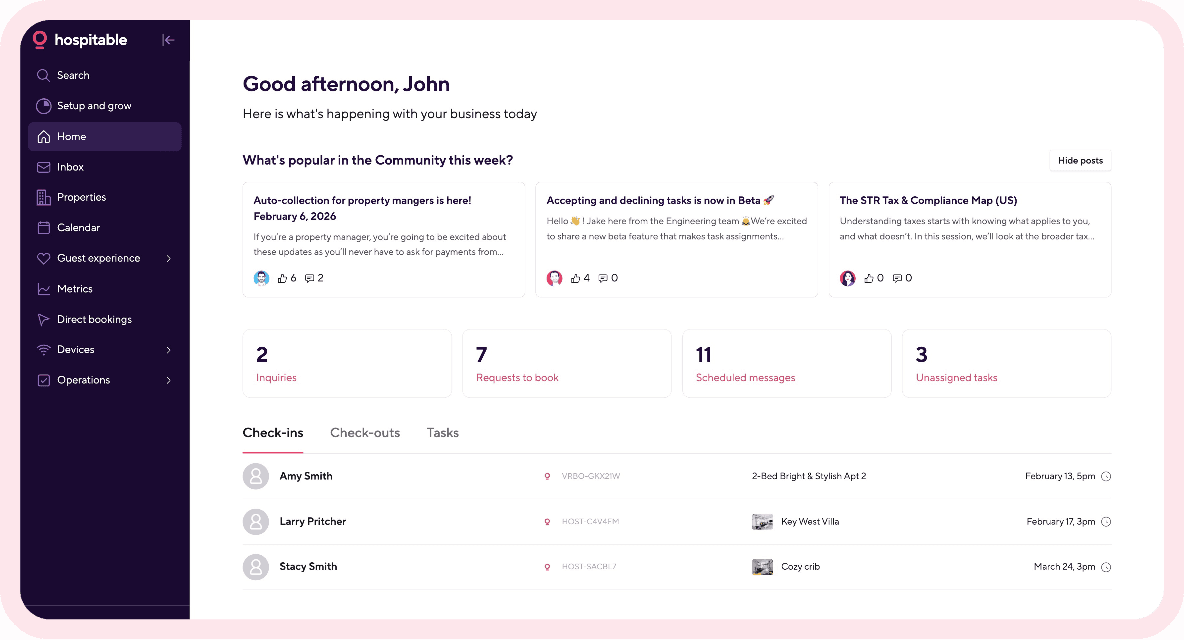
Hospitable has a built-in security deposit feature that makes it easy to collect, manage, and release security deposits automatically off the Airbnb platform, eliminating the need for third-party tools. You can add an automated security deposit to any of your properties and specify the amount to collect.
Then, Hospitable will automatically charge your guests 2 days before check-in and will refund them 2 days after checkout if no charge request is submitted. Our STR super app will handle all guest communication, informing guests of the deposit amount and collection dates. Check-in messages will be restricted until the guest provides their payment information for the deposit.

How to Deal with Squatters
The situations where guests refuse to leave are rare, but they do happen, so how to deal with squatters on Airbnb? Here is what you can do to protect your legal standing.
Communicate clearly. If your guests refuse to leave, you need to contact them on private and recorded Airbnb channels and tell them that they are no longer legally entitled to remain on your property. You need to request that they leave formally.
Involve Airbnb Support. Airbnb can also help you establish clear communication channels and resolve the issue with your guest, so you should contact the Airbnb support team as soon as possible and file a complaint. But they can’t override local tenancy laws or physically remove squatters from your property. So if the dispute is not resolved, you need to contact your local police and partner with a lawyer experienced in eviction proceedings.
Do not use force. If Airbnb guests have obtained tenant rights, you should never attempt to forcibly remove them from your home. You can’t do things like cutting off the power, removing their belongings, or changing the locks without a court order since it is against the law.
File a formal eviction. At this point, evicting a guest can only be done through a formal eviction process in court. It can take months to complete and costs a lot of money in legal fees. You will need to hire a real estate lawyer to carry out the procedure properly.
Final Thought
Fortunately, stories of Airbnb squatters are quite rare, but it’s important to take some practical measures to make sure that your Airbnb guests don’t overstay their welcome. It can be costly to evict a guest who refuses to leave, so the best strategy is to take steps to prevent squatters from renting your property.