Beginner's Guides
Starting an STR Business
Short-Term Rental License: Do You Need It to Run Airbnb?
Renting out your property short-term on platforms like Airbnb or Vrbo can be a viable source of income, but you should remember that you’re starting a business. That means you must understand the laws and regulations governing the short-term rental market.

Thinking about becoming a vacation rental host? Renting out your property short-term on platforms like Airbnb or Vrbo can be a viable source of income, but you should remember that you’re starting a business. That means you must understand the laws and regulations governing the short-term rental market and apply for the relevant short-term rental license before listing your property.
Do You Need a License to Do Airbnb?
What rules and regulations apply to you? Do you need a license to do Airbnb in your city? What taxes do Airbnb hosts need to pay in your area? These are the key questions for anyone considering becoming a host. It’s important to ensure that you fully comply with all applicable laws at the city and state levels.
STR regulations are highly localized and vary from city to city. While there are cities with liberal STR rules, some don’t allow short-term rentals at all, and many cities have laws restricting your ability to host paying guests for short periods. These laws are part of a city’s zoning or administrative codes. For example, the city of Irvin in California prohibits all short-term rentals in residential zones, and it’s illegal to promote them on rental listing sites such as Airbnb and Vrbo.
In many cities, you must register, get a permit, or obtain a license before you list your property or accept guests. For example, in Seattle, hosts must apply for both business and short-term rental licenses. Hosts are also required to post license numbers on their listings on OTA platforms, including Vrbo and Airbnb. Additionally, the regulations limit the number of units hosts can rent at their primary residence to one additional unit.
You can learn more about the rules and regulations in your area if you visit the Airbnb Help Center. There you can find region-specific information to get a general sense of the hosting requirements for obtaining the Airbnb license in your country, state, county, or city. But regulations change frequently, so visiting your local government website and reviewing local STR policies and requirements is important before listing your space on Airbnb.
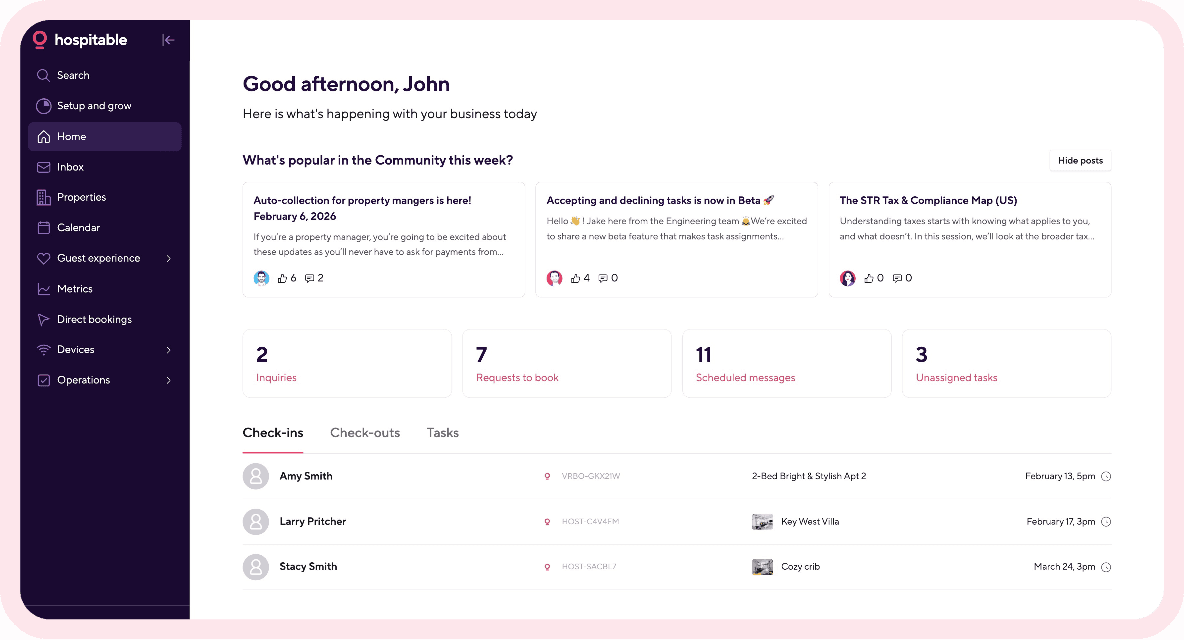
Starting a vacation rental business in the right city is key to generating profit, but it’s also important to ensure effective property management. With Hospitable, you’ll be able to save time by automating most routine operations and make your business more efficient.
If you are new to hosting, you can start with Essentials, Hospitable’s free plan, which provides hosts with the core tools needed to manage day-to-day short-term rental operations efficiently. You pay only if you add optional add-ons.
Short-Term Rental License: What Licenses and Permits Are Required?
It all depends on the short-term rental regulations of the city or county where your rental property is located. Still, common licenses and permits you may need to obtain as a vacation rental owner include a general business license and a short-term rental license, also called a vacation rental license.
A general business license (sometimes called a business tax certificate) is a basic license required in most states for operating any business, including short-term rental owners. Many local governments have sections on their websites that explain the process for applying for a business license and provide relevant forms. If you can’t find this information online, email or call them directly. And if your city doesn’t have a business licensing department, you should visit your local tax office for information.
Most likely, you’ll also need to get a short-term rental license due to the discussed regulations and restrictions. This document demonstrates that your rental property complies with zoning restrictions and meets certain health and safety standards. It also helps you ensure that all neighboring properties have been notified.
How to Get a Vacation Rental License
Here are the steps you need to take to apply for a short-term rental license.
Before submitting an application, check if your property is eligible for short-term rentals. Review local requirements related to zoning restrictions, primary residence rules, and HOA or building regulations.
Then, gather the required documents, including your government-issued ID, proof of ownership or owner authorization (if you manage or rent a property that you do not own), and a business license or tax registration.
Register on your local government's official online portal, submit your application, and pay a licensing fee (most government portals accept online payments). Keep in mind that your licensing department may ask you to provide other documents, for example, a floor plan of the property, proof of primary residence, proof of property liability insurance, etc.
Wait until the government approves your application. When you receive a vacation rental license, you may need to add its unique number to all your online listings and display a physical copy of the license inside your property.
Keep in mind that if you manage multiple vacation rentals, you may need a separate license for each property in most locations. Don’t accept bookings until your property is legally approved to operate.
What Are the Penalties for Airbnb License Violations?
Local governments vary greatly in how they enforce short-term rental laws and regulations. Penalties for non-compliance with local legislation may include hefty fines or other enforcement measures, such as temporary bans and business closure. Moreover, fines for violations are typically levied daily. So, compliance is key to keeping your short-term rental business profitable.
Final Thought
Vacation rental properties are subject to different rules and regulations that vary greatly depending on the location, and you must comply with them to avoid serious legal implications. So if you want to become a short-term rental host, you need to check the applicable laws and apply for the relevant general business and short-term rental licenses. And if you have any questions, you should consult a local lawyer or tax professional.
Keep in mind that regulations for short-term rentals can change annually since lawmakers lack consensus on how regulated the industry should be. That’s why STR hosts should remain vigilant and frequently check their location’s laws and requirements to stay informed of these constant changes.


Table of contents
Common questions
What licenses do you need for a short-term rental?
The exact requirements depend on the city or county where the property is located. Common requirements include a general business license and a short-term rental license, also called a vacation rental license. Some jurisdictions may also impose zoning, primary-residence, tax registration, HOA, or building requirements.
How do you get a short-term rental license?
First, confirm that the property is eligible for short-term rentals under local zoning, primary-residence, HOA, and building rules. Then gather the required documents, such as government-issued ID, proof of ownership or authorization, and business or tax registration. Submit the application through the local government portal, pay the licensing fee, provide any additional documents requested, and wait for approval before accepting bookings.
Do you need a separate short-term rental license for each property?
In many locations, yes. Hosts managing multiple vacation rentals may need a separate short-term rental license for each property, depending on local rules. Requirements should be checked for every individual property before it begins operating.
Can you list on Airbnb before getting a license?
In many cities, no. Some jurisdictions require hosts to register, obtain a permit, or receive a short-term rental license before listing the property or accepting guests. Local rules may also require the license number to appear on Airbnb or other OTA listings.
What happens if you operate an Airbnb without a license?
Operating without the required license can lead to fines and other enforcement actions, including temporary bans or business closure. In some jurisdictions, fines can be imposed for each day the property remains non-compliant.