

Starting an STR Business
Vacation Rental Investment: Is It Worth It?
Thinking about real estate investment to make money outside your 9-to-5 job? Buying a vacation rental home might be the best way to enter the real estate business and become a property investor.

A vacation rental investment is an excellent strategy to make money in real estate. Today, making money with vacation rentals is much easier than ever before, thanks to services like Airbnb, Booking.com, and Vrbo.
But are vacation rentals a good investment for beginners, and how to get started? Find out whether investing in a vacation rental is right for you and how to turn your property into a valuable income source.
Are Vacation Rentals a Good Investment?
Vacation rental investments are gaining popularity nowadays due to their potential for higher rental income, property appreciation, and tax benefits. Many people choose to buy vacation property as an investment and rent it out when they’re not using it themselves.
The idea is that you are actually buying a dual-purpose property. You can use it as a second home and spend your vacations there. Then you can rent it to guests for the rest of the year.
The major advantage of this approach is that you gain a steady source of income without necessarily having to buy an “investment” property. It’s your second home, and it looks as if you make money on the side.
The best thing is that the money you make from bookings helps you pay the mortgage and other expenses for the property where you spend your vacations.
The Benefits of Vacation Rental Investment
Buying a vacation rental home might be the best way to enter the real estate business and become a property investor, but it also carries significant risks and costs. So if you’re thinking of buying a vacation home to rent out for extra cash, you should consider the full range of pros and cons before diving in.
Owning a vacation rental property has several obvious advantages:
You can make extra income if you list your property on Airbnb and other similar platforms.
You can have your spot to get away and use your property for birthdays, parties, or family get-togethers.
Tax benefits—you can write off a lot of your expenses you’ll incur to repair and maintain the property if you rent the home out for more than 14 days a year.
Over time, the right vacation rental investment in the right location can significantly increase in value.
It can ensure you have healthy finances upon retirement—you can sell it to cover your future costs of living, healthcare, travel, and more. Or you can keep it as a retirement home.
But as with any investment, there are several disadvantages to investing in vacation rentals. You have to clean, prepare, and restock the property between each guest, and if you don't have time to do it yourself, you may need to hire a team. Besides, you need to list your property on Airbnb and other platforms, find guests, answer their inquiries, ensure smooth check-ins and checkouts, etc.
Managing a vacation rental requires year-round work. The good news is that you can automate most routine tasks with short-term rental software like Hospitable, saving you many hours every week and making it easy to manage your property even remotely.
Investing in Vacation Rentals: How to Get Started
Choosing the right location for your vacation rental property is one of the most important decisions you’ll make as an investor, so you need to start with thorough market research to make an informed decision.
Find top locations for vacation rental investment
When it comes to investing in vacation rentals, location is key because it can determine how successful your rental is. Here are some key factors to consider when choosing the best places to invest in vacation rentals.
Begin by identifying areas with high demand for short-term rentals. Typically, these are popular tourist destinations, business hubs, and regions with special attractions such as mountains, national parks, ski resorts, beaches, and annual events. Pay attention to metrics such as occupancy rate, average daily rate, and RevPAR, as they help determine potential profitability.
Evaluate supply. Before investing, find out how the number of active listings has changed over time. Look for a location that is not too saturated with short-term rentals. A balanced market with steady demand offers better investment opportunities because it’s easier to attract guests and charge higher rates, ultimately generating more revenue.
Consider seasonality. Can you maintain steady occupancy year-round? Virtually all markets have high and low seasons, especially beach towns, ski towns, and lakeside retreats. So if you buy an investment property in a highly seasonal market, it’s essential to understand seasonal demand fluctuations to optimize your pricing strategy and set realistic expectations for your occupancy rates.
Pay close attention to home prices in the area, as the price you pay for your property will significantly impact its profitability. You don’t want to buy a vacation rental and find out that your rental income doesn’t cover your property expenses, such as mortgage payments, property taxes, insurance, and maintenance costs. It’s important to balance affordability with your likely potential revenue.
Pro tip: Conducting a thorough market analysis and estimates can be challenging and time-consuming, so it’s better to use Airbnb analytics and intelligence tools. They can help you gather and analyze accurate data and find the best cities for Airbnb investment and the most profitable investment properties.
Research local STR laws and regulations
STR rules can vary dramatically by city or state, and some markets are more STR-friendly than others. So, you need to check local policies on short-term rentals in your target markets as they can impact your profitability.
Some areas may have strict STR rules and regulations, such as zoning laws, licensing requirements, occupancy limits, caps on rental nights, or bans on specific types of properties. Some cities may require proof of additional liability coverage to protect your guests and neighbors.
Before investing in vacation rentals, you need to do due diligence and familiarize yourself with local laws and any restrictions to ensure compliance. Ignoring the legal aspects of operating vacation rentals can lead to hefty fines or even removal from OTA platforms.
Since short-term rental regulations are constantly evolving, it’s important to stay informed and remain compliant. It can help protect your investment and keep your business thriving in an increasingly competitive market.
Consider what types of property perform best as vacation rentals in your area
After you've chosen a location for vacation rental investment, you should decide on the most appropriate type of property that can generate more income for you. So, you should review the local listings on major OTAs like Airbnb, Vrbo, and Booking.com to determine which property types are in demand in your chosen area, and consider the types of guests you want to attract.
There are various types of properties suitable for vacation rentals, depending on the target market and location. Common options include:
Single-family homes are ideal for families and groups as they offer maximum privacy and space.
Villas cater to high-end travelers looking for luxury amenities and willing to pay premium rates.
Condos that provide low-maintenance shared amenities are popular in urban or beach settings.
Cabins and chalets are often located in woods near national parks or ski resorts and are perfect for nature lovers.
Niche properties like treehouses, A-frames, houseboats, yurts, barns, etc., can attract travelers looking for unique and comfortable stays.
You should consider factors such as property size and the number of bedrooms—they affect how many guests you can host and what you can charge per night. For example, properties with multiple bedrooms and bathrooms are more attractive to families or larger groups traveling together. They command premium nightly rates in established destinations.
However, more bedrooms don't automatically mean better returns. Although larger properties generate higher gross revenue, they require a higher upfront investment for acquisition and furnishing, and their ongoing cleaning and maintenance expenses are higher.
Estimate your potential vacation rental income
After you’ve chosen your target market and property type, determine your budget, then start researching properties for sale on real estate sites. Buying a vacation rental is all about making money, so you should look for a property that generates positive cash flow (income exceeds expenses).
As you browse listings, filter them by price and desired features to find properties that fit your criteria.
Once you've identified a potential vacation rental investment property, use a short-term rental analytics tool to thoroughly analyze it based on such factors as property type, location, and demand trends.
If the property you are researching shows potential vacation rental demand, you can estimate your potential rental income and operating expenses (mortgage payments, utilities, cleaning and maintenance costs, restocking supplies, insurance, hosting fees, or property management fees).
Calculate your cash flow—subtract your expenses from your potential rental income. If a property has a positive cash flow, it is worth investing in.
Doing investment analysis manually on each property is very time-consuming. So, to make this task easier and save time, you can use analytics tools with a rental property calculator to generate the important metrics you need to evaluate the profitability of each property.
How to Get More Out of Your Vacation Rental Investment
Running a vacation rental is a business and, like any other business, it requires strategic planning, continuous effort, and attention to detail. Being a vacation rental host involves many responsibilities. It comes with certain challenges, so the key to long-term success of your investment lies in effective management and delivering an exceptional guest experience. Here are some things you should focus on to turn your property into a high-performing asset.
Focus on your target guests
Different vacation rental properties may appeal to different demographics, so it’s essential to identify your ideal guests. For example, if you own a beach house in a popular resort town, you’re likely to cater to families with children, and if you rent out a cabin in a destination known for hiking trails, it may appeal to adventure seekers.
Knowing who your potential guests are will help you tailor your property to meet their needs and preferences, making it more attractive to them and providing a guest experience that is better aligned with their expectations. This will help you compete with other vacation rentals in your market and secure more bookings.
Remember to avoid a one-size-fits-all direction. If you try to appeal to all or multiple audiences with one property, you will eventually appeal to no one.
Here are 6 common types of vacation rental guests and what they are looking for when choosing a place to stay:
Families with younger children often seek STR properties that are safe, spacious, and equipped with child-friendly amenities, such as cribs, high chairs, toys, and games.
Couples who choose vacation rentals for romantic getaways, honeymoons, and anniversaries might be looking for properties with cozy décor and secluded outdoor spaces that offer privacy and an opportunity to relax.
Digital nomads working remotely look for comfortable properties with dedicated workspaces, high-speed Wi-Fi, and perhaps a good coffee machine.
Adventure seekers look for rentals located near national parks, trails, or beaches so they can enjoy outdoor activities. They also often want specialized equipment, such as bikes, ski gear, or kayaks.
Eco-conscious travelers seek vacation rentals with eco-friendly features, such as energy-efficient appliances, water-saving devices, and electric vehicle charging, so they can maintain the same sustainable lifestyle that they practice at home.
Luxury travelers value comfort, convenience, and premium service and look for exclusive vacation rentals with unique design, locally inspired décor, high-end amenities, and concierge services.
Implement dynamic pricing
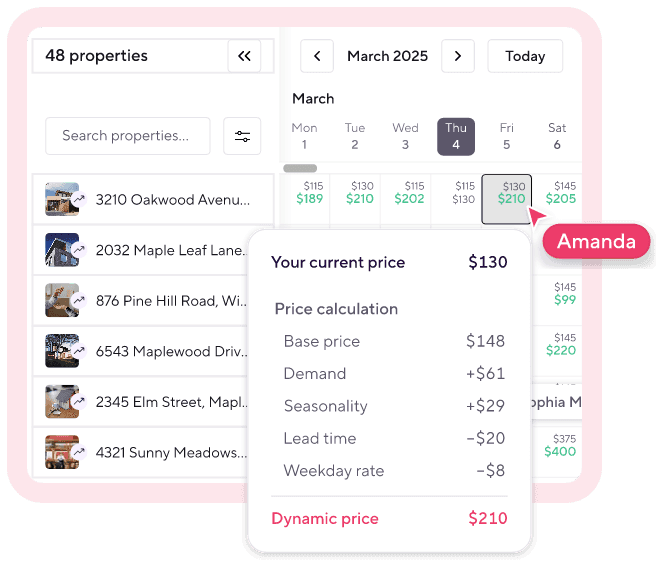
Don't just set a flat nightly rate and forget it—fixed rates that don’t adapt to market changes or seasons don’t work. Instead, implement dynamic pricing to optimize your property’s rates based on real-time market conditions. This strategy can help you stay competitive in the ever-changing market environment and maximize your earnings.
Many vacation rental owners and managers use dynamic pricing tools that apply sophisticated algorithms to analyze current market data and automatically adjust rates in real time. Top dynamic pricing tools integrate with many OTAs and property management systems, including Hospitable. Such tools can help you increase your ROI by optimizing the pricing of your vacation rental investment property and improving your occupancy. However, they come with costs.
Hosts and property managers who use Hospitable to automate vacation rental management tasks can take advantage of our built-in Dynamic Pricing solution. The good news is that Hospitable’s built-in Dynamic Pricing is included in Host, Professional, and Mogul subscription plans at no extra cost, saving you money on third-party pricing tools.
You can enable this feature for some or all of your properties and let our Dynamic Pricing engine automatically adjust your rates based on demand fluctuation, competition, seasonality, booking trends, and your pricing strategy to maximize revenue and optimize occupancy.
Deliver an experience that your target guests will love
Providing an exceptional guest experience from the moment a potential guest discovers your property to the time they check out and leave a review is crucial for the success of your vacation rental business. You should do your best to make your guests feel welcome and happy with their stay because happy guests leave glowing reviews and 5-star ratings, which help build trust and drive future bookings.
Keep in mind that today’s guests expect more than a clean space and a comfortable bed. They also want fast, clear communication, streamlined processes, and thoughtful details that make their stay memorable. Here is what you should do to meet your guests' expectations.
Create a comfortable and inviting atmosphere at your rental to impress your guests and make them feel at home. Consider their needs and preferences when selecting furniture and decor.
Ensure your property listings are clear and visually appealing, with detailed descriptions and high-quality photos that showcase unique features and amenities.
Guests value convenience and flexibility, so consider installing smart locks to ensure a seamless self-check-in that involves zero waiting time.
Keep your property clean and well-maintained. Hire professional cleaners and provide them with a detailed cleaning checklist to ensure high cleaning standards during each turnover.
Add personal touches to delight your guests. Small gestures like a handwritten welcome note, a bouquet of fresh flowers, or a welcome basket with local snacks can create a more memorable guest experience that leads to great reviews and repeat bookings.
Communicate effectively with your guests via messages to keep them informed at every stage of their journey. Respond to inquiries promptly and be helpful throughout every guest’s stay.
Communication with guests is one of the most time-consuming aspects of running a vacation rental property, but automating it with a PMS like Hospitable can help you save time while maintaining a personal touch. You can also use Inbox AI tools to quickly draft and correct detailed, personalized responses to unusual guest questions and even set up times when our AI can automatically reply to guests' inquiries without your review.
Claim all available tax deductions
If you self-manage your vacation rental, there is a legal and transparent way to reduce the taxes that you pay every year by deducting certain expenses directly associated with operating your STR property. By claiming all available STR tax deductions, you can significantly reduce your tax burden and keep more of your rental income in your pocket.
Here are some essential tax deductions you may be eligible for if you’re actively involved in managing your vacation rental investment property:
Repair and maintenance costs
Cleaning services and supplies
Mortgage interest
Property taxes
Utilities and internet
STR insurance premiums
Home office expenses
Depreciation
List your vacation rental on multiple platforms
Plan to list your vacation rental investment property on multiple platforms, as relying on a single platform isn’t enough to survive and thrive in a competitive STR market. By adopting a vacation rental multi-channel strategy, you can reach more travelers who can become your potential guests.
By diversifying your listings, you boost your property's booking potential while reducing the risk of relying on a single source of traffic. Your listings are discovered in more searches, which can help you fill your calendar faster, reduce vacancies during slower seasons, and maximize your revenue.
First, focus on well-known OTAs like Airbnb, Vrbo, Booking.com, and Agoda (identify platforms that best fit your rental market), and then expand strategically to niche platforms that cater to specific traveler segments and local sites as needed.
However, managing listings across multiple platforms can be time-consuming and complex. You need to keep up with guest communication, manage cleaners, and regularly update availability and pricing. The risk of double bookings also increases without proper calendar sync across platforms, potentially leading to cancellations and penalties.
The solution is to use a vacation rental channel manager, like Hospitable, which connects listings across multiple booking platforms and updates them in real time. Hospitable will protect you from double bookings by automatically syncing calendars, pricing, and availability across platforms like Airbnb, Booking.com, Vrbo, Google, and a direct booking website.
Moreover, with Hospitable, you can create your own modern, mobile-friendly direct booking site within minutes using our professional website templates. We’ll publish your properties on Google Vacation Rentals, so travelers can find them when they use Google platforms to search for stays in your area. If travelers decide to book your listing, Google will direct them to your Hospitable Direct website, and you’ll get direct bookings without paying high OTA fees.
Conclusions
Vacation rental investment is a great way to generate passive income if you do thorough market research and come prepared. A vacation rental property that can generate enough rental income to pay for itself is a good place to start if you are interested in real estate investing.
If you buy the right home and manage it effectively, purchasing a vacation rental property can yield excellent results over the years. But investing in vacation rentals requires careful planning, smart management, and the right technology to ensure everything goes smoothly and to build a rewarding, profitable business.


Table of contents
Are Vacation Rentals a Good Investment?
The Benefits of Vacation Rental Investment
Investing in Vacation Rentals: How to Get Started
How to Get More Out of Your Vacation Rental Investment