Starting an STR Business
Property Management
Vacation Rental ROI: What’s a Good Return and How to Get There
Find out how to measure it, how it compares to other financial metrics, and how to increase your vacation rental returns.

A solid vacation rental ROI falls between 8% and 12%. That’s the short answer. The longer answer fills the rest of this article, because that range hides a lot of variation. A self-managed cabin in the Smokies and a PM-run condo in Miami can both hit 10% through completely different math. Property type, location, financing, whether you manage it yourself or hire someone, and whether you use the place on weekends all shift the number. We’ll break down how to calculate your ROI, what benchmarks make sense for different scenarios, and what you can do to push the number higher.
Knowing your numbers is important for making smart, data-driven decisions, so in this blog, we’ll show you how to measure vacation rental ROI. We’ll also discuss how it compares to other financial metrics, what is considered a good ROI on a vacation rental property, and share some tips on how to increase your vacation rental returns.
What Is Vacation Rental ROI?
ROI is a financial metric. It is commonly used to evaluate the profitability of a vacation rental property by comparing net income to total investment cost. ROI shows how much profit you’re making compared to what you spent on your property.
You can calculate vacation rental RO by dividing annual net operating income (gross rental revenue minus all operating expenses) by total capital invested (including purchase price, renovations, furnishing, and setup costs). Express the results as a percentage.
The simplified formula for vacation rental ROI is:
ROI = ((Annual Rental Income – Expenses and Costs) / Total Investment) х 100%
For example, a vacation rental property generating $55,000 annual rental income with annual operating expenses of $20,000 on a total investment of $ 400,000 has an 8.75% ROI.
ROI is one of the main vacation rental KPIs. It helps you assess the profitability of your vacation rental over time and provides a clear picture of the potential success of your investment.
What Is a Good ROI on Vacation Rental Property?
It’s a big question, and there is no single, simple answer, as it depends on several factors. A solid vacation rental ROI typically falls between 8% and 12%, although results vary widely by property type, market, and management approach.
Properties in high-demand tourist destinations with strong seasonal pricing can exceed 15%, but a higher return comes along with greater risk. Short-term rentals in competitive urban markets may achieve 5-8%, which is lower than in traditional vacation spots, but urban properties benefit from steady year-round demand and stronger appreciation potential.
The key is understanding your specific market's dynamics and setting realistic expectations for your vacation rental investment. ROI isn’t just about how much money you can earn owning a vacation rental. It also comes down to how steady your income is, how easy it is to buy an Airbnb property, and how simple it is to actually start a vacation rental business and run a rental in the area you’re looking at.
What counts as “good ROI” changes depending on what you’re actually trying to do with the property.
If you’re investing purely for cash flow, focus on cash-on-cash return. Anything below 6% means your money would probably work harder in an index fund. The 8–12% range is solid. Above 15% is excellent, but usually means you’re either self-managing in a high-demand seasonal market or taking on regulatory risk that could shrink those numbers fast.
If you’re betting on appreciation, a property with 4–5% cash return can still make sense if the market is adding 5–8% in property value annually. But appreciation is speculative. You can’t pay your mortgage with unrealized gains, so make sure the cash flow at least covers your costs while you wait for the market to do its thing.
If you plan to use the property yourself and rent it part-time, your ROI will be lower by design because you’re blocking your best weekends for personal use. In this scenario, 3–5% cash return is realistic, and that’s fine. You’re getting a vacation home that partially pays for itself, not running a pure investment play.
If you’re financing with a mortgage, cash-on-cash return matters more than total ROI, because you’re measuring the return on the cash you actually put in—your down payment, closing costs, and setup expenses. Leverage amplifies returns in both directions: a property that returns 10% CoC unlevered might return 15%+ on your cash with a mortgage, but a bad month hits harder when you have a payment due regardless of occupancy.
If you’re hiring a property manager, subtract 20–30% of gross revenue from your projections before you calculate anything. Self-managing can add 3–5 percentage points to your ROI, but it costs your time. The right comparison isn’t self-manage vs. PM—it’s the hourly value of your time vs. the management fee.
Short-term rentals require more active management than traditional long-term rentals and involve many responsibilities, so it makes sense to automate your daily repetitive tasks using a solid PMS like Hospitable. Our STR super app is packed with automation and AI tools that help you to run your vacation rental business on autopilot.

Vacation Rental ROI: Key Metrics You Should Know
There are several metrics you can use to evaluate a rental property before investing, assess your property’s performance, and inform your STR strategy. Each of them represents a different way of looking at the same situation.
Net operating income (NOI) shows you how much income a vacation rental property generates after covering all operating expenses, such as cleaning, maintenance, utilities, insurance, and property taxes. NOI can be useful for comparing the earning potential of different properties or assessing profitability. It provides a clear view of how well a rental property performs as a business.
Formula: NOI = Annual Rental Income – Operational Expenses (excluding mortgage)
Cap rate shows how effectively a vacation rental property converts its purchase price into income. The metric tells you how profitable the property is without considering how it was financed and is often used to compare similar properties across various markets.
Formula: Cap Rate = (NOI / Property Purchase Price) x 100
Gross yield gives you a quick look at your vacation rental property’s income potential. It compares a property’s annual rental income to its purchase price, without considering operating expenses or financing. This metric doesn’t tell you if the property is profitable, but it allows you to screen potential deals in the early stages as a first filter.
Formula: Gross Yield = (Annual Rental Income / Property Purchase Price) x 100
Cash-on-cash return (CoC) offers a straightforward way to evaluate a vacation rental’s profitability and inform your future investment strategy. It shows how much cash you’re earning relative to what you’ve invested upfront. This is the most relevant ROI metric if you’re financing the property because it reflects the return on your down payment, closing costs, and any upfront improvements, and not just the total property value.
Formula: Cash-on-Cash Return = (Annual Cash Flow After Expenses and Mortgage / Total Cash Invested) x 100
Experienced vacation rental investors and property managers look at multiple metrics and use each where it is most appropriate to inform their strategy.
Your business success as a vacation rental host increasingly depends on how well you understand your property’s performance and how quickly you can identify issues and uncover growth opportunities. Luckily, with Hospitable’s Metrics, you don’t have to spend time on spreadsheets to make sense of the property management data. Our advanced analytics system brings your performance data together, allowing you to see the big picture in a single view and track the metrics that matter.
Factors That Influence Your Vacation Rental ROI
ROI reflects your vacation rental investment strategy within its market conditions. Here are the things you should consider while setting ROI targets for your vacation rental property.
Risk tolerance
A good ROI isn’t just about how much income a vacation rental property brings in. It’s also about how much risk you’re willing to take on. High-yield STR properties in highly seasonal or unregulated markets may look appealing at first glance if you’re targeting high cash flow.
However, such markets can bring surprises, like vacancies during the slow season or changes in STR regulations that limit the number of nights a property may operate as a short-term rental. So, if you’re not willing to deal with ups and downs and prefer stable income, lower-yield markets that offer more consistency may feel like a better fit.
Local market performance
Location is the single most important factor determining your vacation rental property’s performance. It’s important to choose a location that can support your investment goals.
A seasonal market may work if you plan to use your vacation home personally and rent it occasionally at premium rates during high season. But if you’re investing purely to get rental income, you should target a location that has consistent demand from travelers.
So, when choosing a location for your investment, you need to find out whether the area has tourism traffic throughout the year, and not just in peak season. Research what draws travelers: mountains, beaches, urban attractions, events, or cultural destinations. Investigate the local economy because economic stability determines whether demand for vacation rentals persists.
Demand and pricing trends
Occupancy and pricing help explain how a short-term rental property earns income. A property that books frequently at a lower rate may bring in the same revenue as one with a high average daily rate (ADR) that sits empty more often. Both properties can lead to a good ROI if both numbers work in your favor.
So, you should always look at RevPAR (Revenue Per Available Rental). This metric combines ADR with occupancy rate in one helpful number to show average income per day available. If RevPAR is rising over time, it usually means the STR market has a strong long-term growth potential.
STR regulations
Local short-term rental regulations can seriously impact your ROI. Some cities have introduced STR bans in certain zones, or cap the number of nights you can rent your place per year. Others require expensive permits or restrict short-term rentals to primary residences.
STR laws vary dramatically by state, city, and even neighborhood. Regulations have tightened significantly in many markets over the past several years. So before investing, research current local laws, zoning restrictions, HOA rules, and proposed changes to ensure compliance and avoid legal issues. Check out if there’s anything that can limit your property’s earning potential.
Management strategy
In most markets, single-family homes tend to bring higher ROI than apartments and condos. Yet, how you run your vacation rental can make or break your returns. Well-managed STR properties perform better—they often see higher occupancy, better reviews, and lower turnover costs, contributing to a stronger ROI.
Vacation rental management requires commitment and can consume significant time. You may consider hiring a professional property manager to oversee your property on your behalf, but you have to factor in monthly vacation rental management fees into your ROI calculations.
If you live far from your investment properties and prioritize passive income, hiring a pro to handle day-to-day tasks may be the right strategy. But it’s important to find an experienced manager who matches your needs and can help you achieve your goals.
Hospitable can help you find a partner you can trust. We can connect you with vetted, top-performing property managers in your market, so you can compare and decide who is the perfect fit for your rentals.
Another option is to self-manage your vacation rental property and automate routine daily tasks using all-in-one short-term rental property management software like Hospitable to save time. Self-managing your property can save you money and boost your profits. You’ll also have full control over how your vacation rental is run.
With Hospitable, you can automate 90% of repetitive property management tasks with the help of AI. Hospitable is also the first PMS on the market to have launched an MCP server, available to users on most plans. You can use our MCP server to connect AI tools, such as ChatGPT or Claude, directly to your Hospitable account and go beyond the platform’s existing features. This way, you can build repeatable AI workflows to solve your specific hosting challenges and manage your vacation rental business with simple prompts.
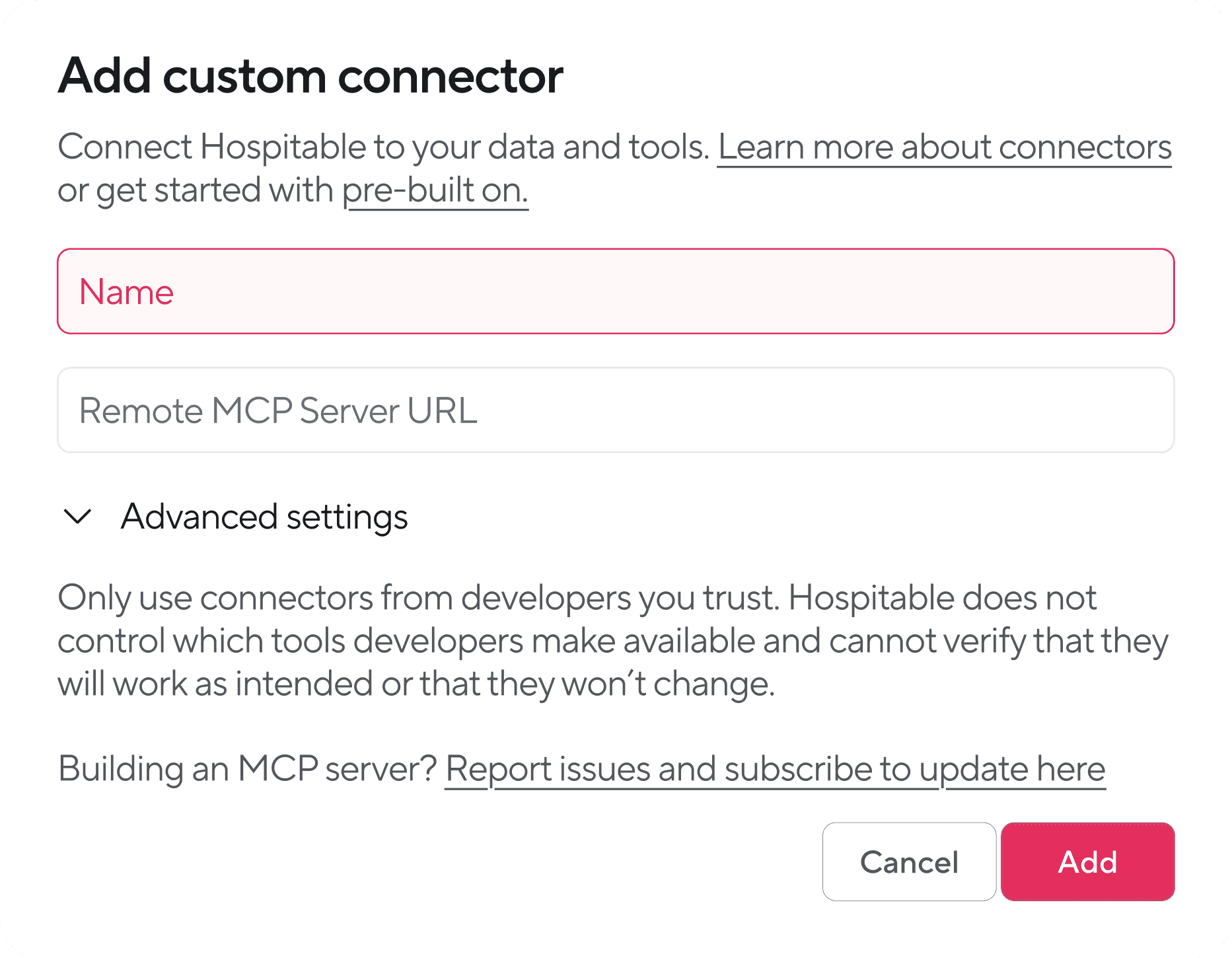
You may want to check out our blog article to learn more about agentic automation for vacation rentals.
How to Improve ROI for Your Vacation Rental Property
Vacation rental ROI is something you can actively improve by making intelligent tweaks to your rental strategy. Consider these proven tactics to improve your returns and ensure your property is as profitable as possible.
Increase your revenue
Optimize pricing. Setting fixed rates for weekdays or weekends, during a high or a low season, means leaving money on the table. Successful vacation rental properties implement dynamic pricing, which represents the most significant opportunity for revenue optimization. Dynamic pricing helps ensure your property is competitively priced at all times, striking the right balance between nightly rates and occupancy to maximize rental income.
If you opt for Hospitable, you’ll be able to take advantage of our Dynamic Pricing feature that is included in Host, Professional, and Mogul plans at no extra cost. If you enable Dynamic Pricing for any of your properties, Hospitable will automatically adjust your nightly rates based on market demand, seasonality, and other factors to help maximize revenue while maintaining healthy occupancy.
Look for upselling opportunities. Offering your guests extra services and amenities for an additional fee is a great way to increase your revenue per booking and improve the guest experience. You can offer your guests early check-ins, late checkouts, mid-stay cleaning during longer stays, luggage storage, gourmet food baskets, bike rentals, and other value add-ons.
The best thing is that upselling doesn’t mean doing much administrative work if you use the right technology. For example, with Hospitable, you can offer paid upsells to your guests automatically through the Guest Portal, without requiring any additional external software. Just create a catalog of your offerings and send your guests the link to their guest portals in automated messages.

Adopt a multi-channel strategy to maximize exposure and booking opportunities. List your property across major OTA platforms (Airbnb, Vrbo, Booking.com, and Agoda) as well as niche sites that cater to specific traveler segments and create a direct booking website. Optimize each listing with compelling photos and detailed vacation rental descriptions. This way, you can significantly increase your visibility and booking rates and maximize your revenue.
You may want to check out our blog article where we discuss effective Airbnb listing optimization strategies that will help you appear higher in guest searches.
Reduce ongoing expenses
Schedule preventative maintenance. Travelers expect well-maintained rental space, so don’t wait for something to break. Preventive maintenance saves money by addressing issues before they become expensive problems. Plan regular maintenance routines for appliances (refrigerators, ovens, and coffee makers), HVAC systems, and plumbing. This way, you can prevent costly emergency repairs, protect your ROI, and avoid mid-stay disruptions.
You may want to check out our article where we share essential rental property maintenance tasks that you need to perform regularly to keep a pleasant living environment for your guests.
Optimize energy usage. Install smart thermostats to control temperature at your vacation rental property and save on utility bills. The best thermostats for Airbnb and vacation rentals allow you to adjust your home’s temperature remotely from anywhere and ensure comfort for your guests when they arrive without wasting energy.
You can also connect your smart thermostats to Hospitable and automate temperature control at your vacation rental. Set up custom thermostat presets based on guest check-in and check-out times, and Hospitable will automatically adjust the temperature based on bookings and vacancies in your rental.
Automate property management. Adopt a property management system (PMS) to optimize processes and reduce operational costs. Choose your PMS wisely—make sure the software of your choice provides the features and tools that fit your business needs, coordinates multiple STR properties efficiently, and offers the best value for money.
Choose all-in-one platforms, opt for a flat subscription fee, and make sure you clearly understand what is included in the subscription price and what is extra. For example, most PMS offer dynamic pricing and smart lock management as paid add-ons. But with Hospitable, built-in dynamic pricing is included on Host, Professional, and Mogul plans, and smart lock and smart thermostat automations are included in the Professional and Mogul plans at no extra cost.
If you’re starting as a vacation rental host, you can opt for Hospitable’s free solution to streamline your operations without adding to your budget. Hospitable’s Essentials plan gives you core property management tools without a monthly subscription fee, and there’s no cap on the number of properties or users.
Final Thought
Your long-term success as a vacation rental property owner depends on optimizing both rental income and operating costs, and technology plays a big part in this. With short-term rental software like Hospitable, you can ensure efficient operations that control costs, optimize pricing to maximize revenue, and adopt a multi-channel strategy to maximize your booking opportunities. This way, you can ultimately increase your vacation rental ROI without extra manual work.



Table of contents
Common questions
What is vacation rental ROI?
Vacation rental ROI measures how much profit a property generates compared with the total amount invested in it. It is calculated by dividing annual net operating income—rental revenue minus operating expenses—by the total capital invested, including the purchase price, renovations, furnishings, and setup costs, then multiplying the result by 100.
What is a good ROI for a vacation rental?
A solid vacation rental ROI typically falls between 8% and 12%, although the right benchmark depends on the property, market, financing, management strategy, and investment goal. Returns above 15% can be excellent but often come with higher seasonality or regulatory risk, while lower returns may still make sense for properties with strong appreciation potential or significant personal use.
What factors affect vacation rental ROI?
Vacation rental ROI is influenced by location, local demand, seasonality, nightly rates, occupancy, short-term rental regulations, financing, operating expenses, and how the property is managed. Personal use can also reduce returns by blocking profitable dates, while hiring a property manager adds management fees that must be included in the calculation.
How can you increase vacation rental ROI?
You can improve ROI by increasing revenue and reducing ongoing expenses. Revenue strategies include dynamic pricing, paid upsells, stronger listing content, and distributing the property across multiple booking channels and a direct booking website. Cost-saving strategies include preventive maintenance, better energy management, and automating repetitive operational work.
How can property management software improve vacation rental ROI?
Property management software can improve ROI by reducing manual work and operating costs while supporting higher revenue. Hospitable helps hosts automate guest communication, task management, calendar synchronization, pricing, upsells, smart-device controls, and multi-channel operations. Its built-in Dynamic Pricing is included in the Host, Professional, and Mogul plans at no extra cost, while the free Essentials plan provides core management tools without a monthly subscription fee or limits on properties and users.