OTAs
Starting an STR Business
Airbnb Regulations by State: Licensing Requirements, Taxes, and More
Short-term rental laws and regulations are local in nature and can be very confusing. In this blog, you'll find information about different aspects of current Airbnb regulations by state.

The United States is a vast country that offers many opportunities for aspiring investors looking to buy a property to rent it out on Airbnb. But when deciding whether to become a short-term rental host, you need to understand how the laws and regulations in your city work.
The problem is that short-term rental laws and regulations are highly localized and can be confusing. Moreover, some cities may restrict your ability to rent out your property for short-term rentals, trying to keep the rapid growth of Airbnb rentals in check.
So if you’re thinking about turning your property into a vacation rental, you’ll find information here on different aspects of current Airbnb regulations by state. We’ll talk about short-term rental laws in some popular locations for Airbnb investments and look at the specific rules in some vacation rental hotspots.
You may also want to check out our Airbnb hosting guide for beginners, which covers all the essential things you need to do to become a successful STR host.
Airbnb Regulations by State and City
With its launch in 2008, Airbnb disrupted the vacation rental market, allowing travelers to rent single rooms or entire homes cheaper. And for property owners, renting out their homes short-term has become a desirable way to start a real estate side hustle and earn extra income. But in recent years, many states and cities across the US have enacted strict Airbnb and vacation rental regulations that vary from place to place.
Keep in mind that Airbnb regulations in the United States are constantly changing, and this article shouldn’t be taken as legal advice. So do your due diligence and consult your local lawyer to ensure you are taking the necessary steps to comply with local laws and regulations.
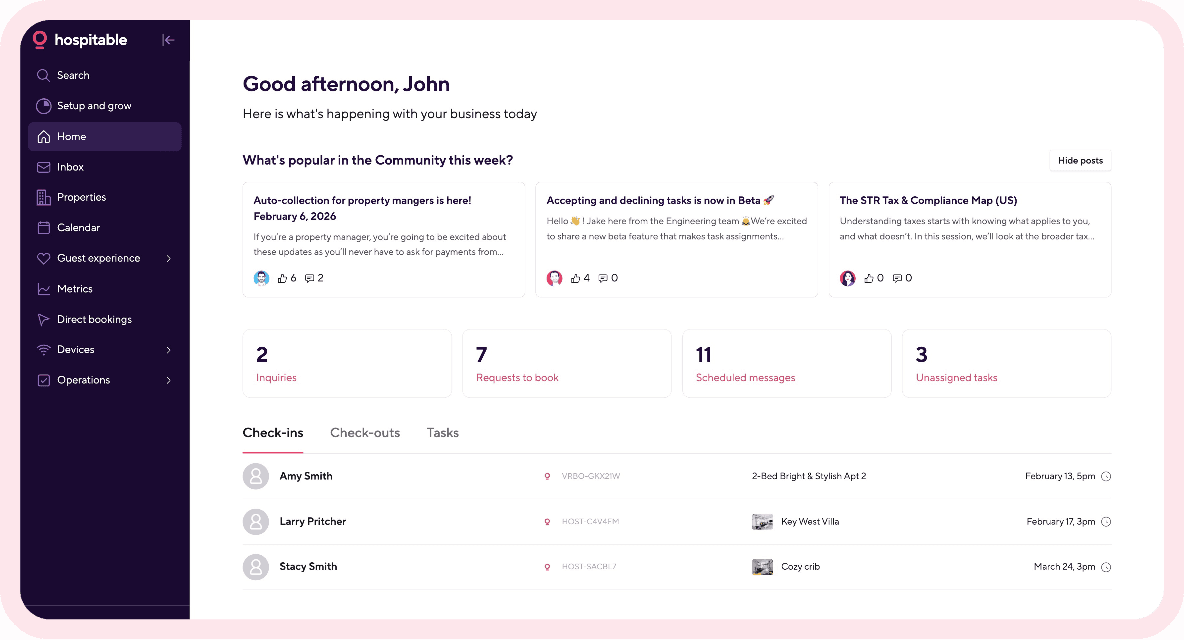
Understanding the current short-term rental regulations in your city is critical for your business’s success. Once you’ve set it up, consider using vacation rental software like Hospitable to automate your routine. Hospitable can help you manage conversations with guests using automated messages and Inbox AI tools, sync calendars across major OTA platforms, implement dynamic pricing, assign tasks to your team automatically, and more.
Airbnb Regulations in Florida
According to Florida state law (Florida Statutes Chapter 509.032), local governments are prohibited from banning short-term rentals altogether and can’t limit the length or frequency of stays. This makes Florida one of the preferred states for those who are interested in investing in vacation rentals. But county and city governments can pass their own rules to control the negative impact of vacation rentals on local communities—they are allowed to regulate issues such as noise, occupancy limits, trash collection, parking requirements, and other neighborhood concerns.
Licensing requirements
In Florida, all vacation rentals, including Airbnbs, must be licensed through the Florida Department of Business and Professional Regulation (DBPR). You must get a license from the DBPR if you rent out an entire unit more than 3 times in a year for periods of less than 30 days, or if you promote the unit to the public as a place frequently rented to guests.
DBPR license is not required if you want to rent out a single room or several rooms which do not qualify as public lodging. But such rentals may still be subject to other city, county, or other local-level requirements.
Taxes
STR operators in Florida pay several different taxes, including:
Income tax is paid annually to the federal government and the state government
State sales tax is paid to the Florida Department of Revenue—in Florida, it’s 6%
County-imposed sales surtax varies depending on the county (0.5%–1.5%)—you can find county rates on the DR-15DSS form
Local option transient rental tax varies between counties—county rates and instructions on reporting and remitting can be found on the DR-15TDT form
STR regulations in Kissimmee, FL
In Kissimmee, short-term rentals are defined as residential properties rented for less than 30 days, and operating a short-term rental business is permitted only in certain zoning districts. You should consult the City of Kissimmee Planning and Zoning Division to determine whether your listing meets zoning requirements or uses definitions. Property owners may be required to obtain a conditional use permit from the City and need to apply for a Business Tax Receipt before starting an STR business.
STR regulations in Miami, FL
Miami imposes restrictions on vacation rental properties listed on the CDMP Land Use Map Plan as Estate or Low-Density Residential. The Responsible Party—usually the owner—must live in the property for more than six months in a calendar year. Moreover, the rental may occur while the Responsible Party is residing on the property.
The maximum overnight occupancy for all Miami vacation rentals is 2 persons per bedroom, plus 2 additional persons per property. The maximum overnight occupancy must not exceed 12 persons, excluding children under three.
Short-term Rental Regulations in New York
The state of New York defines short-term rentals as renting dwellings for less than 30 consecutive days. But for tax purposes, they are defined as reservations of fewer than 90 consecutive days.
At the state level, short-term rentals are regulated by the New York State Multiple Dwelling Law, which prohibits them in residential multifamily buildings—“Class A” multiple dwellings. But it might be possible to rent out a room within most apartment buildings if the permanent resident lives there during the guest’s stay. So owner-occupied rentals of part of a property might be an option if all parts of the apartment are available to the paying guest.
Licensing and taxes
There are no statewide requirements for short-term rental licenses and permits. But most cities and towns across the state have strict requirements for licensing vacation rentals.
New York vacation rentals are subject to a state sales tax of 4% applied to “short‑term rental unit occupancy” and, within NYC, a $1.50 per‑unit‑per‑day fee, local sales taxes, and local lodging taxes. Booking platforms and certain operators of short-term rental properties located within New York State are required to register, obtain a Certificate of Authority, collect and remit the sales tax and unit fee, and file returns.
New York City STR laws
New York City has restrictive STR regulations outlined in the NYS Multiple Dwelling Law, the NYC Administrative Code, and the New York City Zoning Resolution. These restrictions prohibit renting out an entire apartment or home to guests for less than 30 days, even if you own it or live in the building. Hosts must be present throughout a guest’s stay if it is for less than 30 days and can host only two paying guests at a time.
On January 9, 2022, New York City adopted Local Law 18, also known as the Short-Term Rental Registration Law, which requires STR hosts to register with the Office of Special Enforcement (OSE). The NYC Local Law 18 prohibits OTA platforms such as Airbnb and Vrbo from processing transactions involving unregistered listings.
Airbnb Regulations in Texas
As the fourth most-visited state in the US, Texas has minimal state-level regulations for short-term rentals and allows city governments to set their own laws and regulations. Local governments regulate zoning and land use eligibility, licensing requirements, and operating conditions (occupancy limits, parking plans, quiet hours, and safety standards).
Due to high demand for vacation rentals, affordable property prices, and a favorable business environment, Texas offers excellent opportunities to run a successful Airbnb business. But it’s important to understand the state and city-level laws and regulations well.
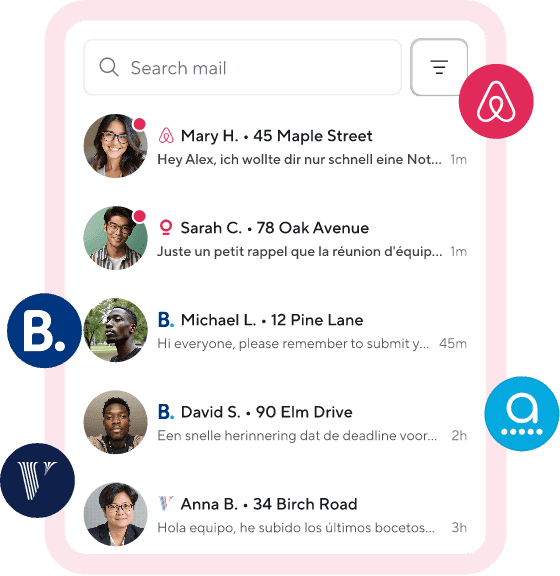
If you list your property on other OTA sites, you’ll be able to reach a wider audience and increase your occupancy rate and revenue. Managing listings on multiple platforms using short-term rental software like Hospitable will be easier. Our tool instantly syncs your calendars across platforms and protects you from double bookings.
Licensing and taxes
There are no state-level requirements to get a license to run a vacation rental business in Texas. But many major cities have specific licensing requirements, so compliance depends on the municipality where the property is located, and you must check them before listing your rental on Airbnb, Vrbo, or Booking.com.
STR property owners in Texas are also expected to pay two types of taxes:
6% State hotel occupancy tax that is collected by the Texas Comptroller’s Office
Local lodging tax collected by the local tax authorities.
STR laws in Dallas, TX
STR hosts in Dallas are required to register their homes with the City. They are also required to collect hotel occupancy taxes (HOT) from their guests and report and pay all HOT to the City every month.
In 2023, the Dallas City Council passed a strict ordinance banning STRs from single-family residential neighborhoods. However, property owners and the Dallas Short-Term Rental Alliance quickly sued and won a temporary injunction. The ban is frozen due to an ongoing legal battle that has reached the Texas Supreme Court.
Airbnb Regulations in California
California has strict regulations for short-term rentals. Although statewide short-term rental laws are not very detailed, they allow local authorities to set regulations and restrictions within their jurisdictions. Many cities in California restrict short-term rentals, and some, such as Irvine and Temecula, even ban them outright.
Most cities require hosts to register their units and get a license or a permit. STR property owners must also pay transient occupancy tax (TOT). The rate varies across counties and cities, generally ranging from 6% to 14%. Senate Bill 346, which took effect on January 1, 2026, requires short-term rental platforms like Airbnb to share information about STRs operating within the city with local governments, helping identify illegal rentals and ensure proper tax collection.
STR laws in Los Angeles, CA
The Home-Sharing Ordinance that went into effect in 2019 limits short-term rentals to the host’s primary residence, where the host lives for more than six months per year. This form of home-sharing is also limited to 120 days per year, and hosts must register with the city. However, hosts who have been registered for 6 months or who have hosted for 60 days can apply for the extended home-sharing permit, which allows them to host for 366 days per year. A host can run only a single short-term rental.
Vacation rental regulations in Palm Springs, CA
Palm Springs recognizes two types of short-term rentals: a homeshare, in which one or more bedrooms are rented out for 28 or fewer days while the owner is present during the stay, and a vacation rental, in which a property is available for 28 or fewer days without the owner present. Hosts must get a Vacation Rental or Homeshare Registration Certificate and a Transient Occupancy Tax permit to operate any short-term rental legally.
The property owner must sign a written contract with a responsible person aged 25 or older who will meet and greet guests in person and explain local rules and regulations to them. The maximum occupancy is 2 adult overnight guests per bedroom and 1 vehicle per bedroom.
In November 2022, Palm Springs adopted an ordinance that limits the number of short-term rentals in its jurisdiction to 20% of homes in residential neighborhoods. Hosts must also adhere to the 26-contract limit per calendar year under Palm Springs Municipal Code § 5.25.090(A).
Airbnb Regulations in Hawaii
Short-term rental laws in Hawaii are highly restrictive and are set at the county level. At the state level, short-term rentals are officially referred to as transient accommodations and defined as properties rented for fewer than 180 consecutive days. STR properties must be registered with the local county, and hosts are required to obtain General Excise Tax (GET) and Transient Accommodations Tax (TAT) licenses /tax ID numbers.
The Senate Bill 2919 granted counties enhanced authority to regulate short-term rentals through zoning ordinances and potentially ban them. SB 2919 clarifies that counties have the authority to control “the time, place, manner, and duration” of land uses, particularly transient accommodations including short-term rentals.
STR Regulations in Honolulu, HI
The City and County of Honolulu define short-term rentals as lodgings provided for fewer than 30 consecutive days. STRs are only permitted in resort-zoned areas and a couple of specific apartment-zoned areas.
All new STRs must be registered with Honolulu’s Department of Planning and Permitting (DPP) as either a Bed & Breakfast (B&B) or a Transient Vacation Unit (TVU) and complete a Statement of Compliance form. Hosts are required to display their registration license in all advertising and on the property itself, along with a tax key map.
Final Thought
Airbnb laws and regulations in the US change frequently and locally, and some cities have very restrictive rules. So if you’re planning to invest in short-term rental property, it’s vital to conduct due diligence and research Airbnb regulations by state to find cities with the fewest Airbnb legal issues.
Note: We don’t provide legal advice. If you have questions about Airbnb regulations in your jurisdiction, contact your local government or consult a local lawyer to ensure you’re fully compliant with any laws for your area at the city and state levels.