
OTAs
Property Management
Short-Term Rental vs. Long-Term Rental: Which Strategy Is Right for You?
Short-term rental vs. long-term rental strategies each have advantages and challenges. So which one fits your property best? Read the article to find out.

A two-bedroom condo near the beach might rent for $2,000 a month to a tenant or $200 a night to vacationers. On paper, the second option looks like double the money. In practice, it adds furnishing costs, platform fees, local rules, and much more work, and the gap shrinks once you factor them in.
Short-term rental vs. long-term rental is one of the first decisions every property investor faces, and there’s no universal right answer. This guide compares both strategies on income, costs, effort, risk, and taxes, with a calculator you can fill in with your own numbers, so you can pick the one that fits your property and your life.
Short-Term Rental vs Long-Term Rental: Key Differences
Short-term rentals, also known as vacation rentals, are furnished properties rented out on a short-term basis, commonly for less than 30 days. This type of rental is a popular alternative to hotels for people who need temporary accommodation, such as vacationers, business travelers, families on trips, and digital nomads.
Long-term rentals are residential properties leased for a significant duration, typically six months or longer at a fixed monthly rate. Long-term rentals involve lease agreements that offer landlords and tenants more consistency and a stable place to live for longer.
Generally, short-term rentals and long-term rentals differ in how a rental property is used, experienced, and maintained. Let’s briefly review the core differences between short-term rental and long-term rental properties.
Short-term rentals:
Typically rented by the night or week, often in travel hotspots, urban centers, vacation markets, or areas near tourist attractions.
Fully furnished, guest-ready, and equipped with essentials, including furniture, a fully stocked kitchen, linens, décor, basic supplies, and often, convenience features like smart locks.
Designed to deliver a hotel-like experience and often benefit from standout features (outdoor spaces, pools, views, smart home tech).
May be subject to local STR regulations, permits, or restrictions depending on the city
Experience frequent guest turnover, leading to more regular cleaning and upkeep, and require hands-on management.
Running a short-term rental involves many responsibilities, but you can automate the most time-consuming part of the job using vacation rental software like Hospitable. Our STR super app can help you streamline routine operations and self-manage your property with minimal effort.
Long-term rentals:
Leased for months or years, usually in residential, community-focused neighborhoods with consistent housing demand (near employment hubs/schools).
Typically rented unfurnished, allowing tenants to bring their own belongings.
Prioritize durability, functionality, practical layouts, and storage.
Subject to landlord-tenant laws, leases, and tenant protections.
Fewer turnovers mean less frequent day-to-day involvement.
Short-Term Rental vs. Long-Term Rental: Pros and Cons
Wondering whether a short-term or long-term rental makes the most sense for you? Let’s take a look at the pros and cons of both strategies.
Pros and cons of short-term rentals
Renting a property for short-term offers several advantages that make it an attractive option for property owners:
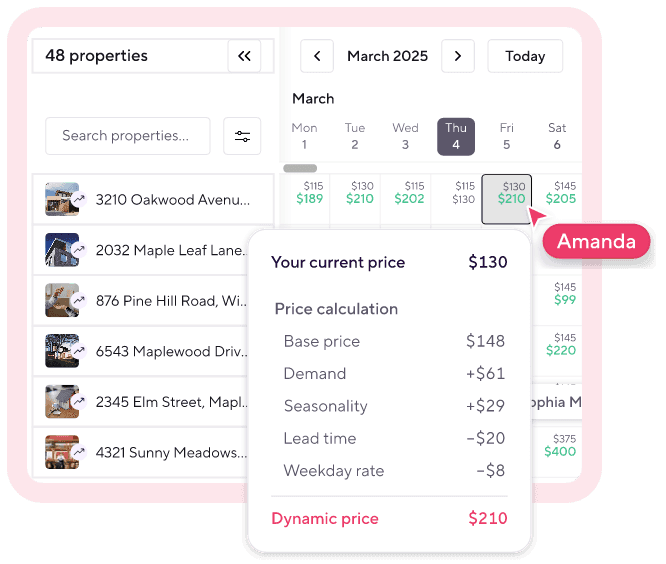
Higher rental income potential. One of the main reasons why property owners choose short- term rentals is profitability. In many markets, short-term rentals can make more money than long-term rentals due to premium pricing during peak seasons, especially in popular tourist destinations. You can earn more with your STR property if you implement dynamic pricing to adjust nightly rates around local demand trends, seasonality, and major events.
If you opt for Hospitable, you’ll be able to take advantage of our built-in Dynamic Pricing tool that is available for users on Host, Professional, and Mogul plans at no extra cost. If you enable the Dynamic Pricing feature for your property, Hospitable will automatically adjust your nightly rates based on the real-time market conditions to help maximize revenue while maintaining healthy occupancy.
Flexibility for owners. With regular breaks between guests, you can use the property for vacations when it’s not rented. You can also block off dates when needed for personal use or family visits without the inconvenience for anyone.
Tax advantages. STR owners can lower their taxable rental income by claiming short-term rental tax deductions, including cleaning costs, utilities, repairs and maintenance, property taxes, and platform and software fees. Keep an eye on personal use, though. If you stay in the property for more than 14 days a year, or more than 10% of the days it’s rented, the IRS treats it as a residence and limits what you can deduct. And if you rent it out for 14 days or fewer in a year, the income is tax-free, but you can’t deduct rental expenses at all.
Short-term rentals also come with a benefit long-term rentals don’t have: the so-called short-term rental tax loophole. If your average guest stay is seven days or less and you materially participate in running the property (for example, you spend at least 100 hours on it a year and more than anyone else does), the IRS doesn’t treat it as a passive rental activity. Losses from depreciation and cost segregation can then offset your W-2 or other ordinary income. Tax rules are complex, so talk to a tax professional before you build a strategy around this.
No tenant rights to deal with. A guest isn’t a tenant. If a guest overstays or breaks the rules, you don’t need to go through a months-long court eviction process. In a long-term rental, a tenant who stops paying can stay in your property for months while the case moves through the system. One caveat: in some states, a guest who stays 30 days or longer can gain tenant rights, so check local law before accepting monthly bookings.
When evaluating short-term rental opportunities, it's also important to consider the potential downsides:
Unpredictable income. Short-term rentals require property owners to constantly find new renters, and income may fluctuate depending on the time of year. If your STR market has seasonal highs and lows, seasonal dips in occupancy can create unstable cash flow. While you can adjust your rates to compensate for seasonality, bookings are not always guaranteed.
Competition. If your short-term rental is in a city center or a popular tourist area, you’ll have lots of opportunities to find guests, but you’ll also have heavy competition. You’ll be competing not only with vacation rental properties but also with hotels.
The good news is that many travelers today prefer short-term rentals to traditional hotels because they offer more space, greater privacy, and home-like amenities. Research similar STR properties in your area and decide what you can offer that they can’t to stand out and attract more guests.
Regulatory risk. Many cities now require permits, cap the number of nights you can rent, or ban non-owner-occupied short-term rentals entirely. Rules can change with a single city council vote, and an STR business plan that worked last year may not work next year. HOAs and condo boards can impose their own restrictions too. Check the rules in your area before you buy or convert a property.
Higher upfront costs. A long-term rental can go on the market empty. A short-term rental needs furniture, a fully stocked kitchen, linens, décor, and professional photos before the first guest arrives. Depending on the size of the property, that can mean $15,000 to $30,000 or more before you earn anything.
Higher operating costs. In a long-term rental, the tenant usually pays for utilities and keeps the place clean. With a short-term rental, it’s all on you: cleaning after every stay, utilities, internet, streaming subscriptions, toiletries and supplies, platform fees, and software. You’ll also need insurance that covers short-term rental use, since standard landlord policies usually don’t, and you’ll replace towels, sheets, and furniture more often because of guest turnover.
Pros and cons of long-term rentals
Long-term rentals have their own set of advantages:
Consistent rental income. Long-term rentals offer stable, predictable income every month with fixed monthly rent (although it is partially limited by lease agreements and by any local rent control laws).
Lower management effort. With fewer turnovers, long-term rentals require less day-to-day oversight. Management duties are typically limited to lease agreements, occasional repairs, and collecting rent.
Tenant investment in the property. Tenants staying for extended periods are more likely to treat the property as their home and take better care of it.
However, there are also some drawbacks to consider:
Less earning potential. Long-term rentals typically bring in less income than short-term rentals, and lease terms limit your ability to adjust rent with changing markets.
Limited control. You can’t inspect or access the property as frequently or carry out improvements. Routine maintenance often depends on tenant communication and cooperation.
Tenant risk. With longer leases, you face challenges of dealing with problematic tenants who can cause property damage, pay late, or require costly evictions.
Short-Term Rental vs. Long-Term Rental Calculator
Let’s go back to the two-bedroom condo from the beginning. The calculator below starts with its numbers and compares one year of each strategy. Move the sliders to match your own property and see where the gap goes.
In the condo example, gross income almost doubles, but net operating income grows by only about a third. OTA fees, utilities, supplies, and replacing the furniture every few years take the rest.
Occupancy decides most of the outcome. The example needs to stay booked more than half the year to beat the lease. Below that, the long-term rental earns more with far less work.
A property manager can flip the result too. In the example, any fee above about 16% of revenue leaves the short-term rental earning less than the long-term one, and full-service managers typically charge 20% to 35%. That’s why most hosts who pick the STR route and want to keep the extra income self-manage with automation software.
Direct bookings and furnishing matter as well. Every booking that comes through your own website instead of an OTA keeps about 12% more of its revenue. And furniture isn’t a one-time purchase. It wears out in about five years, so the calculator counts its replacement as a yearly cost.
Your numbers will depend on your market, so run them for your own property before deciding.

A Third Option: Mid-Term Rentals
You don’t have to choose between a nightly rental and a 12-month lease. Mid-term rentals are furnished stays of one to six months, booked by traveling nurses, people relocating for work, remote workers, and families between homes during a renovation or move.
Mid-term rentals often pay more per month than a long-term lease, with far fewer turnovers than a short-term rental, so you’ll spend less on cleaning and guest communication. Many local STR rules only apply to stays under 30 days, so mid-term rentals can be an option in cities where short-term rentals are restricted. Keep in mind that 30+ day stays can give guests tenant rights in some states.
Some owners also mix strategies: short-term bookings in peak season, mid-term stays during the slow months. That keeps the property earning year-round without the seasonal dips.
Short-Term Rental vs. Long-Term Rental: Which Is Best for You?
| Short-term rental | Mid-term rental | Long-term rental |
Typical stay | Nights to weeks | 1 to 6 months | 12 months or longer |
Income potential | Highest | Medium to high | Lowest |
Income stability | Seasonal | Fairly stable | Most stable |
Upfront costs | High (fully furnished) | High (fully furnished) | Low |
Operating costs | High | Medium | Low |
Time and effort | High without automation | Medium | Low |
Regulations | Strictest | Often exempt from STR rules | Landlord-tenant law |
Tenant rights | None for short stays | May apply after 30 days | Full |
Personal use | Yes, between bookings | Limited | No |
Tax loophole | Possible | No | No |
It depends on your personal situation, financial goals, and preferences. Long-term rentals can be a good option if you are looking for consistent, passive income, less daily work, and fewer ups and downs. Short-term rentals are a great fit if you want higher returns and can commit time to manage them. Although short-term rentals require more oversight, they generate more revenue, which may justify the extra work, especially if you use reliable short-term rental property management software to automate daily tasks. And if neither option fits perfectly, a mid-term rental or a seasonal mix of both can give you some of the best of each.


Table of contents
Short-Term Rental vs Long-Term Rental: Key Differences
Short-Term Rental vs. Long-Term Rental: Pros and Cons
Short-Term Rental vs. Long-Term Rental Calculator
A Third Option: Mid-Term Rentals
Short-Term Rental vs. Long-Term Rental: Which Is Best for You?
Common questions
What is the difference between short-term and long-term rentals?
Short-term rentals are typically furnished properties rented by the night or week, often for stays under 30 days, while long-term rentals generally involve leases lasting six months or longer at a fixed monthly rate. Short-term rentals offer more pricing flexibility and opportunities for personal use but require frequent turnovers and more active management. Long-term rentals typically provide steadier income, lower operating costs, and less day-to-day involvement.
Are short-term rentals more profitable than long-term rentals?
Either strategy can be more profitable, depending on the property, market, and operating costs. Short-term rentals can generate higher gross revenue through premium nightly rates, but furnishing, cleaning, utilities, supplies, platform fees, and property management can substantially reduce net income. Long-term rentals usually earn less gross revenue but have lower expenses and more predictable cash flow. Comparing net operating income rather than gross revenue is essential to determining which strategy offers better returns.
Which is less risky: short-term or long-term rentals?
Neither strategy is risk-free, but their risks differ. Short-term rentals face seasonal demand fluctuations, frequent vacancies, higher operating costs, competition, and changing local regulations. Long-term rentals offer more predictable monthly income but expose owners to late payments, problematic tenants, property damage, and potentially lengthy eviction proceedings. The lower-risk option depends on local market conditions, financial reserves, regulations, and the owner's tolerance for income volatility.
How do you decide between short-term and long-term rentals?
Compare the expected net income, upfront investment, ongoing expenses, management workload, local demand, regulatory restrictions, and income stability of each strategy. Short-term rentals may suit owners seeking higher revenue potential, pricing flexibility, and occasional personal use, while long-term rentals may be preferable for those prioritizing predictable cash flow and minimal involvement. The decision should be based on realistic financial projections for the specific property rather than nightly rates or monthly rent alone.
Are mid-term rentals a good alternative to short-term and long-term rentals?
Yes. Mid-term rentals typically involve furnished stays lasting one to six months, serving traveling professionals, remote workers, relocating families, and other guests needing temporary housing. They can generate more monthly revenue than traditional long-term leases while requiring fewer turnovers than short-term rentals. Some owners also combine strategies, offering short-term stays during peak season and mid-term rentals during slower periods. Local rental regulations and tenant rights still need to be considered.