
Starting an STR Business
How to Start an Airbnb Business: Questions Answered
You are wondering how to be an Airbnb host? Anyone can list an extra room on the Airbnb website, and signing up to become an Airbnb host is fairly simple. Still, there's a number of steps to take and pitfalls to avoid. Don't worry, we'll guide you.

Airbnb is an online marketplace for short-term rentals that lets hosts rent out their private accommodations to travelers as an alternative to hotels. Airbnb rental properties range from single rooms to entire houses and are available in more than 100,000 cities worldwide.
Tourists love Airbnb because it gives them a unique opportunity to live like a local while traveling the world. And with consistent hard work and dedication, running an Airbnb can be profitable for hosts. If you want to make extra money and build a thriving side hustle, listing your space on Airbnb is a good option.
If you’re considering renting out your property on Airbnb, here are tips on how to start an Airbnb business and become a successful host.
If you are in an options-comparing mood, you may also want to check how Airbnb compares to Booking, Vrbo, and long-term renting.
While this blog post is a good starting point, you may want to dive into the details of becoming a successful short-term rental host. Download our free ebook!
Starting an Airbnb Business: Important Things to Consider
Anyone can list a short-term rental property on the Airbnb marketplace, and signing up to become an Airbnb host is pretty simple. If you have a second home, an extra room in your primary residence, or an RV, you can start an Airbnb business. You may also consider buying a residential property and turning it into an Airbnb rental.
How to choose the right property for Airbnb
If you decide to buy a property for Airbnb, it’s important to think strategically and avoid making an emotional decision. Look for a property with high earning potential in popular areas with tourists or business travelers to achieve the best ROI.
Remember that your decision should be based on reliable data, so you should research each location carefully and study local STR market trends. When choosing profitable cities for vacation rental investment, the most critical Airbnb metrics are occupancy rate, average daily rate, monthly rental income, and cash-on-cash return.
Doing your market research and analysis can be challenging, so a smarter approach is to leverage Airbnb analytics tools like AirDNA, Rabbu, Airbtics, and others. They get real-time data directly from Airbnb and other OTA platforms and can help you find the best STR markets and choose the top-performing properties within specific locations and neighborhoods.
Buying a property in a lucrative vacation rental market is an important step. Still, if you want to become a successful host, setting the right business processes is crucial. Short-term rental software like Hospitable can help you automate almost all daily operations and increase efficiency. Hospitable will give you all the tools and features needed to build a thriving Airbnb business.
Check local STR laws and regulations
Before you decide on a location for your Airbnb rental, you should research local short-term rental laws and regulations. Find out what requirements you must meet to operate legally and what taxes you must pay. This step could save you headaches later.
Keep in mind that some cities ban short-term rentals completely, and some locations don’t allow non-owner-occupied short-term rentals. Some cities may restrict your ability to rent out your property short-term to specific zones or limit the number of days you can rent out per year. Many cities and counties require short-term rental property owners to register and obtain licenses and permits.
If you are considering starting an Airbnb business in the US, you may want to check out our blog article covering different aspects of Airbnb regulations by state. You’ll learn about STR laws in some popular locations.
But keep in mind that short-term rental regulations vary from city to city and are constantly changing. So, you should check out local government websites and consult your local lawyer if you have any questions about the steps you need to take to ensure compliance.
Consider your expenses
Listing your rental space on Airbnb is free, but you’ll want to consider any extra costs you might incur as a host. They include Airbnb service fees and ongoing expenses for maintaining your vacation rental home. They include repairs and maintenance costs, professional cleaning services, utilities, subscriptions for WiFi and Netflix, and funds for supplies and goods to restock your space after each stay.
Besides, you should consider how much you’ll need to invest in your property to make it cozy and visually appealing for guests, ensuring a comfortable stay and an enjoyable experience. For example, you may want to buy durable furniture suitable for a rental apartment that adds personality to your space.
Interior décor is also important, and your rental’s aesthetics can greatly impact your income potential. You may want to check out our article to find Airbnb decorating ideas and tips to help you create an inviting space and achieve the “wow” factor.
Make sure you can meet the basic Airbnb host requirements
Airbnb has a few basic requirements and rules that hosts are expected to follow to create comfortable, reliable stays for guests and maintain a high standard of customer service:
Provide the essentials, including toilet paper, soap, linens, and at least one towel and pillow per guest. Tick out all the boxes in our host checklist;
Keep your listing clean and free of health hazards before guests check in;
Accept reservation requests from guests when you’re available and provide a reliable check-in experience;
Avoid cancellations of confirmed reservations unless there are certain valid reasons that you can’t control—Airbnb cancellation policy is stringent;
Ensure timely communication with guests. Respond promptly to your potential guests’ booking requests and inquiries. The slowest response time you can afford is 24 hours. Sometimes, to win a booking, you must send a message within minutes of an inquiry.
How to Start an Airbnb Business: Essential Steps
For hosts, renting out a short-term property is much more lucrative than taking on long-term tenants. But before you even sign up for Airbnb and start creating your listing, you should prepare your house for welcoming guests.
Spruce up your place
Your space may be perfect for you, but it doesn’t mean it's ideal for guests. So declutter your home, consider a proper renovation, review must-have amenities, and deep-clean every room.
If you don’t have a large budget for renovating your home, focus on what your guests would value most after a long day of travel and exploration. Invest in comfortable beds and high-quality bedding, revamp the bathrooms, and modernize the kitchen, replacing outdated appliances with energy-efficient ones.
Here are some tips to cut your long-term costs—following these tips will minimize your maintenance and repair costs. Rest assured—the comfort of your guests will not be jeopardized:
Choose robust, durable materials, fixtures, and fittings that will withstand a constant stream of STR guests.
When painting walls, use high-quality, hard-wearing paint that requires minimal maintenance, and use heavy-duty gloss paint where possible.
Furnishings may be broken and damaged by Airbnb guests, and they are costly to replace. So it makes sense to use only necessary furnishings and remove everything else.
Soft furnishings are subject to spills and stains as well as wear and tear, so it’s better to replace them with hard-wearing PVC or leather alternatives.
Replace carpet with hard flooring where possible because hard floors last a very long time and are easy to clean.
Paint skirting boards with dark, hard-wearing paint—then scuffs and marks will be less visible. You can also use dark-stained wood as an alternative.
Use black grout with any tiling work in the bathroom since it makes any mold buildup invisible and is easy to clean. Then, you won’t need to re-grout tiles often.
Pro tip: There are a few significant differences between an apartment you want to live in and an apartment you want to rent out. And it's not about saving on the quality of amenities. It's about efficiency.
Make your property safe for guests
You should take measures to ensure the safety of your guests. Equip your rental with safety items, including a functioning smoke alarm, a carbon monoxide detector, a fire extinguisher, and a first-aid kit. Provide emergency contact information for the nearest hospital and directions to the emergency exits.
It’s essential to identify potential risks before they turn into accidents. Go through your home to check for possible issues like loose steps, tripping hazards, slippery tubs, broken railings, or exposed wires, and fix everything.
A good idea is to install security cameras around entrances to keep your guests safe and protect your property. Just inform your guests about their location in your listing’s description. And remember that Airbnb's camera policy restricts security cameras that monitor any part of a listing’s interior, regardless of their location.
You may also consider installing noise-monitoring devices to receive alerts when noise exceeds a certain level. That will help you prevent unauthorized parties and avoid neighbor complaints. However, remember that Airbnb doesn’t allow hosts to install noise-monitoring systems in bedrooms, bathrooms, or sleeping areas.
Set up self-check-in
You’ll also need to set up a smooth check-in process. Today, more and more guests are looking for vacation rentals that offer self-check-in, eliminating the need for a host to be on-site when guests arrive.
The simplest solution is to install a lockbox and store the keys to give guests access to your property. But this solution is outdated, and there’s a smarter alternative. So consider installing a smart lock, which you can manage remotely via your smartphone and easily change the code after each guest checks out. Offering self-check-in will save you time and ensure a seamless experience for your guests from the start.

Consider installing smart thermostats to automate temperature control, streamline check-in, save on utility bills, and enhance overall guest comfort. With these smart thermostats, you can adjust the temperature in your Airbnb remotely and ensure guests feel comfortable as soon as they arrive.
You can connect the supported smart locks and smart thermostats to Hospitable, and our STR super app will sync your smart devices with your booking schedule, allowing you to offer your guests a seamless, automated self-check-in and optimize energy consumption.
Our system will automatically create a unique door code for each reservation and share it with your guests via messages. Hospitable will also automatically adjust the temperature settings based on your guest’s reservation status, saving you energy.
It’s important that with Hospitable, the smart device automations are included with the Professional and Mogul subscription plans.
Create an attractive listing
Your Airbnb listing page is your first opportunity to attract potential guests. So, ensuring that your listing accurately reflects what you offer to manage guest expectations is important. Setting the right expectations will help you avoid many problems and increase your chances of getting positive reviews.
Here are some tips on how to set up an Airbnb listing:
Describe your space in detail, emphasizing what makes it unique. Consider the types of guests who will appreciate your rental the most, and craft your description to appeal to your target audience. Try to create a vivid picture of the experience your guests can have if they book your property. Use relevant words and phrases to help the Airbnb algorithm categorize and show your property in appropriate categories.
Provide high-quality images of your whole space. Upload several photos of each room from different angles, along with pictures of the top amenities and focal points, to help guests imagine themselves in your home. If your rental has accessibility features that make it easy for guests to navigate, you should also add photos of each feature to your listing.
List your amenities. Many guests search for popular amenities such as a laptop-friendly workspace, WiFi, pet-friendly space, and free parking, so it’s important to mention any you offer.
Create a list of house rules outlining the dos and don’ts at your vacation rental property and helping your guests understand your hosting style. Clear house rules can also help travelers determine whether your vacation rental is a good fit for them.
Set your pricing strategy
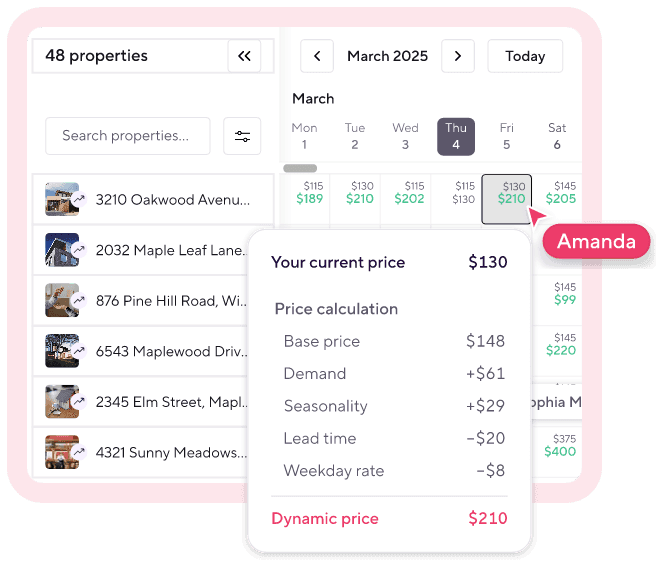
Don’t underestimate the importance and complexity of a good pricing strategy. Your objective is to maximize RevPar (revenue per night). So you must find the balance between charging too low to keep your place occupied constantly and charging a premium when the market allows. The key to finding a competitive price is understanding local demand and the factors that influence it. Luckily, you can automate the whole process instead of becoming a pricing analyst.
Hospitable has a built-in Dynamic Pricing solution, so you won’t have to spend money on third-party dynamic pricing tools. Hospitable’s Dynamic Pricing is included in the Host, Professional, and Mogul subscription plans. If you enable this feature for your Airbnb property, Hospitable will automatically adjust your nightly rates in real time to maximize your revenue and optimize your occupancy.
Manage Your Airbnb Efficiently
Getting started in the Airbnb business is pretty straightforward. Managing guests is the real trick. Providing excellent customer service is the backbone of any successful business, and being an Airbnb host is no different. Here are some tips for running a successful Airbnb property.
Hire professional cleaners
Keep your rental space clean and guest-ready at all times. Cleanliness is the top priority for Airbnb guests, so you should always go above and beyond with your cleaning standards. And since vacation rental cleaning is very time-consuming, it’s better to delegate this task to professionals and hire cleaning services. Provide your cleaners with a comprehensive cleaning checklist to follow at each turnover, ensuring your vacation rental is always sparkling clean for the next guest.
When hiring cleaners, look for cleaning services that specialize in vacation rentals. They understand the unique demands of short-term stays and can do the job efficiently to ensure quick turnovers. It’s best to find cleaners who operate within a reasonable distance of your property and can adapt to your needs for last-minute bookings.
Finding reliable cleaners will be easier if you automate the process with Hospitable’s Marketplace Cleanings. Our system will automatically create cleaning tasks for every turnover and find a reliable cleaner. Watch the interactive demo to see the feature in action.
Ensure perfect communication with your guests
Be polite to your guests and respond quickly to their inquiries. Remember that first impressions count, so keep the tone friendly yet professional and efficient. Be available to answer your guests’ questions 24/7 and proactively communicate with them via messages throughout their journey. This way, you’ll be able to provide them with the necessary information at the right time and make them feel special and cared for.
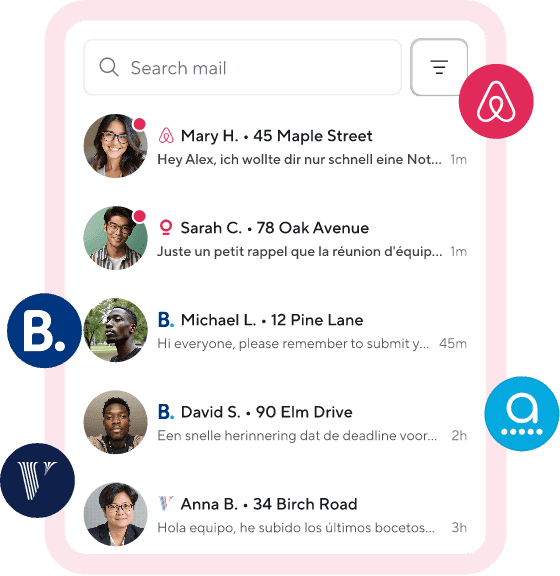
Guest communication requires round-the-clock attention from hosts, but you don’t have to type and send each message to your guests manually. Hospitable comes with AI-powered automation tools and can help you put guest messages on autopilot.
You can use Hospitable’s AI tools available in your Inbox to quickly generate detailed, context-aware responses for unusual guest questions or correct the messages that you’ve drafted and improve their clarity and tone.
You can help the AI generate better messages by uploading your guidebooks to the Knowledge Hub, and the AI will use relevant bits of information when crafting draft responses.
You can even opt for a fully automated AI Inbox and let the AI reply to guests’ messages automatically without your review.
Hospitable uses AI to automatically scan guest messages for mentions of issues such as noise, broken locks, or leaks, and our system will alert you when help is needed by highlighting the conversation in your Inbox.

Ensure that the property is in top condition
Perform routine property maintenance to keep your rental space in great shape. It can help prevent many serious issues. Fix all problems ASAP: if a guest reports a leaky tap, you should fix it immediately, apologize to the guest, and show empathy.
If you decide to take on multiple properties, build a team that includes plumbers, electricians, cleaners, and laundry services. Ensure you have the necessary processes and tools to manage your team.
Update your calendar
Regularly update your booking calendar to help potential guests determine when your rental property is available. Block dates when you aren’t hosting and set the minimum and maximum number of nights guests can stay. That can help you prevent unnecessary cancellations.
As soon as you extend your sales beyond Airbnb, calendar sync becomes uber-important. You definitely will want to avoid double bookings.
Create a direct booking website
If you provide a memorable guest experience, you’ll be rewarded with positive reviews, higher placement in search rankings, and more bookings on the Airbnb platform. But limiting yourself to a single booking channel means restricting your potential.
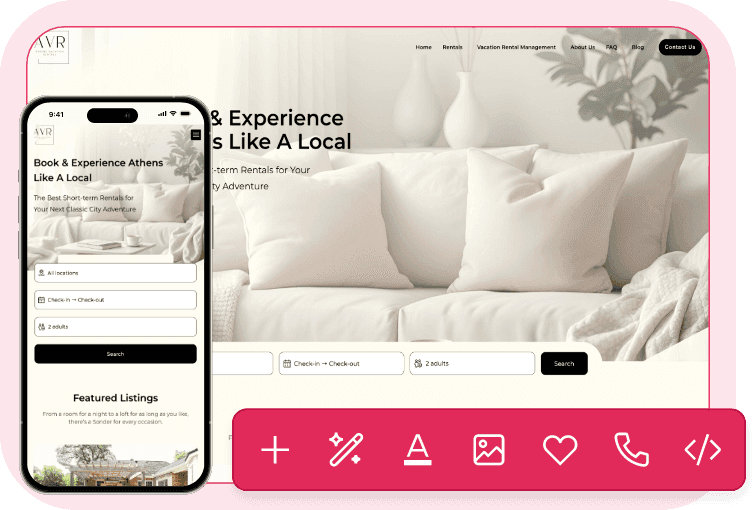
If you want to maximize your revenue and have greater control over how you build your brand and market your properties, you should create a direct booking website. It will save on OTA fees, foster good relationships with your guests, build customer loyalty, and drive repeat direct bookings. As a result, you’ll be able to generate higher profits.
If you opt for Hospitable, you can take advantage of our dedicated service, Hospitable Direct, and build a direct booking website without any technical skills. Additionally, your properties will get listed on Google Vacation Rentals.
Keep your books in order
You need to accurately record your income and expenses related to running your Airbnb properties to comply with tax laws, claim eligible deductions to reduce your taxable income, and make informed business decisions. You should establish solid bookkeeping and accounting practices to keep your finances in order and ensure accurate financial reporting.
Vacation rental bookkeeping isn’t always straightforward, and keeping track of your income and expenses on a spreadsheet can be time-consuming and prone to error, so you’re sure to benefit from using accounting software like QuickBooks. This popular accounting platform provides a comprehensive suite of tools and features to manage your finances and track your transactions, and it’s easy to use.
Consider additional revenue streams
Upselling unique extra services and hotel-level amenities to your guests is a great way to enhance the guest experience and increase revenue per booking. You can offer your guests valuable add-ons such as early check-in/late check-out, local experiences, gourmet food baskets, bike or scooter rentals, or pet-friendly packages.
Implementing upselling is easy with Hospitable—you can offer paid upsells to your guests in their Guest Portals without sounding too pushy. Just create a catalog of your offerings and send your guests the link to their guest portal—our system creates it automatically for each booking. If your guests purchase any available upsells, Hospitable will handle payments, payouts, and taxes.
You can think of upselling services your team can provide, such as kayak or bike rentals, or you can leverage Hospitable’s integration partners to offer trip insurance or private chef services.
Conclusion
Becoming an Airbnb host can be a great option if you need additional income or want to turn it into a full-time business. There are minimal startup costs, and much of the setup and marketing is handled for you on the platform.
We’ve provided tips on starting an Airbnb business, but becoming a successful Airbnb host is not just about landing a booking. It’s about providing your guests with the best experience.


Table of contents
How to choose the right property for Airbnb
Check local STR laws and regulations
Consider your expenses
Make sure you can meet the basic Airbnb host requirements
Spruce up your place
Make your property safe for guests
Set up self-check-in
Create an attractive listing
Set your pricing strategy
Hire professional cleaners
Ensure perfect communication with your guests
Ensure that the property is in top condition
Update your calendar
Create a direct booking website
Keep your books in order
Consider additional revenue streams
Common questions
How much money do you need to start an Airbnb business?
The startup costs for an Airbnb business vary depending on your strategy. If you already own a property, you may only need $2,000 to $5,000 for high-quality furniture, professional photography, and initial supplies. If you are pursuing rental arbitrage (leasing a property to sub-rent it), you will likely need $5,000 to $10,000 to cover the first month’s rent, security deposit, and furnishing. Regardless of your budget, investing in automation software early on is a low-cost way to prevent expensive operational mistakes.
Do I need to own property to start an Airbnb business?
No, you do not need to be a homeowner to start an Airbnb business. Many successful hosts use "rental arbitrage," in which they secure the landlord's permission to sign a long-term lease on a property and then list it as a short-term rental. Alternatively, you can start a co-hosting business, managing the daily operations and guest communication for other property owners in exchange for a percentage of the revenue. Both methods allow you to scale a portfolio without the capital required for a mortgage.
Is an Airbnb business still profitable in 2026?
Yes, but the market has matured, meaning profitability now depends on professionalization and efficiency. While the "gold rush" era of simply listing a spare room has passed, hosts who offer unique stays and high-level guest experiences continue to see strong returns. To remain profitable in 2026, hosts must focus on optimizing their nightly rates and reducing overhead costs by using automation tools like Hospitable to handle the heavy lifting of guest management.
How do I manage an Airbnb if I have a full-time job?
Managing an Airbnb while working a 9-to-5 is entirely possible through "management by exception." By using automation software, you can handle 90% of guest inquiries, check-in instructions, and cleaner scheduling automatically. This ensures that you only need to step in personally for rare, high-level issues. With a "tech-first" setup, your business can run in the background while you are at work, providing a scalable source of passive income.
Can I automate my entire Airbnb business from day one?
Yes, and starting with automation from day one is highly recommended to prevent burnout. From your very first booking, you can use Hospitable to automate guest vetting, messaging, and check-in details. You can also sync your calendar with cleaning teams so they are notified of new bookings instantly. Implementing these systems early allows you to build a professionalized business structure that is ready to scale the moment you decide to add a second or third property.