
Starting an STR Business
Beginner's Guides
LLC for Vacation Rentals: Do You Need One for Your STR Property?
Learn about the advantages of this business structure and what steps you need to take to set it up for your short-term rental property.

A guest trips on your porch steps, breaks an ankle, and sues. Without an LLC, everything you own is on the table — your house, your savings, your other properties. With one, only the LLC's assets are at risk. That's the core reason most vacation rental hosts form an LLC, and for a business where strangers sleep in your property every week, it's worth understanding whether it makes sense for you.
If you’re an STR host weighing your options for forming an LLC, this article provides general information about starting an LLC for a vacation rental in the US. We’ll discuss what an LLC is, benefits of creating one for your rental property, and how to set it up.
Operating a Vacation Rental Is a Business
Whether you rent out your vacation home occasionally or manage multiple short-term rental listings, you’re engaging in commercial activity. In the eyes of local governments and the IRS, it is a business.
As a business, operating a vacation rental is subject to different STR regulations that vary from city to city, and you may need to obtain certain short-term rental licenses and permits. And with that come responsibilities like taxes, liability, and compliance.
Running vacation rentals also means juggling many operational tasks, such as guest communication, turnover cleaning coordination, pricing optimization, calendar and booking management, and more. However, short-term rental property management software like Hospitable can help you automate 90% of routine hosting tasks and free up more time to focus on strategy and growing your business.
Many vacation rental hosts begin informally, treating hosting as a side hustle to get extra income. Still, later, as their business grows, they realize the need for a legal structure that reflects their income-generating activity. This is where an LLC for vacation rentals comes in.
Is an LLC Right for Your Vacation Rental Business?
A limited liability company (LLC) is a popular business structure that protects the assets of its owners or members from lawsuits and creditors concerned with the company's business debts. It creates a legal boundary between you as an individual and the business itself, separating your personal assets from your business operations.
An LLC combines the advantages of a corporation with the simplicity and tax flexibility of a sole proprietorship or partnership. It strikes the right balance by offering liability protection without the hassle of complex business management.
That’s why starting an LLC can be a good option if you are earning consistent rental income and are concerned about protecting your personal assets. Forming an LLC also makes sense if you are managing multiple rentals and want to add more properties to your portfolio. Consider forming an LLC if you want to create a brand or attract co-hosts and partners.
Let’s take a look at the main benefits vacation rental hosts may expect from forming an LLC.
Liability protection
An LLC limits the owners’ personal liability for their company’s financial obligations. By holding your vacation rental under an LLC, you protect your personal assets from any legal claims that your business may incur. If an accident occurs on your property and a guest sues, only the LLC’s assets are at risk, and not your home, personal savings, other properties, or investments.
Tax benefits
LLCs offer flexible options when it comes to filing your taxes. Depending on your situation, you can choose to be taxed as a sole proprietor, partnership, C corporation, or S corporation. You can choose the structure that best suits your business needs.
If you form an LLC, profits pass through to your personal return by default, which allows you to avoid double taxation. But you have options to change your tax classification as you grow to minimize your tax burden. For example, high-earning hosts may choose S Corp status to reduce self-employment taxes by splitting income between their salary and distributions.
Just remember that tax laws are complex, and always consult a CPA or tax attorney before you choose a new tax status.
Professional image and credibility
LLCs can lend a sense of legitimacy and professionalism to your vacation rental business. It signals that your rentals are managed responsibly and with legal protections in place. Operating your vacation rentals through an LLC helps you win guest trust with a professional business name, access better financing options, or form valuable partnerships as you grow.
Forming an LLC can also help build your vacation rental brand and stand out among the competition on OTA platforms. The professional touch can make all the difference in today's competitive market, making it easier to market your vacation rentals.
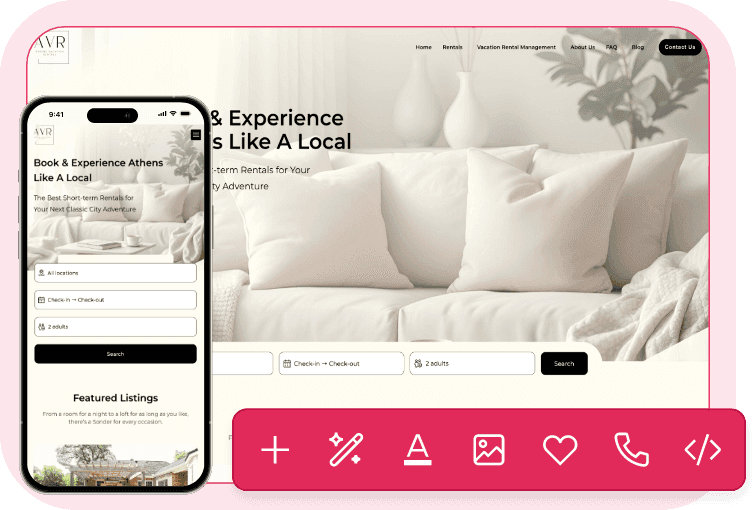
After forming an LLC for your vacation rentals, the next logical step can be launching your own direct booking website. It will help you gain control over guest relationships, increase your profits, save on OTA commissions, and build a truly sustainable business.
You don’t need any technical skills to build a direct booking website if you use property management automation software like Hospitable. With Hospitable Direct, you can create a modern, mobile-friendly direct booking website that showcases your properties in minutes.
How Do You Form an LLC for a Vacation Rental?
The process of setting up an LLC for vacation rentals follows the same basic steps in every state, although specific requirements, fees, and timelines differ.
Choose the right name for your LLC. Pick a unique name that reflects your business and complies with your state’s naming rules. It should be easy to spell and must include “LLC” or “Limited Liability Company” (it’s required by law).
Choose your registered agent. It’s a point of contact for all legal matters required in all 50 states. This can be you, someone you trust, or a third-party service. The registered agent will receive legal paperwork and tax notices on your LLC’s behalf.
File the Articles of Organization and pay associated fees. The Articles of Organization are a legal document that officially registers your LLC with the state. It outlines your vacation rental business registration details, including its name, address, ownership, and management structure. You can submit your Articles of Organization through your state’s official business registration website.
Create an operating agreement. This document outlines the rules and regulations for your LLC, including who owns it, how decisions are made, how profits and losses are distributed, and what happens if a member wants to leave the LLC.
Get an EIN (Employer Identification Number) and register for taxes. The IRS requires any entity to secure an EIN for tax purposes. You can apply for an EIN online through the IRS website. Even if you don’t have employees, an EIN is necessary for filing business taxes, opening a bank account, and hiring contractors.
Set up a business bank account. You need to open a separate business bank account for your LLC and use it for all business-related transactions to keep your income and expenses organized. All booking income, owner payouts, and business expenses should flow through this account, not through personal accounts. This helps with tax reporting and allows you to maintain your LLC’s liability shield.
Final Thought
LLCs are most useful for vacation rental hosts managing multiple properties. By formalizing your business structure, you’ll get a powerful tool for protecting your assets and reducing personal liability. Starting an LLC for vacation rentals can take some time and requires monetary investment and paperwork, but by taking this step, you can create a solid foundation for long-term success.
Hospitable does not provide legal, tax, or accounting advice. This article is for informational purposes only and should not be relied on as legal guidance for forming an LLC or structuring your vacation rental business. Laws and requirements vary by state, and your situation may involve factors not covered here. Consult a licensed attorney or tax professional before making decisions about your business structure.



Table of contents
Operating a Vacation Rental Is a Business
Liability protection
Tax benefits
Professional image and credibility
How Do You Form an LLC for a Vacation Rental?
Common questions
Do you need an LLC for a vacation rental?
You are not generally required to form an LLC to operate a vacation rental, but it can be a sensible choice if you earn consistent rental income, manage multiple properties, plan to expand, or want to protect your personal assets. An LLC creates a legal separation between you and the business, which can reduce your personal exposure if the rental faces a lawsuit or business debt.
What are the benefits of an LLC for vacation rental owners?
The main benefit is liability protection. If a guest is injured and sues the business, an LLC can help keep personal assets such as your home, savings, investments, and other properties separate from the claim. An LLC can also provide tax flexibility, improve your professional credibility, make it easier to build a brand, and support future partnerships or financing.
Can an LLC reduce taxes on vacation rental income?
Potentially, but it depends on your situation and tax classification. By default, LLC profits usually pass through to the owner’s personal tax return, which avoids corporate double taxation. As the business grows, an LLC may elect a different tax treatment, such as S corporation status, which may help some high-earning hosts reduce self-employment taxes. Because the rules are complex, consult a CPA or tax attorney before changing your tax status.
How do you form an LLC for a vacation rental?
The basic process is to choose a compliant business name, appoint a registered agent, file Articles of Organization with your state, create an operating agreement, obtain an EIN, register for applicable taxes, and open a separate business bank account. Requirements, fees, and timelines vary by state, so you should check your state’s official rules and seek professional legal or tax advice where needed.