OTAs
Property Management
Airbnb Inventory Management: Tips for Hosts
Learn how to manage inventory efficiently to ensure that your rental is always fully stocked and guest-ready.

As a host, one of your responsibilities is ensuring that your Airbnb rental is fully stocked with everything that your guests need for a comfortable stay. Most guests are unlikely to compliment you on having such basic Airbnb supplies as toilet paper, coffee, dish soap, or clean towels. But if any of these essential items are missing, your guest will be disappointed and will mention it in their review.
Poor Airbnb inventory management can quickly turn great stays into negative experiences, which can cost you rankings and repeat bookings. So in this blog, we’ll provide you with top tips on how to stock and manage your Airbnb inventory effectively.
Airbnb Inventory Management: Best Practices
Inventory management in vacation rental properties involves tracking, maintaining, and replenishing all supplies, amenities, furnishings, and consumables. This includes such items as toiletries, cleaning supplies, kitchen essentials, bedding, towels, light bulbs, batteries, and welcome gifts.
Tracking your Airbnb inventory ensures all items are in place and everything guests expect is present and functional. But effective Airbnb inventory management isn’t just about guest comfort. It’s essential to ensure turnovers go smoothly and quickly, and to avoid over-purchasing that ties up cash and clutters storage.
Get organized
Not all Airbnb inventory should be handled the same way, so you should group your items into clear categories.
Consumables are items that guests use up and expect to be fully stocked during every stay. This category includes toilet paper, hand and body soap, shampoo, trash bags, coffee, and similar basics. These items need a defined par level (the minimum quantity of a supply you want available at all times) and require frequent checks.
Durables are items that last across many stays, such as hangers, kitchen tools, small appliances, and decor. You should inspect them regularly (monthly or quarterly) and replace them only when they are damaged or missing.
Linens and textiles deserve a specific category because they depend on your turnover schedule and laundry cycle. Towels and bed sheets wear out faster, so they require extra backup sets.
For each category, decide how often to check it, and establish par levels and reorder points (minimum stock thresholds so you can reorder supplies before they run out). This will help you avoid running out of essential items without tying up cash or storage space in excess supplies.
Using par levels and reorder thresholds together is considered an Airbnb inventory best practice because it helps keep operations predictable and easy to scale as you add more properties to your portfolio.
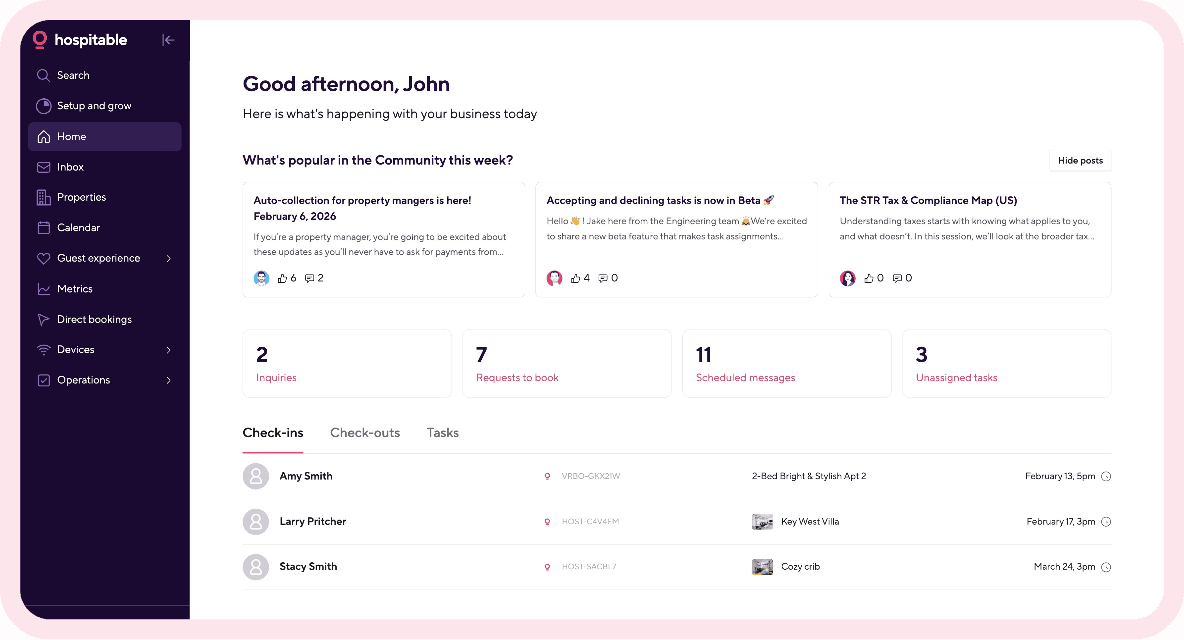
You’ll be able to scale faster if you improve your operational efficiency using a robust Airbnb PMS like Hospitable. Our STR super app allows you to automate almost all repetitive tasks and have more time to focus on Airbnb strategy and grow a successful business.
Build the baseline inventory list for your Airbnb property
Categories tell you how often to check and restock each item. The checklist itself works better by room, because that’s how your cleaners move through the property. Create a master checklist and break it into room-by-room sections for easy scanning and editing. Include sections for kitchen, bathroom, bedroom, living areas, and cleaning supplies. Add items that should be present so nothing gets overlooked.
Then, it makes sense to separate your list into minimum viable essentials and nice-to-haves. Essentials are items that will immediately frustrate guests if they are missing, while nice-to-haves improve the guest experience but will not ruin a stay if they run out.
A comprehensive rental inventory checklist will help you ensure that your property is fully equipped to meet the needs of your guests. You can also provide this checklist to your cleaners. This gives them clear guidance on what should be in each room so they can verify items during turnover.
Linen management
Ensure you have an ample supply of bed sheets, pillowcases, towels, and other necessary linens. A good rule is to keep at least 3 full sheet sets per bed (one in use, one in laundry, one clean and ready). You should also keep a towel par level that matches your average length of stay and turnover frequency.
Spare sets are especially useful for vacation rental properties with high turnover or back-to-back bookings because they help prevent laundry bottlenecks and rushed turnovers. It’s also important to use mattress and pillow protectors—they help extend the life of your linens so you can avoid constant replacements from stains or wear.
Set up storage
Dedicate a locked closet for backup supplies to make emergency turnovers and same-day bookings easier to manage. If you have inventory on-site, your cleaners will be able to replenish it immediately rather than wait for deliveries.
Organize your primary storage by kits and by room—this makes restocking fast for you and your cleaning team. Think in terms of a bathroom kit, laundry kit, kitchen kit, and a simple welcome kit.
Use a simple 2-bin or backup-behind system for high-use consumables, such as toilet paper, trash bags, and paper towels. Keep one bin active and the second as a reserve. When the reserve bin is opened, that is your signal to reorder the items.
It also helps to keep a small spares box on hand. Stock it with such items as batteries, spare light bulbs, and extra cables. Although these items may not need constant replacement, it is still smart to keep extras available.
Track missing and damaged items
Inventory tracking also protects you when something disappears or breaks. Guests occasionally walk away with towels, chargers, or a bottle opener, and sometimes a kettle or a lamp doesn’t survive the stay. If your cleaners check items against the list during every turnover, you’ll know right away what’s missing and after which stay it happened.
That matters because both time and evidence are limited. On Airbnb, you must request reimbursement from the guest through the Resolution Center within 14 days of checkout; if the guest doesn’t pay, you can escalate the request to AirCover for Hosts. Either way, you’ll need proof: photos of the item before and after the stay, and receipts or links showing what it costs to replace. An up-to-date inventory list with photos gives you exactly that, so ask your cleaners to report damage with photos before the next guest checks in.
Airbnb Inventory Management Software
Even one missing item can damage an otherwise perfect stay and result in a poor review. That’s why you should track inventory regularly to monitor stock levels, identify frequently used items, and keep your property well stocked. There are Airbnb inventory management software tools that can help, and most of them work the same way. You set up item lists and checklists, and then your cleaners tick them off during turnovers.
Hospitable works differently. It lets you simplify inventory tracking and ensure guests have everything for a pleasant stay, without needing third-party tools. At the time of writing, Hospitable is the only PMS that offers a built-in Inventory Management solution. It allows you to monitor property supplies through reports submitted by cleaners while they are completing assigned jobs at your property.
You don’t need to add a checklist or build a catalog first. Your inventory sections start populating when your cleaner submits their first supply report. During a turnover, cleaners describe what’s running low by voice or text in the Tasks App, and Hospitable identifies consumables and their stock statuses.
You can review this information in the Inventory to see which supplies need attention. Cleaners can also offer to purchase and bring missing supplies on their next visit. You approve their first restock offer before they buy anything, and set approval rules and spending limits for the ones that follow.
Once a cleaner uploads the receipt through the Tasks App, Hospitable matches the purchase to the requested supplies and shows you the details, including tax and discounts, so you know exactly what you’re reimbursing. You can then reimburse eligible purchases right through Hospitable or record a payment made outside the platform.
Hospitable can help you automate Airbnb inventory management. You’ll be able to track supplies, coordinate restocking, and manage receipts in one place without any extra admin.
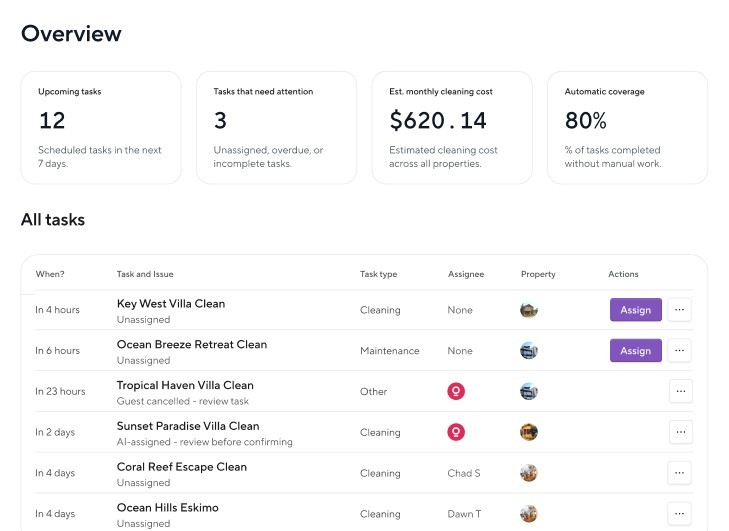


Table of contents
Common questions
What is Airbnb inventory management?
Airbnb inventory management is the process of tracking, maintaining, and replenishing supplies, amenities, furnishings, and consumables to keep a vacation rental guest-ready. It covers everything from toiletries and cleaning products to bedding, kitchen equipment, and replacement items. Effective inventory management helps prevent shortages, streamline turnovers, control purchasing costs, and maintain guest satisfaction.
How do you organize inventory for an Airbnb property?
Divide inventory into three categories: consumables that require frequent restocking, durable items that need periodic inspection, and linens that depend on turnover and laundry schedules. Create room-by-room checklists, establish minimum stock levels and reorder points, and organize backup supplies in a dedicated storage area. For bedding, a practical rule is to keep at least three complete sheet sets per bed: one in use, one in laundry, and one ready for the next guest.
What are par levels in vacation rental inventory management?
Par levels are the minimum quantities of supplies that should always be available at a vacation rental property. They help hosts maintain sufficient stock of frequently used consumables, such as toilet paper, toiletries, and cleaning supplies. Combined with reorder points, par levels help prevent shortages while avoiding unnecessary purchases and excessive storage.
Is there software for Airbnb inventory management?
Yes. Airbnb inventory management software helps hosts track supplies, identify shortages, and coordinate restocking between stays. Many tools rely on predefined inventory lists and checklists completed by cleaners. Hospitable offers built-in Inventory Management that works differently: cleaners report low supplies through the Tasks App, and the system automatically identifies items and their stock statuses without requiring hosts to create an inventory catalog beforehand.
How can you automate Airbnb inventory management?
Hospitable automates Airbnb inventory management by allowing cleaners to report low supplies through voice or text during turnover tasks. The system identifies items that need restocking, lets cleaners submit purchase offers, and allows hosts to approve purchases or establish spending limits. Cleaners can upload receipts through the Tasks App, while hosts can review expenses, track reimbursements, and manage restocking directly within Hospitable without separate inventory software.