Property Management
Property Management Trust Accounting in the US
Property management trust accounting isn’t just a legal requirement; it protects your business and helps build trust. Find out how to make it more manageable.

Running a short-term rental property management business means keeping books around money that mostly belongs to other people. Guest payments belong to owners, security deposits belong to guests, and only the short-term rental management fees are truly yours after you've properly earned and separated them.
When those funds land in a single bank account, the risk of unintentional commingling increases, also creating legal and cash flow risks. This is where trust accounting comes in. This financial framework serves as the backbone of keeping rental funds organized. It tracks every dollar to its rightful owner and creates a clear audit trail that protects owners, managers, and guests alike.
In this guide, we explain what property management trust accounting is, why property managers should care about it, and what tools make it manageable at scale.
What Is Property Management Trust Accounting and Why You Can’t Ignore It
At its core, trust accounting is a system for managing money that you hold on behalf of others. In short-term rentals, this means guest payments, refundable security deposits, cleaning fees, lodging taxes collected, and maintenance reserves contributed by property owners.
The principle is simple: you must keep owner money and your operating funds separate. In practice, this means creating dedicated bank accounts to hold money that doesn’t belong to you until you distribute it to property owners or return it to guests. It also requires maintaining accurate, auditable records of every transaction and clear reporting that shows property owners exactly what happened with their funds.
When you’re managing other people’s money, it’s a serious responsibility, and every dollar needs to be traceable—where it came from, who it belongs to, and how it was used. Trust accounting helps you keep those records organized and transparent, and it’s good business practice that lets you prove to clients that their funds are safe, secure, and handled responsibly. It’s a legal requirement for licensed vacation rental property managers in many states, including North Carolina, Hawaii, and Oregon, although specific rules vary by jurisdiction.
Another reason to implement proper trust accounting is that without fund separation, you can’t know how much money is actually yours. If owner funds are in the same account as your operating funds, your bank balance looks healthier than reality. Trust accounting allows you to know your actual cash position, plan for seasonal downturns, and make informed financial decisions.
When done right, property management trust accounting builds trust and transparency with your clients and supports your business's long-term success. You’ll be able to grow your business faster if you improve your operational efficiency using short-term rental property management software like Hospitable. Our STR super app includes the tools property managers would otherwise need several third-party integrations for.
Vacation Rental Trust Accounting: Key Principles
Many US states classify vacation rental property managers as fiduciaries, which are similar to real estate brokers or escrow agents. As a fiduciary, you have a duty to safeguard client funds and never treat them as your own. While requirements for vacation rental trust accounting vary, some key principles apply almost everywhere.
The core rule is fund segregation. Most states require property managers to hold client funds in a dedicated trust account until properly disbursed or earned, separate from their operating funds, to protect client funds from misuse. Commingling the two is treated as a serious violation in most states. Even in jurisdictions where a trust account is not legally required, segregating client funds is standard professional practice. Failing to do so can expose you to legal liabilities.
Individual ledgers. Every property owner (and, where your state asks, each property or guest) requires their own ledger within the trust account to track all transactions for them. It shows every dollar received, spent, or transferred, helping you identify when the transaction occurred, who sent or received the money, and what the transaction was for.
Accurate record keeping. Maintain detailed, accurate records of all financial transactions that property owners can review at any time. Properly document every deposit, withdrawal, and disbursement to provide a clear audit trail. Keep records as long as your state requires, and produce them on request. Retention periods vary by state; for example, three years in Hawaii and six years in Oregon.
Timely deposits. You are required to place client funds into your trust account within the period required by state law, often within a few business days after receipt. For example, Hawaii requires trust funds to be deposited by the next business day, and North Carolina within three banking days of receipt. Missing these deadlines can cause compliance issues.
Regular three-way reconciliation. Perform it at least monthly to verify that these three numbers agree exactly: the trust bank balance (adjusted for deposits in transit and payouts not yet cleared), your book balance for that trust account, and the sum of all individual owner and property ledgers. If they don’t match, money is misallocated somewhere. That’s a compliance failure, and even a small mistake can put your license at risk. If there are discrepancies, investigate and resolve them immediately.
Timely reporting and disbursements. Ensure timely payments to property owners (along with owner statements that report the period) according to the schedules specified in your vacation rental property management agreements.
In the US, trust accounting is regulated state by state and depends on state real estate commission rules. Trust rules mostly come from real estate licensing. In many states, renting or managing property for others for a fee is considered broker activity, and licensing rules require a trust account and specify how it is run.
Short-term rental management is where states differ most, so STR operators should confirm the specific rules that apply to their license and jurisdiction.
Some states have a separate vacation rental license with its own escrow rules. For example, in Tennessee, a Vacation Lodging Service (VLS) firm license is required for anyone managing and renting homes owned by others to travelers staying for 14 days or less. A VLS must keep an escrow or trustee account for funds relating to vacation lodging services, and show proof of it when applying for the firm license and at each renewal.
Some states regulate vacation rental money in their own act. In North Carolina, trust accounting for vacation rentals is strictly regulated by the North Carolina Real Estate Commission (NCREC) and governed under the state's Vacation Rental Act. In South Carolina, property managers and real estate brokers managing vacation rentals for other people are required to use a dedicated trust account in accordance with state real estate licensing and the South Carolina Vacation Rental Act.
Some states have exceptions to the trust accounting laws for short-term property managers. Yet, there are very good reasons to implement trust accounting even if it is not legally required. Trust accounting protects your business and is considered an industry best practice. In fact, the Vacation Rental Management Association (VRMA) Accreditation Standards require professional short-term rental operators to maintain a segregated trust/escrow account separate from their operating account to ensure that client funds are never at risk.
Trust Accounting Software: What to Look For
Managing trust accounts manually on spreadsheets is time-consuming and risky, as manual data entry leads to errors. And as your portfolio grows, maintaining a three-way reconciliation becomes a massive headache. However, the right property management software simplifies vacation rental trust accounting, making it more manageable so that you can stay compliant with less stress.
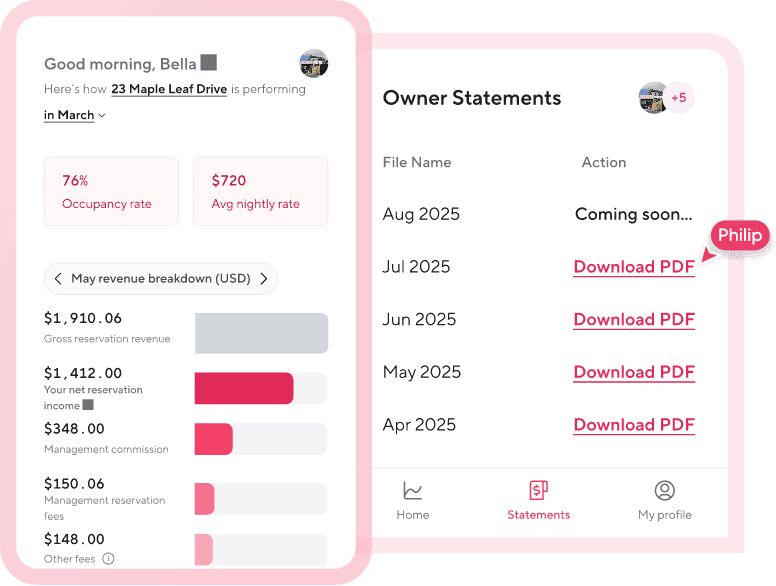
For example, Hospitable comes with features that support trust accounting workflows and help property managers stay compliant. Hospitable allows property managers to track income and expenses efficiently and offers the most complete Owner Relations stack. It includes Owner Portal, Agreements, Protection, Owner Statements, Payments, and Payouts.
Property managers in the United States who operate a trust account to keep owner funds separate from operating funds can also use Hospitable Trust Accounting to keep their trust account reconciled and transparent.
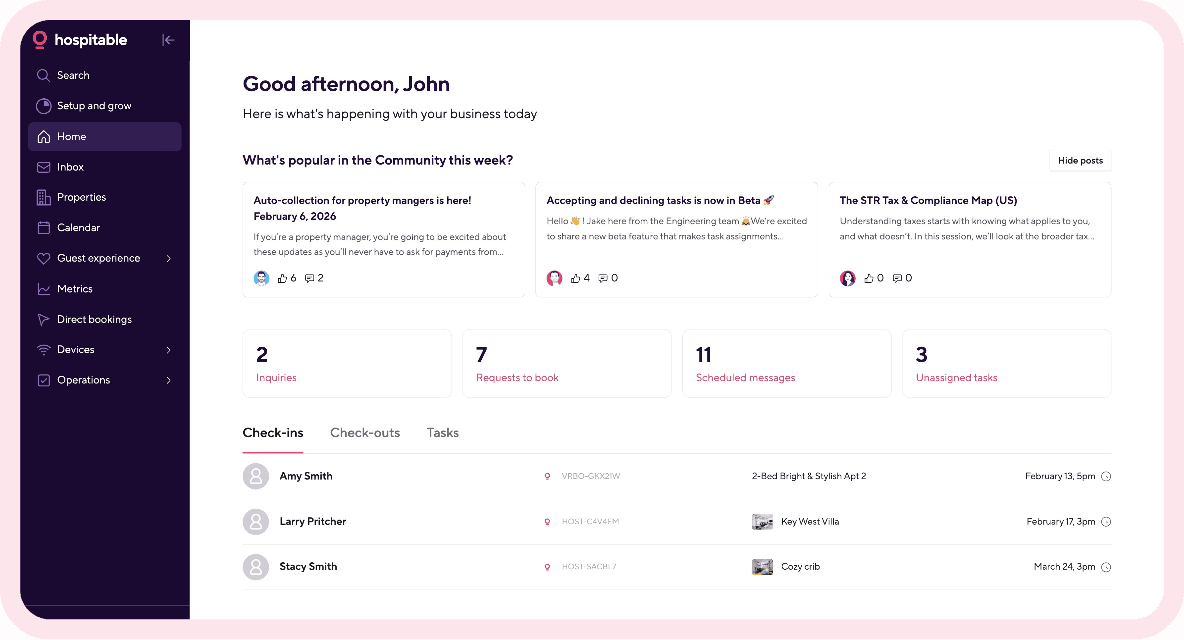
Hospitable Trust Accounting makes it easy to sync your trust account bank feed automatically, reconcile transactions, manage separate owner and property ledgers, and generate reports that update as you reconcile. When you set up Hospitable Trust Accounting, rules such as record retention, deposit deadlines, and report formats are set for your location.
With Hospitable, you get property management automation, owner reporting tools, and trust accounting software in one platform. Hospitable Trust Accounting connects directly to your bank, suggests matches between your bank transactions and the owner statements you already published, lets you close the month with a permanent record, and keeps your ledgers and reports audit-ready. There’s no exporting data into a separate tool—you get everything your trust account records need in one place.
Disclaimer. This article is for general information only and isn’t legal or accounting advice. Trust accounting rules vary by state and change over time, so check the current rules with your state’s real estate commission and consult a qualified attorney or accountant.



Table of contents
Common questions
What is property management trust accounting?
Property management trust accounting is a system for managing money held on behalf of property owners and guests. It involves keeping client funds separate from a property management company's operating money, tracking transactions in individual ledgers, and maintaining accurate financial records. Trust accounting ensures that every payment, expense, and disbursement can be traced to its rightful owner, protecting client funds and providing a clear audit trail.
Is trust accounting required for property managers in the US?
Trust accounting is legally required for property managers in many US states, but the rules vary by jurisdiction, licensing requirements, and type of rental activity. States such as North Carolina, Hawaii, and Oregon regulate how client funds are handled, while some states exempt certain short-term rental operators. Even where trust accounting is not mandatory, keeping client funds separate from business operating money is considered a professional best practice.
What types of funds must property managers keep in trust accounts?
Depending on state law, property managers may need to hold rental payments collected on behalf of owners, refundable guest security deposits, cleaning fees, lodging taxes collected, and owner-funded maintenance reserves in trust accounts. These funds must remain separate from the manager's operating money until they are properly disbursed, returned, or earned under the management agreement. The exact requirements depend on the applicable state regulations.
How can property management software simplify trust accounting?
Property management software can simplify trust accounting by automating transaction tracking, bank reconciliation, owner ledger management, and financial reporting. Hospitable Trust Accounting connects directly to a property's trust bank account, suggests matches between bank transactions and published owner statements, and maintains separate owner and property ledgers. It also supports three-way reconciliation, applies location-specific compliance settings, and generates audit-ready reports, reducing manual bookkeeping and helping property managers maintain accurate financial records as their portfolios grow.