OTAs
Property Management
Short-Term Rental Marketing Strategies That Work Best for Hosts
Сheck out our STR marketing tips that can help you make your property stand out and attract more guests.

Most hosts market their rental exactly once: the day they publish the listing. After that, the algorithm does the rest, or doesn’t. And when bookings slow down, the only lever left is cutting the price.
Good short-term rental marketing strategies give you more levers than that. In this guide, we’ll cover how to attract the right guests, bring past guests back without paying OTA fees again, and keep your calendar full through every season.
Short-Term Rental Marketing Strategies
As competition in the STR market intensifies, an ideal location and cozy interior are no longer enough to attract guests. Online visibility, 5-star reviews, and a regular presence where potential guests are looking for a place to stay are becoming key.
Here are essential short-term rental marketing strategies to help you stand out in a competitive market, get more bookings, reduce your reliance on OTAs, and build a loyal guest base.
Identify your ideal guest
Before you can effectively market your short-term rental, you need to identify your target audience. Rather than trying to appeal to everyone, you should choose your niche and focus your marketing efforts on your ideal guests. These are the specific types of travelers who fit your property best—they are most likely to enjoy your property and leave positive reviews.
Consider what your rental offers (location, type of property and size, amenities, price, etc.) and think about who would be most interested in staying in it: business travelers, couples, families with young children, solo travelers, large groups of friends, digital nomads, or pet owners.
Consider your potential guests’ travel purpose (e.g., vacations with friends, romantic getaways, family reunions, celebrations, short city breaks, or business travel) and take into account their key expectations and preferences to determine the types of experiences they are seeking.
By creating “guest personas,” you can tailor every aspect of your marketing (messaging, visuals, and offerings) to appeal directly to this specific audience. A targeted approach beats a generic one-size-fits-all strategy because it helps you attract the right guests who will love staying at your property, secure more bookings, and optimize the guest experience.
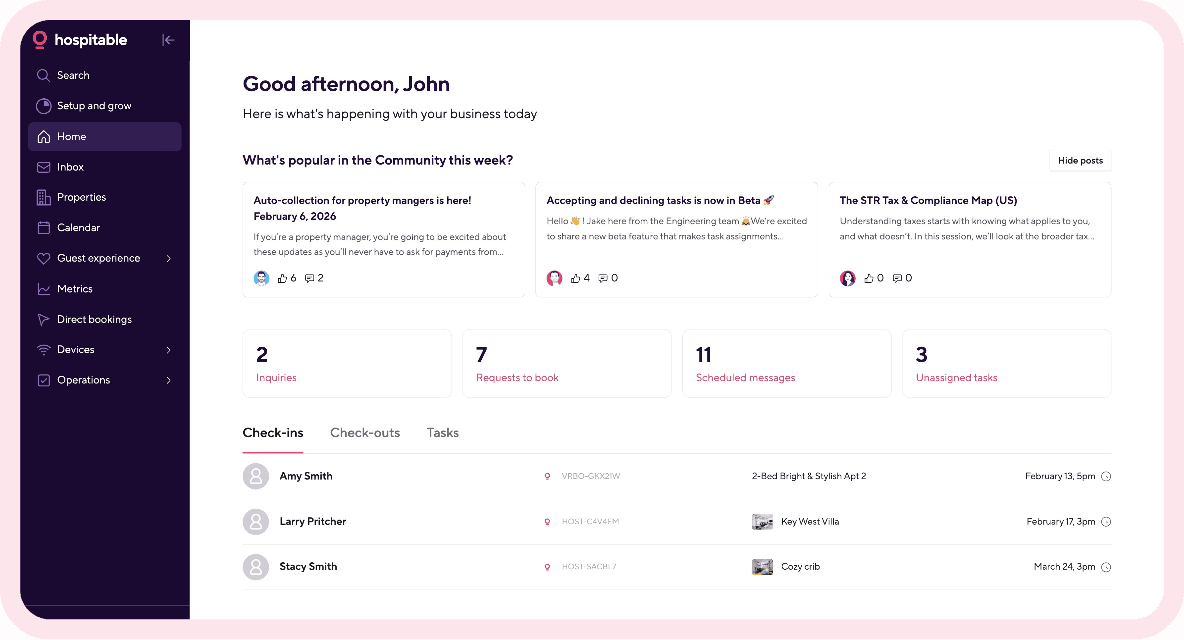
Marketing your short-term rental requires time and effort, but a robust PMS like Hospitable can help free up your time. Our STR super app comes with a wealth of features to automate your hosting routine, so you can focus on marketing and other important tasks that require a personal touch.
Build guest loyalty through email marketing
Vacation rental email marketing is one of the most effective ways to stay in touch with your previous guests, build loyalty, and drive repeat direct bookings. When your guests book for the first time, you can use WiFi marketing to collect their email addresses.
For example, Hospitable integrates with StayFi, which can automatically capture contact information (name and email address) from all your guests, not just the booker, when they log into your property’s WiFi network. This way, you can grow your email list faster, establish a direct line of communication with potential repeat guests, and keep your rental top of mind.
Use your email list to send out monthly newsletters that can include information about upcoming local events, news about new restaurants or local attractions, updates about your property, special offers for returning guests, or seasonal promotions to encourage people to book with you again on your direct booking website.
Generic newsletters are a good start, but they treat every guest the same. The real value is in what you already know about each guest: how many times they’ve stayed, which dates they booked, what they asked about, what they loved, and what they complained about. Until recently, using that information meant scrolling through hundreds of old conversations. Now an AI agent can do it for you.
With Hospitable MCP, you can connect ChatGPT, Claude, or another AI assistant to your Hospitable account in a couple of minutes, with no coding. The AI can then read your reservation history and guest conversations and build segments no email tool can create on its own. Connect it to your email account too, and it can write and send the emails. Since Airbnb doesn’t share guests’ email addresses, use the contacts you collect through StayFi or your direct booking site, and the AI will match them to past reservations.
Here are a few ideas:
Guests who had one complaint you’ve since fixed. Ask the AI to find past guests who were happy overall but mentioned one specific issue, like slow WiFi or a missing coffee maker. If you’ve fixed it, send them a personal note to let them know you listened and that their next stay will be even better.
Guests who celebrated something. Couples on an anniversary trip or families celebrating a birthday often want to come back on the same dates. The AI can find them in your message history, check whether those dates are still open next year, and send an invitation a few months ahead.
Repeat guests get first dibs. Ask the AI to find guests who’ve stayed with you two or more times and offer them your peak dates, like holidays or a big local event, a week before you open them to everyone else.
Remote workers for the off-season. Guests who asked about WiFi speed or a desk, or stayed for a week or longer, are good candidates for a longer stay. Invite them to spend a month with you during your slow season.
One email per guest. Skip segments altogether. Ask the AI to read each guest’s past conversations and write a personal invitation based on them: the restaurant they loved, the hiking trail they asked about, the dog they brought along. Every guest gets an individual message, and you don’t have to write any of them yourself.
The AI won’t send anything without your approval, so you stay in control of every email that goes out.
In fact, with Hospitable MCP, you can automate any element of your STR business the way you like and manage complex multi-step tasks with simple prompts. That’s the magic of agentic automation.
Leave a souvenir guests will take home
A business card on the kitchen counter usually ends up in the trash. A small, thoughtful gift doesn’t. Leave something guests will want to keep: a postcard with an illustration of your house or the view from the porch, a fridge magnet with a drawing of your neighborhood, a bag of coffee from a local roaster, or a tote bag with a hand-drawn map of the area. Add your property’s name and website in small print, on the back or on the tag, never in the center.

Months later, the magnet on their fridge or the postcard on their desk will remind them of the trip, and they’ll know exactly where to book next time. That’s also why your property’s name should match your website’s domain: when guests remember one, they can find the other.
Show off your reviews on your direct booking site
Guests trust Airbnb because of its reviews. Your direct booking website starts with none, and that’s the main reason visitors hesitate to book there. Close that gap by putting your best reviews front and center. With Hospitable’s review management, you can highlight the best reviews on your direct booking website, so new visitors see the same social proof they’d find on an OTA.
Optimize your social media presence
Use the power of social media to market your short-term rental. Instagram, Facebook, and TikTok suit properties with strong visuals and can build brand awareness and trust, showcase your property's unique features and the lifestyle it represents, and engage potential guests.
You need to pick one or two platforms where your guests spend their time and post there regularly. Use social media to give guests a reason to visit your direct booking website, and then capture their email there.
Instagram works for almost every rental property. Use it to post stunning photos and short videos showing your rental space and behind the scenes, and highlighting nearby attractions. Use relevant hashtags to increase visibility.
Facebook holds value for family-oriented properties with longer stays, helping you reach an older audience, and has local and interest groups and communities. You can join travel groups and share local recommendations and your property with people looking to visit your area.
TikTok favors video content that feels real and can be a powerful marketing tool if you want to reach younger demographics (Gen Z and millennials).
Community sites like Quora and Reddit have threads dedicated to travel. They work best for building brand authority and reaching niche audiences for your business. You can join them to participate in conversations and discussions and offer helpful advice and local tips to travelers who may become your potential guests.
Earn more from every booking
Marketing isn’t only about getting more bookings. It’s also about earning more from each one. Once guests have booked, you already have their attention, and the right offers at the right time can add a meaningful amount to every stay.
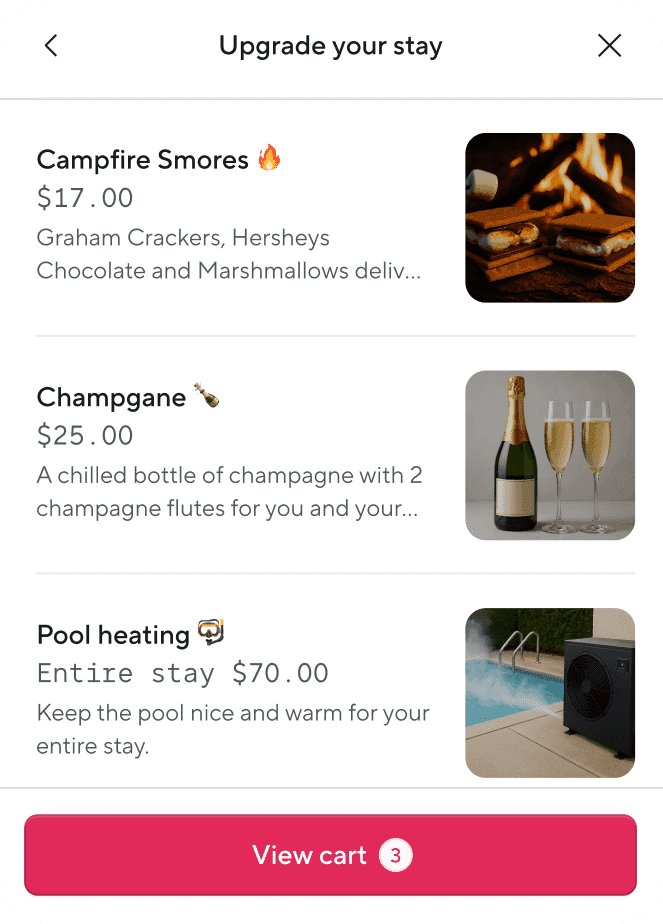
Start with upsells: early check-in, late checkout, a mid-stay cleaning, a pet fee, or a romantic package with flowers and wine. With Hospitable upsells, you set up your add-ons once, and guests can choose them while planning their trip or during their stay. They pay for the upgrades you approve right away, with no separate invoices or payment links.
Local businesses can become another income stream. Make a deal with a restaurant, a spa, a boat tour, or a bike rental shop near your property: your guests get a discount, and you get a referral fee for every guest you send their way. All you need is a small card in your welcome book or on the kitchen table that guests bring along to claim the discount. Pick places you’d recommend anyway, since a bad dinner reflects on your stay too. Guests get a better trip, the business gets new customers, and you earn more from a booking you’ve already made.
Update your property listing for seasons, holidays, and special events
Marketing short-term rentals means selling the experience, building an emotional connection, and helping travelers imagine themselves staying at your space. Seasonal changes, holidays, festivals, and other special events in your local area matter too.
So to drive year-round bookings for your short-term rental, you should regularly update your property listing (photos and description) as well as social media content and adjust your email messages.
Create seasonal titles and descriptions and use seasonal keywords when listing your amenities. If your short-term rental is near a lake, forest trails, ski slopes, or local hangouts, describe how your potential guests can spend their day. It helps your property listing feel current and ready.
Update your listing page with photos at the start of each season to ensure they’re relevant and accurately depict the current experience at your property. In winter, include images of any cozy outdoor spaces, and in summer, highlight areas like pools or patios.
Add interior photos that reflect the season, such as a cozy throw and book by the window in the winter or bright, airy rooms for the spring. Consider adding a virtual tour to provide potential guests with a more immersive look at your property’s seasonal amenities.
Highlight local festivities. Promote local holiday events and attractions in your listing and in your social media posts. Guests are more likely to book if they know they can enjoy nearby seasonal activities.
Reach out to past guests: send festive-themed emails with exclusive offers to encourage repeat bookings.
Promote upcoming concerts, festivals, regional fairs, or sports events directly in your listing description, social media, and a local guidebook.
Use the promotion tools OTAs already give you
You don’t need a marketing budget to run a promotion. Airbnb and Booking.com both have built-in tools that make your listing more visible in search, and many hosts barely use them.
On Airbnb, you can set early-bird discounts for bookings made 1 to 24 months ahead, last-minute discounts for bookings made 1 to 28 days before check-in, and weekly and monthly discounts for longer stays. You can also run a custom promotion for specific dates, which helps fill a slow week without lowering your base price. Guests see a special callout for weekly and monthly discounts of 10% or more and for promotions of 15% or more, so your listing stands out in search results.
On Booking.com, join the Genius loyalty program. You offer a 10% discount to Genius members, and in return, your property gets a Genius badge, a ranking boost, and a spot in search filters that frequent travelers use. According to Booking.com, Genius partners see 18% more bookings on average. You can also block up to 30 days when you don’t want to offer Genius rates.
Final Thought
Effective marketing is essential for the long-term success of your rental, so it’s important to get it right. We’ve provided proven short-term rental marketing strategies, and we hope implementing them helps you attract more guests, increase bookings, and maximize your revenue.



Table of contents
Common questions
What are the best short-term rental marketing strategies?
The most effective short-term rental marketing strategies include identifying your ideal guests, maintaining a strong presence on relevant social media platforms, showcasing positive reviews, and using seasonal promotions to attract bookings. Building an email list and encouraging repeat direct bookings can also reduce reliance on OTAs and their commissions. Combining these approaches helps hosts reach new travelers, build guest loyalty, and maintain demand throughout the year.
How can email marketing help increase repeat bookings?
Email marketing helps short-term rental hosts stay connected with past guests and encourage them to book directly instead of returning through an OTA. Hosts can collect contact information through their direct booking website or WiFi marketing tools like StayFi, then send personalized offers, seasonal promotions, and updates about local events. Tailoring messages to guests' previous stays, preferences, and travel occasions can make repeat booking invitations more relevant and effective.
How can you market a short-term rental during the off-season?
To attract guests during the off-season, update your listing photos and descriptions to highlight seasonal experiences, local events, and amenities suited to the time of year. Offer targeted discounts, promote longer stays, and reach out to previous guests with exclusive deals. Social media campaigns and personalized emails can help attract travelers with flexible schedules, such as remote workers, and generate bookings when regular demand is lower.
Do discounts and promotions help increase short-term rental bookings?
Yes. Targeted discounts and promotions can make short-term rentals more attractive and improve listing visibility without permanently lowering nightly rates. Airbnb offers early-bird, last-minute, weekly, monthly, and custom promotions, while Booking.com's Genius program provides additional exposure to frequent travelers. According to Booking.com, Genius partners receive 18% more bookings on average. Promotions work best when targeted at specific dates, booking windows, or guest segments rather than applied indiscriminately.
How can AI improve short-term rental marketing?
AI can help short-term rental hosts create highly personalized marketing campaigns by analyzing booking histories, guest conversations, preferences, and past feedback. Through Hospitable MCP, hosts can connect AI assistants like ChatGPT or Claude to their property management data to identify valuable guest segments, generate tailored offers, and prepare personalized repeat booking invitations. For example, AI can identify anniversary travelers, guests whose previous complaints have been resolved, or remote workers interested in off-season stays. Connected to an email account, it can also help send these campaigns with the host's approval.