Property Management
How to Become a Property Manager for Vacation Rentals
In this guide, we cover everything you need to know to succeed in this role.

Want to become a vacation rental property manager but are not sure how to get started? Becoming an STR property manager can be a rewarding career choice, offering the potential for high profits and flexible hours.
The short-term rental industry continues to expand, and there’s a growing demand for vacation rental property management services. Many people prefer to rent their investment properties on a short-term basis and are choosing to delegate property management tasks to professionals.
In this blog, we’ll cover everything you need to know about how to become a property manager for vacation rentals. We’ll walk you through key responsibilities, skills, the necessary steps, and practical tips to help you succeed.
How to Become a Property Manager: Path to Success
If you’re considering becoming a short-term rental property manager, it’s essential to understand what property managers do, the skills associated with the role, the educational requirements, and the certifications.
Key responsibilities
Property management isn’t just about overseeing properties for property owners; it also involves managing guest experience, financial management, marketing, and ensuring compliance with STR regulations and local laws.
Key responsibilities of short-term rental property managers include, but are not limited to:
Distributing listings on OTA platforms and managing reservations
Setting pricing strategies and occupancy policies, managing revenue and expenses, and handling accounting
Marketing vacation rental properties to attract potential guests
Handling communications with guests, coordinating check-ins and checkouts, providing customer service, and managing guest reviews
Coordinating professional cleanings, scheduling routine inspections, and handling repairs
Navigating legal aspects of property management and ensuring compliance with local laws and regulations
Analyzing local STR market trends, implementing improvements, and optimizing property performance
Keeping property owners informed about occupancy, revenue, expenses, and any issues.
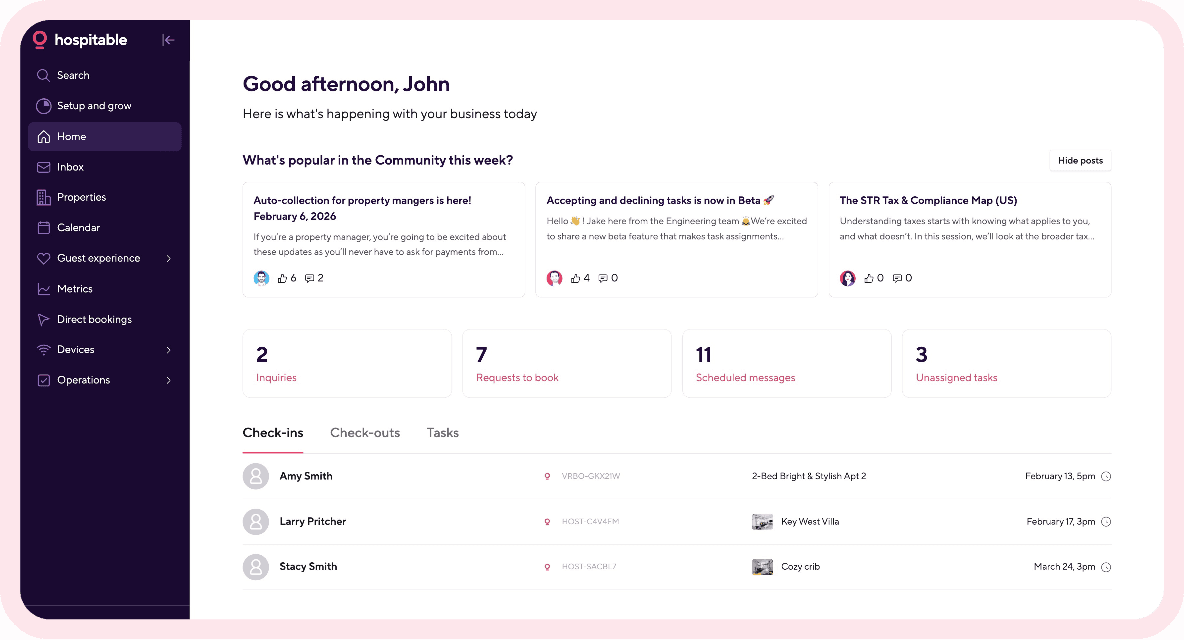
In simple terms, property managers handle the day-to-day operations of vacation rental properties and have to wear many hats. This requires a full-time commitment and the right tech stack (scaling is impossible without one). The good news is that with all-in-one short-term rental property management software like Hospitable, you can automate most routine operations, ensure that everything runs smoothly, and have more time to focus on growth strategies.
Essential skills
Since managing vacation rentals involves many different tasks, a good property manager needs to excel in a range of skills and have a passion for hospitality to succeed in this competitive industry. Here are essential skills you’ll need to succeed as a property manager:
Strong communication skills are essential for managing guest expectations and maintaining positive relationships with property owners and contractors.
Problem-solving—every day in property management presents unique challenges, so the ability to swiftly resolve issues such as maintenance emergencies, booking conflicts, or guest complaints is essential.
Financial management—basic knowledge of bookkeeping and accounting practice can be helpful to manage rental income and expenses, and prepare for the tax season.
Legal knowledge—understanding local STR laws, licensing requirements, and safety regulations for short-term rentals can help you navigate potential risks and avoid legal issues.
Marketing—understanding and utilizing various online marketing strategies, including SEO, social media marketing, content marketing, and email marketing, will help you build a strong online presence and attract clients and guests.
Technological proficiency—expertise in using property management systems (PMS), dynamic pricing tools, guest experience platforms, and other automation tools can help you simplify your workflows, achieve operational efficiency, and ensure a personalized guest experience.
Educational requirements and certification
Vacation rental property management doesn’t demand specific degrees and welcomes professionals from diverse educational backgrounds. A high school diploma or its equivalent is often the minimum level of education you need to start in this industry. However, a bachelor’s degree in a relevant field such as real estate, business administration, finance, or hospitality management is highly helpful.
As to the licensing requirements for property managers, they vary by state and the type of properties you'll manage. Some states require property managers to hold a real estate broker’s license, while others require a specific property manager license. Obtaining a license typically involves completing a pre-licensing course, passing an exam, and registering with a regulatory authority.
Many property managers obtain certifications to boost their credibility and demonstrate their expertise. For example, both the Vacation Rental Management Association (VRMA) Certificate and the Certified Property Manager certification by the Institute of Real Estate Management are good options for property managers, providing them with a competitive edge. These certifications are not mandatory, but obtaining them will equip you with the necessary skills and knowledge to manage rental properties effectively.
How to Get into Property Management
Now that you know what the property manager job entails, let’s talk about how to get into property management and gain experience. Here are the essential steps.
Educate yourself. You need a deep understanding of how the vacation rental industry and OTA platforms operate, as well as industry best practices. It’s the key to becoming a successful property manager. You also need to understand property management processes and the financial aspects of running vacation rental properties.
You can start with online property management courses, which offer flexibility as you can balance learning with your current job responsibilities. Read books on property management and vacation rental investment that can give you an insight into the vacation rental industry as a whole and some specific aspects.
Gain relevant experience in hospitality, property management, customer service, or administrative support. You may seek entry-level positions at companies that offer short-term rental property management services. Another option is managing one or two STR properties for family or friends to get a basic understanding of operational demands.
Networking is essential. Join local and national industry groups and attend local events. This will help you connect with property owners and industry professionals, learn best practices, and stay informed about regulatory changes.
Start your own STR property management business. Find the right market and choose your niche. Define your business goals, create a business plan, and obtain the necessary licenses and permits.
Build a team—outsource cleaning and maintenance tasks and consider hiring a bookkeeper to track and handle all the income and expenses. Create standardized procedures for recurring tasks. Invest in a smart tech stack that will allow you to manage multiple listings without getting overwhelmed, overcome challenges of growth, and scale efficiently.
Market your business to find clients online—list your business on online directories, create a professional website that showcases your expertise and property management service offerings, use social media to promote your services and properties that you manage.
Join Hospitable's PM Marketplace. It's a matching service for property managers and owners. The marketplace is designed to be accessible to both experienced property managers and those who are just getting started. Rather than relying solely on past client portfolios or industry connections, Hospitable evaluates your overall readiness.
How to Become an Airbnb Property Manager and Excel in This Role
If you’ve been hosting on Airbnb for some time and have had success, you may be looking to add more properties to your portfolio or even provide Airbnb property management services to other property owners. Most vacation rental property owners list on Airbnb, and many seek passive income, making the demand for Airbnb property managers strong.
If you have a passion for hospitality, managing other people's short-term rental properties can be an exciting way to turn that passion into a scalable business. So, how to become an Airbnb property manager?
You may start by exploring co-hosting opportunities. You can join the Airbnb Co-Host Network that connects property owners who list their properties on Airbnb with experienced local hosts who can manage their listings. Just keep in mind that you need to meet certain requirements to qualify.
Co-hosting is a smart way to get started without taking on full responsibility for property management right away. And after you gain experience as a co-host and build a track record, you can start approaching more property owners, negotiate with them to hire you, and grow your portfolio.
Just keep in mind that manual workflows don’t work when you manage a large portfolio. That’s why embracing technology isn’t just an option; it’s the cornerstone of your success as an Airbnb property manager. A powerful Airbnb PMS like Hospitable can help you overcome the challenges of scaling and turn the obstacles into opportunities, making property management straightforward.

Automate routine tasks with Hospitable
Our STR super app offers a comprehensive set of features to automate key tasks, making your short-term rental property management business more efficient, so you can handle large portfolios and work smarter, not harder. Hospitable will handle the heavy lifting, freeing up your time to focus on strategic growth.
Hospitable provides AI-powered tools to automate guest messaging and ensure fast, clear communication with STR guests across all touchpoints of their journey. You can also use Inbox AI tools to draft and correct personalized replies to tricky guest questions when you message guests manually.
You can help our AI craft better messages by uploading your guidebooks to the Knowledge Hub to educate it about your properties, policies, nearby attractions, and local recommendations. Inbox AI will use these bits of information to answer specific guest questions. You can enable the AI Auto Reply and set up times when our AI can automatically reply to guests' inquiries without your review.

Hospitable comes with a built-in Dynamic Pricing solution that automates your pricing strategy. You can enable Dynamic Pricing for some or all of your properties, and Hospitable will automatically adjust your nightly rates based on the changing market conditions to maximize revenue and occupancy.
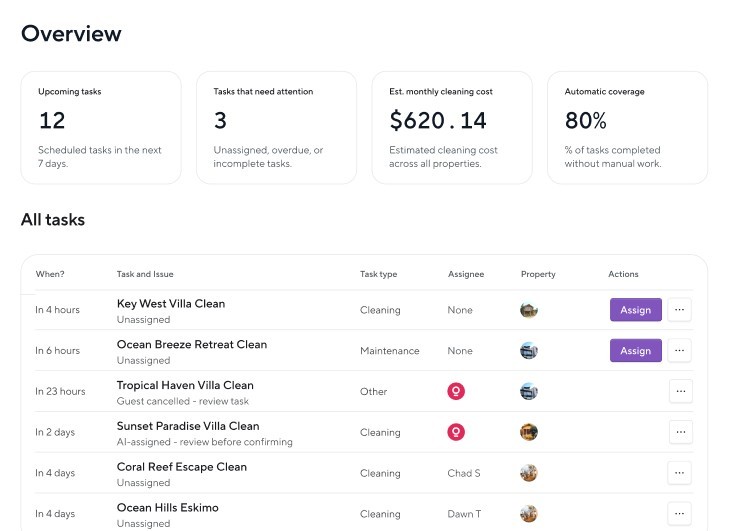
Hospitable makes it easy to coordinate and communicate tasks with your team and automate cleanings and turnovers. You can set task rules and add custom checklists, and our system will automatically assign tasks to your cleaners based on the booking schedule. We’ll notify your teammates about new tasks via email or SMS, but they can also use their own portal to view upcoming jobs, share updates, and add banking info so you can pay them when the work is done. You can also use Hospitable’s Cleaner Marketplace to find and book trusted local cleaners, share turnover details, and pay them in one place.
Hospitable will help you implement measures to minimize the risk of dealing with bad guests and protect your property from damage, without extra administrative work. You can add an automated security deposit to any of your properties, and we’ll automatically collect it 2 days before check-in and release it to your guest 2 days after check-out.
You can create a templated short-term rental agreement, and our system will automatically generate a rental agreement for each new reservation, populating the template with guest and booking data, and send it to your guest for signature. You can require your guest to complete ID verification as part of the rental agreement process. You can also request ad hoc verification for any guest who booked your property and screen your guests without awkward conversations.

Hospitable integrates with popular smart locks and thermostats, so you can connect supported models to your account. Then, our system will sync them with bookings to let you offer your guests automated self-check-ins and optimize energy use at your properties without compromising on guest comfort. The smart lock and smart thermostat automations are included in the Professional and Mogul plans.
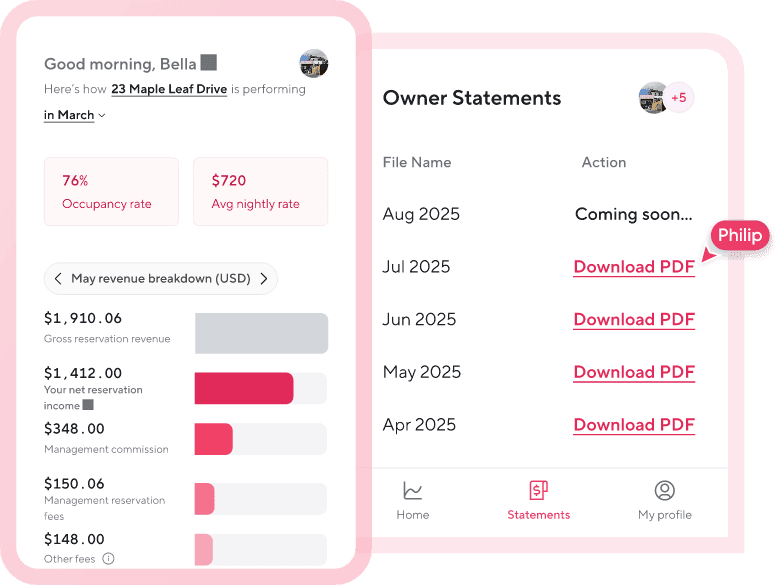
With Hospitable, you can create a branded owner portal for each of your clients to keep them up to date on their property performance. You can generate invoices and owner statements and share them in the owner portal. Most importantly, you can handle payouts to your clients or request payments from them directly through the system.
If your business holds owner funds in a trust account, Hospitable Trust Accounting helps you build good habits from your very first client. Record retention, deposit deadlines, and report formats are set for your location when you get started, and every deposit, owner payout, and fee transfer is matched against the owner statements you publish. As a new property manager, you get organized, reviewable records from day one instead of a spreadsheet you’ll have to untangle later.
The Bottom Line
In this blog, we’ve provided you with tips on how to become a property manager for vacation rentals. With a boom in property investment in recent years and the growing popularity of short-term rentals, becoming a property manager can be a great way to make money in real estate and build a successful business.
Consider starting with a smaller portfolio of STR properties and focus on delivering exceptional service to your clients and building relationships with them. This will allow you to build solid references and case studies – they can become your most powerful marketing tool, helping fuel your growth. It’s also important to use property management automation tools that are designed to help you grow your business.


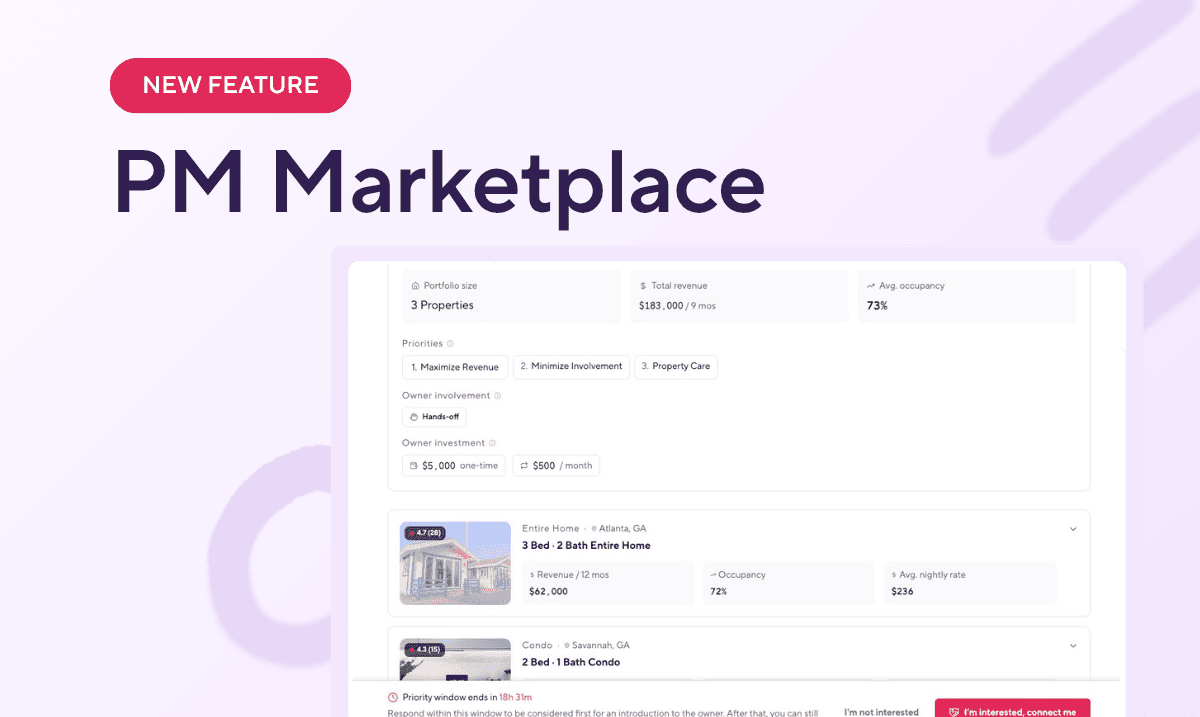
Table of contents
How to Become a Property Manager: Path to Success
Key responsibilities
Essential skills
Educational requirements and certification
How to Get into Property Management
How to Become an Airbnb Property Manager and Excel in This Role
Automate routine tasks with Hospitable
Common questions
How do you become a property manager?
To become a property manager, start by learning the basics of property management, including tenant relations, maintenance coordination, and local regulations. Then gain relevant experience through entry-level roles in real estate, hospitality, or leasing. Depending on your location, you may need a license or certification. From there, you can either join a property management company or start managing properties independently. Building practical experience and understanding day-to-day operations is key to getting started.
What qualifications do you need to become a property manager?
Qualifications for becoming a property manager vary by location, but typically include a combination of education, skills, and sometimes licensing. Many roles require at least a high school diploma, while some employers prefer a background in business, real estate, or hospitality. In certain regions, a real estate or property management license is required. Key skills include communication, organization, problem-solving, and basic financial management. Practical experience is often just as important as formal qualifications.
How long does it take to become a property manager?
The time it takes to become a property manager depends on your starting point and local requirements. In some cases, you can enter the field within a few months by securing an entry-level role and learning on the job. If licensing or certifications are required, the process may take several months to a year. Overall, many people transition into property management relatively quickly compared to other professions, especially if they already have relevant experience. Hospitable's Property Management Marketplace can become your jumpstart. You have solid chanes of getting your first client provided you have excellent stats on managing your own property.
How to get your first job in property management?
To get your first job in property management, start by applying for entry-level roles such as leasing agent, assistant property manager, or administrative positions in real estate or hospitality. Highlight transferable skills like customer service, communication, and organization. Networking with real estate professionals and applying to local property management companies can also increase your chances. Gaining hands-on experience is the fastest way to break into the field. Join Hospitable's Property Management Marketplace. The system welcomes successful hosts with no prior experience of managing properties for others.
How to excel as a property manager?
To excel as a property manager, focus on delivering consistent results across operations, communication, and tenant or guest experience. Strong organization, responsiveness, and attention to detail are essential for managing multiple responsibilities effectively. Using tools like Hospitable can help streamline daily tasks such as communication, scheduling, and coordination. Automation reduces manual workload, minimizes errors, and allows you to focus on higher-value activities like improving performance and client relationships. Successful property managers combine operational efficiency with strong people skills, ensuring both property owners and tenants have a positive experience.