
OTAs
Vrbo Taxes: a Guide for Hosts in the US
Starting on Vrbo is easy, but if you want to succeed as a Vrbo host, you should treat this as a business. And an important part of operating a short-term rental business is taking care of lodging taxes. In this guide, we cover the basics of Vrbo taxes that you need to know to get started.

Renting your property on Vrbo or other OTA websites is a great way to make the most of your space and increase your income. Starting on Vrbo is easy, but if you want to succeed as a Vrbo host, you should treat this as a business. An important part of operating a short-term rental business is handling lodging taxes.
In fact, property owners don’t pay lodging taxes out of pocket because guests do. But short-term rental hosts are responsible for collecting these taxes at the time of payment. They are required to register with local tax authorities and file regular lodging tax returns.
Vrbo emphasizes that property owners and managers are responsible for understanding and complying with the laws and regulations applicable to their property listings. In this guide, we cover the basics of Vrbo taxes you need to get started.
You may also want to check out our article to learn more about vacation rental tax rules.
What Is Vrbo Lodging Tax?
Short-term rental hosts and property managers are required to collect lodging taxes from their guests and remit them to the relevant tax authorities. A Vrbo lodging tax is typically a percentage of the cost of the stay. It is added to the final bill and may be paid to the state, county, city, or other local government tax authority.
Depending on location, lodging taxes may be referred to as hotel taxes, occupancy taxes, tourist taxes, transient taxes, accommodations taxes, etc. Collecting lodging taxes is an essential aspect of the hosting process because lodging tax compliance is required by law and falls on the host.
It’s important to understand the difference between lodging taxes and income taxes. As a taxpayer, you pay income taxes to the federal government and, perhaps, to your state, as a percentage of your annual income. The good news is that you can reduce your taxable income by claiming tax deductions, so you need to keep accurate records of your income and expenses.
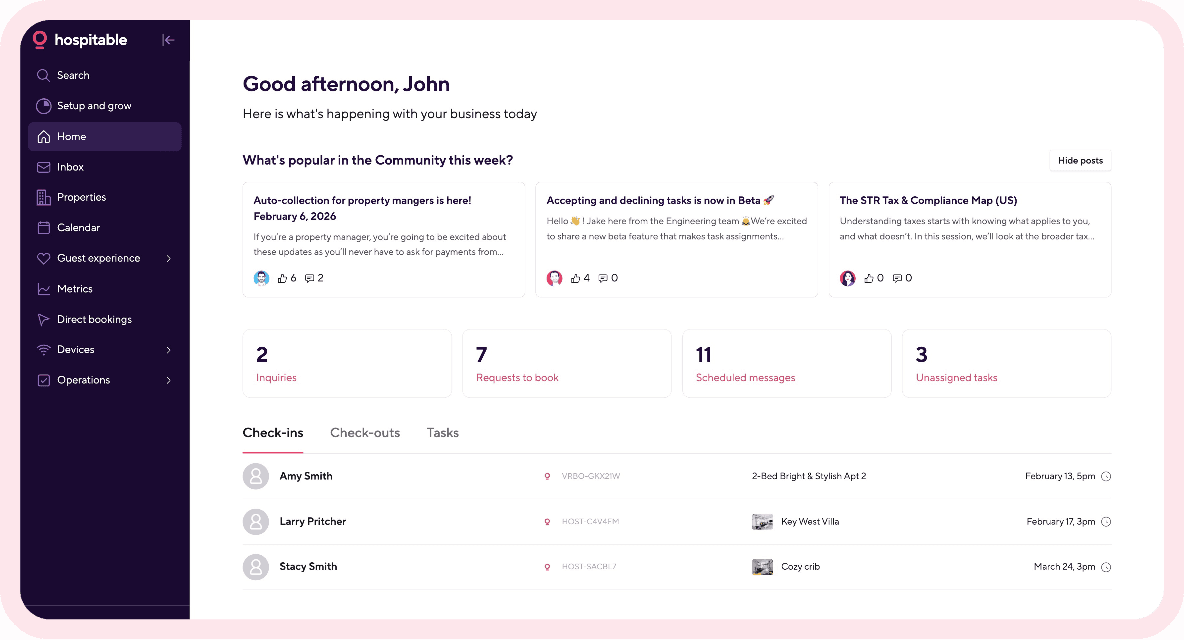
Short-term rental accounting is quite complicated, but you can make it easier by using accounting software that integrates with your PMS. Top property management systems, like Hospitable, integrate with vacation rental accounting software and can help you simplify tax time and stay compliant.
Your short-term rental guests pay lodging taxes, but you, as the host, are responsible for collecting them and remitting them to tax authorities. Lodging taxes are paid to state and local governments, usually each month or each quarter. And you should note that lodging tax requirements vary by city, county, region, state, and country.
Vrbo Tax Documents
If you have a listing on Vrbo, you will need to provide your taxpayer details to them. Before you can begin collecting lodging taxes from your guests, you need to register with the relevant tax agencies and obtain your Vrbo tax documents. Depending on the jurisdiction, you may receive a permit or license.
Keep in mind that you may have to register with more than one tax agency if your vacation rental property is governed by more than one jurisdiction. For example, it can be governed by both the city and state.
After you register, you’re allowed to start renting your property and collecting taxes from your guests. You should receive instructions from the tax agency on filing and remitting your returns, for example, what forms you need to file, when they’re due, and how often you need to do that.
And remember that Vrbo may require you to provide your tax registration number and documentation that you remitted all taxes to the appropriate jurisdiction.
Collecting Vrbo Taxes
Each jurisdiction has different rules that determine what amounts are subject to Vrbo lodging taxes. Generally, taxes are added to the rental amount paid by the traveler and include any owner fees (such as the Vrbo cleaning fee or pet fee). Lodging taxes are collected at the same time a guest pays the bill.
Now, some governments require marketplaces like Vrbo and Airbnb to collect lodging taxes on all their listings. Additionally, Vrbo has agreements with tax authorities in certain jurisdictions to collect taxes on behalf of hosts. Then, Vrbo collects lodging taxes on your behalf when guests pay for their stay and remits them to the appropriate tax authorities.
But you should keep in mind that Vrbo doesn’t have agreements with all jurisdictions in the U.S., so the company may not collect all of the lodging taxes in your area. Besides, Vrbo may have agreements with only some of the jurisdictions that govern your vacation rental. Then you’re responsible for the taxes that the platform doesn’t collect.
You can find out whether Vrbo collects and remits a lodging tax for a specific property by logging into your Vrbo Owner Dashboard and selecting Taxes. The Taxes page shows how lodging taxes are handled for your Vrbo property and what responsibilities apply to you as a host. It is divided into sections, depending on your location and tax setup.
The Vrbo taxes section shows the taxes that Vrbo is required to collect from travelers and remit directly to your jurisdiction.
Your taxes section appears only in select jurisdictions and shows taxes for which you're liable. You can choose to have those taxes collected from travelers and remitted to you for your jurisdiction.
Running a short-term rental business involves a lot of work. By collecting lodging taxes on your behalf, Vrbo takes some of the administrative burden, saving you time and making your life easier. But with short-term rental software like Hospitable, you can automate a significant chunk of your business while improving your guest experience.
As a PMS, Hospitable now offers a new Vrbo Partner Connection built on Vrbo’s latest API and available to users on all subscription plans. Under the Vrbo Partner Connection, Hospitable becomes the ultimate source of truth for your Vrbo listings and can act as the Merchant of Record for Vrbo bookings, processing guest payments and sending payouts directly to you.
Note: Vrbo can only collect and remit some of your taxes on your behalf in jurisdictions where it is liable when it processes payments and acts as the Merchant of Record. When you connect any PMS to your Vrbo account through the API, Vrbo stops processing payments, and you become the Merchant of Record. This means tax collection and remittance all fall on you. Currently, Hospitable is the only property management software that can take on the Merchant of Record role, so you don't have to.
The Vrbo Partner Connection is available to hosts who have access to Hospitable Payments or Stripe, and availability depends on the country where the property is located.
Hospitable is available as the Merchant of Record for properties located in the United States, the United Kingdom, and Australia. For properties located in other countries, the Vrbo Partner Connection may be available through Stripe if Stripe supports the country where the property is located.
When Hospitable is the Merchant of Record, it handles payment processing and collects and remits taxes on your behalf in supported jurisdictions (all 50 US states, the UK, and Australia).
When you use Stripe, all taxes are treated as pass-through taxes. They’re collected from the guest as part of the reservation and included in your payout. You are responsible for filing and remitting taxes to the appropriate authorities.
If your property is located in a country unsupported by Hospitable Payments and Stripe, you can use Hospitable’s Vrbo Legacy Connection and opt in to Vrbo Payments. In this case, Vrbo processes payments and handles tax collection and remittance for you in jurisdictions where it is liable.
Learn more about how tax collection and remittance work for Vrbo Partner reservations in our help article.
Vrbo Tax Reporting
Vrbo doesn’t register your property with tax authorities or report your earnings or the amount of lodging tax paid on your behalf. And in most jurisdictions, you may still need to file a lodging tax return after Vrbo begins collecting and remitting this tax in your area.
In many jurisdictions, hosts are required to file a lodging tax return, even if they collected no tax. If you list your vacation home on multiple rental listing sites, you may still have a tax filing obligation on reservations booked on other sites. And you need a channel manager to overcome the operational challenges of listing on multiple OTAs.
You should check the Vrbo tax reporting requirements for your specific location or consult your tax professional to avoid penalties for non-reporting.
As a United States company, Vrbo is required by the US Internal Revenue Service (IRS) to collect taxpayer details from hosts who may have US-sourced income. If you are a United States person, Vrbo may be required to send you a tax form to report the gross value of transactions processed on your behalf.
But no matter whether they send you a tax form, it’s your responsibility to determine your income for US income tax purposes. Amounts not required to be reported to the IRS by Vrbo may still be subject to US federal and state income tax.
Note: If you’re a STR investor and meet certain criteria, you can reduce your tax bills by leveraging a short-term rental tax loophole. Discover how to qualify and unlock major tax savings on your short-term rental property.
The Bottom Line
Vrbo makes lodging taxes easier for you by collecting and remitting Vrbo taxes in some jurisdictions where they are required by law or agreement. They collect lodging taxes when guests pay for their bookings on the platform and remit them to the appropriate taxing authorities.
But as a host, you are also responsible for collecting and remitting lodging taxes when Vrbo isn’t liable to do so. And you still need to register and file with tax authorities to report your short-term rental earnings and taxes collected, even if Vrbo is collecting them for you.
Hospitable does not provide tax, legal, or accounting advice. The information provided on this website is general in nature. This material has been prepared for informational purposes only, and is not intended to provide, and should not be relied on for, tax, legal, or accounting advice. You are advised to consult with a legal counsel or a tax professional to get professional advice and take into account your specific situation.


Table of contents
What Is Vrbo Lodging Tax?
Vrbo Tax Documents
Collecting Vrbo Taxes
Vrbo Tax Reporting
Common questions
What taxes do Vrbo hosts have to pay?
Vrbo hosts may be responsible for both lodging taxes and income taxes. Lodging taxes are charged to guests as part of the booking and may include state, county, city, or other local taxes, while income tax is based on the host’s rental earnings. The exact requirements vary by location, so hosts need to register with the relevant tax authorities, understand which charges are taxable, and keep accurate financial records.
Does Vrbo collect and remit lodging taxes for hosts?
Vrbo collects and remits lodging taxes in jurisdictions where it is legally required to do so or has an agreement with the local tax authority. However, Vrbo does not cover every tax in every location, and it may collect taxes for only some of the jurisdictions that govern a property. Hosts can check the Taxes section of their Vrbo Owner Dashboard to see which taxes Vrbo handles and which remain their responsibility.
Do you still need to file a tax return if Vrbo collects the tax?
Yes, in many jurisdictions hosts must still file lodging tax returns even when Vrbo collects and remits the tax on their behalf. Vrbo does not register the property with tax authorities, and hosts may also have reporting obligations for bookings received through other platforms. Local requirements vary, so hosts should check the rules for their property’s location or consult a tax professional.
What happens to Vrbo taxes when you connect a PMS?
When Vrbo is connected through an API-based PMS, Vrbo generally stops processing guest payments and no longer acts as the Merchant of Record. With most PMS setups, the host becomes responsible for collecting and remitting taxes. Hospitable is different because it can act as the Merchant of Record for eligible properties and handle tax collection and remittance in all 50 US states, the UK, and Australia. Hosts using Stripe remain responsible for filing and remitting the taxes included in their payouts.