Industry Insights
OTAs
Competitors For Airbnb: Who’s Stealing Market Share From The Industry Giant?
Inside the Airbnb bubble, it's easy to think that it exists as an isolated island devoid from any competition in the outside world. However, this couldn't be further from the truth.

Inside the Airbnb bubble, it’s easy to think that it exists as an isolated island, devoid of any competition in the outside world.
However, this couldn’t be further from the truth.
Airbnb’s rapid rise to world domination in the vacation rental industry has kick-started a global arms race to capture as much market share as possible. The competition between online travel agencies to attract travelers to their platforms remains intense, so in 2025, the largest players collectively spent $20 billion on sales and marketing.
So, who are the biggest competitors for Airbnb? And, what are their unique value propositions?
Let’s find out…
Airbnb industry trends
The COVID-19 pandemic, which canceled travel plans and even the need to travel at all, has posed severe threats to the Airbnb industry and paused the company’s year-over-year revenue growth.
But Airbnb has successfully navigated this challenging operating environment and increased its market share during this time.
At the pandemic’s peak, new bookings were down about 80%, and a growing number of short-term rental hosts switched to typical long-term rentals.
Airbnb successfully pivoted and launched “monthly stays” to compete with traditional rental services, but without the standard annual rental agreements.
As many people put their properties up for rent when short-term rentals rose during the COVID-19 pandemic, Airbnb listings skyrocketed.
Despite regulatory hurdles in several major cities and the setbacks posed by the COVID-19 pandemic, Airbnb demonstrated resilience and adaptability as it navigated market challenges and economic uncertainties.
As global travel rebounds, with international arrivals growing 4% in 2025, and the growth is expected to continue, the company expects strong demand for Airbnb.
Airbnb market share
Although Airbnb operates in the intensely competitive travel accommodation industry, the company’s market share has risen dramatically since 2010.
It is estimated that Airbnb now leads the vacation rental industry, accounting for 44% of global revenue.
With over 9 million active listings, Airbnb operates in 220 countries and regions worldwide and is estimated to have over 275 million users.
But that’s enough about Airbnb’s market share; for now, let’s get back on track and delve into the industry heavyweights that are the leading competitors for Airbnb.
Top Vacation Rental Competitors For Airbnb
Booking.com
You may be interested in our detailed guide to hosting on Booking.com.
From its origins as a small Amsterdam-based startup founded in 1996, Booking.com has risen to become the global travel industry heavyweight.
With its focus originally on aggregating Hotel and short-term accommodation onto one marketplace, it’s now turning its attention to the booming vacation rental industry as well.
With the enormous amounts being invested in marketing (especially in the USA), it appears that Booking.com is starting to gain a larger share of the market.
“It is growing faster than our core business, and we’re pleased with that,” said Booking Holdings CEO Glenn Fogel.
Booking.com vs. Airbnb: What sets them apart?
Both Booking.com and Airbnb are giants in the private accommodation market. So, where should you list your property? Let’s compare Booking.com vs. Airbnb.
Booking.com is still primarily a platform for booking hotel- and holiday-apartment-style accommodation, whereas Airbnb’s core listings are still from small-time homeowners looking to monetize their properties.
However, Booking.com—and the recent addition of its ‘Homestays‘ section—aims to change its image on this front.
With Airbnb and Booking.com both looking to provide end-to-end solutions for the entire travel journey—from car rentals and flights to activity bookings and restaurant reservations—the competition has only just begun.
And it’s beginning to heat up!
Why not list on multiple platforms?
Did you know that it’s possible to list your property on more than one platform?
Well, if you’re a Hospitable user, this process is actually really easy.
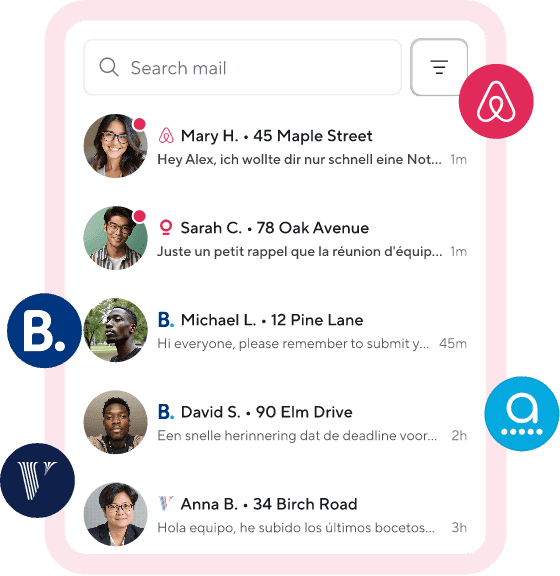
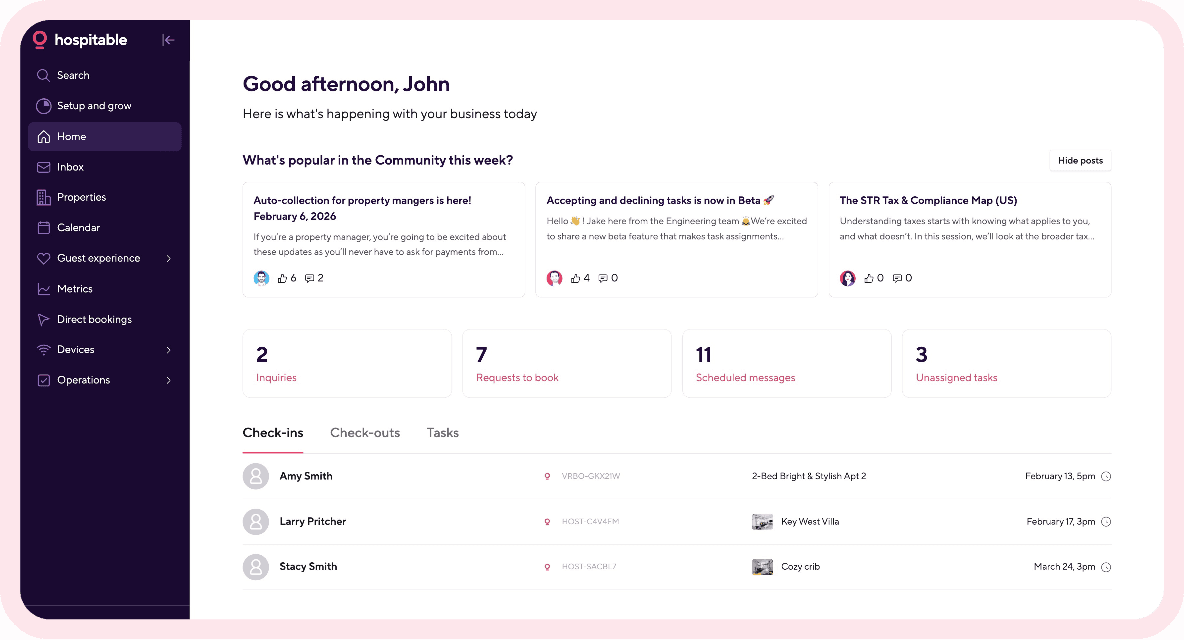
In fact, we currently offer direct integrations with some of the biggest competitors for Airbnb, so you can list your property on multiple platforms—and expose your property to a much bigger audience—and manage the whole thing in one place.
And, because the integrations are seamlessly updated (in real-time), you’ll never run into the problem of double bookings like you would if you were to attempt this manually.
Hospitable has native API connections with Airbnb, Vrbo, Booking.com, Agoda, and Google Vacation Rentals. It has earned Airbnb Preferred+ status and is a Booking.com Premier Plus Partner.
Whichever platforms you choose, make sure your property is ready for STRs. You can make several smart choices to avoid unnecessary expenses in the long run. Download our free guide on how to prepare your place for short-term rentals.
Agoda
While Agoda started life as a hotel booking platform, it's been steadily expanding into the vacation rental space and now lists approximately 4.5 million hotels and private homes across more than 200 countries and territories.
Founded in 2005 and headquartered in Singapore, Agoda was acquired by Booking Holdings back in 2007—making it a sibling to Booking.com, Priceline, Kayak, and OpenTable under the same parent company.
Where Agoda really stands out is its dominance in Asia. The platform positions itself as "Asia's #1 Vacation Rental Platform" and has deep brand recognition across Southeast Asia, East Asia, and the Pacific—markets where Airbnb is still working to gain the same level of traction.
Agoda vs. Airbnb: What sets them apart?
Agoda's roots are in the hotel industry, and its platform still reflects that—it's built around discounted rates, loyalty programs, and flexible payment options rather than the "live like a local" experience that Airbnb pioneered.
For hosts, Agoda's commission structure works differently from Airbnb's flat 3% host fee. The commission varies by property location and payment model, charged as either a percentage of the sell rate or a markup on the loaded rate. It's free to list a property, but the exact commission you'll pay depends on where you're located.
If you're a host looking to tap into the booming Asian travel market, Agoda is definitely worth considering as an additional distribution channel alongside Airbnb—especially since Hospitable already offers a native API connection with Agoda.
Expedia Group
Expedia Group is a massive conglomerate with many smaller subsidiaries under its umbrella brand, making it a major player in the vacation rental industry and a big competitor to Airbnb.
Although its subsidiary brands don’t have the same global brand recognition as Airbnb, they do have a strong regional presence and are definitely competitors to watch.
Expedia Group subsidiary brands
Bookabach
Bookabach is predominantly available in New Zealand (and parts of the South Pacific) and is a popular alternative to Airbnb in many regions.
Stayz
Stayz is targeted exclusively at people looking for accommodation in Australia.
Expedia vs. Airbnb: What sets them apart?
Expedia has gone down the route of acquiring multiple different country-specific travel brands. This has given them an advantage with brand recognition and traction in these local areas.
However, Airbnb continues to make inroads in all of these locations whilst maintaining its operations under a single brand.
In the future, Expedia may try to amalgamate all of its subsidiaries under one brand; however, this remains to be seen.
Until then, however, I see Airbnb continuing to erode market share from Expedia’s subsidiaries over the coming years.
Tripping.com (also known as HomesToGo)
Although not exclusively a competitor to Airbnb, HomeToGo/Tripping.com is a search engine that aims to aggregate the vacation rental market on one platform.
Their system gathers booking information from booking websites: Airbnb, Booking.com, Vrbo, Housetrip, Roomorama, Interhome, Novasol, Wimdu, ZenRentals, Bedycasa, WayToStay, Gloveler, 9flats, RedAwning.
Users can search by price, ratings, location, and a long list of features and amenities.
Vrbo
Airbnb and Vrbo have a lot in common, and they offer many similar features to hosts and guests. Both are P2P rental sites that allow private and commercial accommodation owners to rent out their places. Both platforms act as brokers by promoting and executing transactions, and they receive a commission on each booking. Let’s compare Vrbo vs. Airbnb to help you determine which of the platforms may be right for you as a host.
What is the difference between Airbnb and Vrbo?
Both platforms allow listing a variety of property types, including houses, apartments, treehouses, and more. So what is the difference between Airbnb and Vrbo? The main difference is the availability of properties. Airbnb allows property owners to list shared spaces, while on Vrbo, you can list only the entire property.
Besides, Vrbo requires owners to showcase at least 6 photos of the home, while Airbnb allows as few as 5. Another difference between these popular platforms is the listing fee. At Airbnb, property owners can list their homes for free and pay a 3% host commission rate for each reservation.
Vrbo fees
Vrbo has steep service fees for hosts. With the pay-per-subscription model, hosts pay an annual subscription fee of $699, but this model is no longer available as a pricing plan for new Vrbo hosts or listings. With the pay-per-booking model, hosts only pay for bookings they receive, rather than an annual fee. The host commission rate starts from 8% per booking but can go up to 10% depending on the reservation.
Niche sites
There are lots of alternative, niche vacation rental sites that cater to specific audiences. These channels are focused, and many drive significant traffic, sometimes regionally dominant.
For example, Furnished Finder operates in the US and specializes in mid-term stays, targeting traveling professionals, nurses, and digital nomads. Plum Guide is a curated platform focused on high-end properties, and HipCamp focuses on unique outdoor experiences, appealing to outdoor enthusiasts in the USA and beyond.
Even if you have successful listings on Airbnb and other major OTAs, you can consider adding niche sites as distribution channels to attract unique demographics and get more bookings. And Hospitable can help you seamlessly sync calendars across various niche booking platforms and prevent double bookings with iCal Imports.
Conclusion
Airbnb has hit the vacation rental market by storm, completely changing the landscape in its short history.
However, as the market matures, so too are the competitors to Airbnb, who are hot on their heels.
Will Airbnb trump them all and become a monopoly in the vacation rental market?
Who knows…
But one thing we do know, though, is that the competition is heating up. And, free-market competition is a good thing for hosts and guests alike—bringing down prices and reducing fees.
Luckily, you can hedge your bets by listing your property on multiple platforms seamlessly with Hospitable, so you don't have to pick a winner.


Table of contents
Common questions
Who are the biggest competitors to Airbnb?
Some of the biggest competitors to Airbnb include Booking.com, Vrbo, Expedia Group, and HomesToGo/Tripping.com. These platforms compete for travelers and hosts in the growing vacation rental market, while niche platforms like Furnished Finder, Plum Guide, and HipCamp target more specific audiences and travel styles. Competition in the short-term rental industry remains intense, with major travel companies investing heavily in marketing and expanding their vacation rental offerings to capture more market share.
What is Airbnb's market share in vacation rentals?
Airbnb is estimated to account for around 44% of global vacation rental revenue, making it the market leader in the industry. The platform operates in more than 220 countries and regions and has over 9 million active listings worldwide. Despite increased competition and regulatory challenges, Airbnb has continued to grow and maintain a dominant position in the short-term rental market.
What are niche alternatives to Airbnb?
Niche alternatives to Airbnb are booking platforms that focus on specific types of travelers or accommodations rather than the general vacation rental market. For example, Furnished Finder specializes in mid-term stays for traveling professionals, Plum Guide focuses on high-end curated properties, and HipCamp caters to outdoor and camping experiences. These platforms can help hosts reach targeted audiences and diversify their booking sources beyond major OTAs like Airbnb and Booking.com.
How can you manage multiple booking platforms efficiently?
Managing multiple booking platforms efficiently requires a channel manager that can synchronize availability, pricing, and reservations across all your listings in real time. Without automation, managing multiple channels manually increases the risk of double bookings and creates unnecessary operational work. Hospitable lets hosts manage Airbnb, Vrbo, Booking.com, Agoda, Google Vacation Rentals, and niche platforms from a single centralized dashboard while automating guest communication, pricing, and task management.