Industry Insights
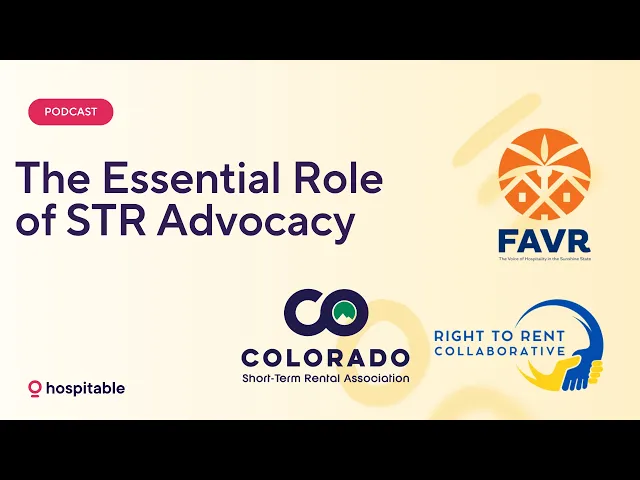
The Essential Role of STR Advocacy
Learn how the Right to Rent Collaborative works toward a more stable and resilient advocacy landscape nationwide, and how you can support their effort.

In this episode of the Hospitable Hosts Podcast, we are joined by industry leaders shaping short-term rental advocacy in 2026. Meet our guests.
Julie Marks is Executive Director of the Right to Rent Collaborative, a member-founded non-profit organization dedicated to raising and distributing essential funds to support state and local short-term rental associations.
Denis Hanks is Executive Director of the Florida Alliance for Vacation Rentals, the largest vacation rental association in the United States, representing approximately 26% of the nation's vacation rental market.
Julia Koster is Executive Director of the Colorado Short-Term Rental Association, a small but mighty community of homeowners and property managers that advocates for fair, balanced, and equitable policies that benefit both STR operators and Colorado’s communities.
In the episode, our guests discuss what their organizations do to protect the right to rent in communities across the country, the programs that they are working on collaboratively, and the future of short-term rental advocacy.
Press Play now to learn how the Right to Rent Collaborative works toward a more stable and resilient advocacy landscape nationwide, and how you can support their effort.
If you prefer to read the highlights, we’ve got a summary of the key takeaways below.
The Right to Rent Collaborative’s Mission
Julie Marks points out that no consistent system or network of associations represents the STR industry across all jurisdictions and markets.
“Obviously, that’s not a really sustainable model for coordinated and effective advocacy in an industry that’s as large as ours and growing as quickly as ours is,” Julie says. So the Right to Rent Collaborative (R2RC) was founded to transform how STR advocacy is funded and sustained.
Julie explains that R2RC’s mission is “to ensure that we have 50 professionally staffed, well-resourced vacation rental associations, one in every state, that can be connected and coordinated and working together.”
R2RC is making this happen through funding. They have created a centralized funding pool to collect industry funds and redistribute them to associations that are just establishing and need funding to grow their professional capacity.
R2RC has already distributed more than $200,000 in grants to 16 organizations fighting regulatory battles across the US. The Florida Alliance for Vacation Rentals and the Colorado Short-Term Rental Association are among them.
What Do STR Associations Do to Help Hosts?
Denis Hanks notes that the Florida Alliance for Vacation Rentals (FAVR) is among the oldest and largest state-level vacation rental associations in the United States. They have 8 chapters throughout the state, and they advocate effectively for fair vacation rental policies at the state and local levels.
“At any given time in the state of Florida, we probably have about 12 communities dealing with some regulatory matter. Right now, we’ve got one county with a lawsuit pending. It will be a precedent-setting lawsuit if the vacation rental operator who’s suing the county wins.” They also connect vacation rental operators across Florida and deliver education and events.
Julia Koster says that in Colorado, about half a dozen counties are working on a variety of short-term rental restrictions and ordinances, so the Colorado Short-term Rental Association (COSTRA) offers support to those local chapters.
Julia notes that for them, receiving a grant from R2RC was a vote of confidence. “It allowed us to think a bit bigger and to start thinking about things like getting ahead of the legislative session and working with our lobbyists before an issue arises.”
How R2RC Grant Applications Are Evaluated
Julie Marks explains that an independent advisory committee, made up of industry volunteers and members of the Collaborative, reviews and evaluates all grant applications. “There’s a scoring rubric. They make a recommendation, and then that recommendation goes to our board of directors, who ultimately have the final say in where the grant money goes.”
Julie emphasizes that R2RC’s core mission is to see state-level organizations start up, grow, and sustain themselves. So, unlike most grant opportunities, they almost exclusively want to fund overhead and operating expenses. “For us, our indicator of impact and success is how many employees that association can hire, and how many members they’re able to attract and retain.”
How R2RC Collects Money
Julie Marks explains that the Right to Rent Collaborative is a member-funded organization. “So when you become a member, you’re funding our mission. You’re contributing to the national pot of resources that’s available to organizations here in the United States. There’s no minimum to join. Anybody can become a member and contribute just $1 a day, or $10 a month.”
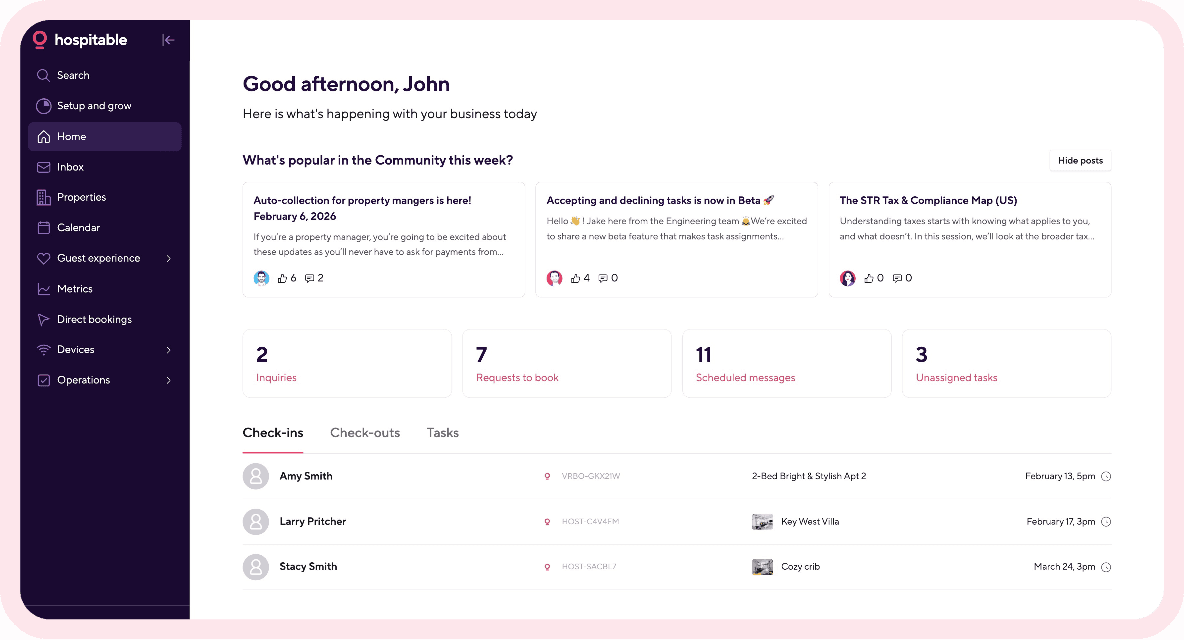
R2RC also has integrations with several PMS companies, including Hospitable, allowing property managers to enroll their portfolios in the $2 Right to Rent Program. So Hospitable users can enroll and directly support the initiative by donating $2 per completed reservation (this amount will be collected automatically).
Recently, R2RC has launched the Half Stays Local program, which applies to states with qualified state associations, such as Florida, Colorado, and Vermont. When property managers who are in those markets enroll in the $2-per-reservation program, they can also opt into the $1 Stays Local.
“So they’ll then see the option to select the Florida Association, the Colorado Association, or the Vermont Association, and we’ll automatically redirect $1 out of every $2 to their state association. So they get that extra boost in funding automatically, without having to stretch the resources they’re already monitoring so tightly.”
R2RC and National Advocacy Trends
Julie Marks says she sees the success of R2RC in “fulfilling that mission of 50 state associations with committed leadership, so that we can build that really robust network of leaders who can work together and bring successes and wins back to their own communities.”
She emphasizes that everyone in the short-term rental community should get involved, and she hopes to see everyone opt in and contribute what they can.
“Advocacy is not a marketing spend. It’s its own line item in your budget, and it should be right up there next to any other insurance policy you hold. Because right now, without people on the front lines having those conversations with lawmakers or with their neighbors, or preventing a new host from operating in a way that causes problems and creates community tension and conflict, there won’t be an opportunity for us to continue growing our businesses in the future.”
Listen to the full episode of the Hospitable Hosts podcast to learn why STR advocacy matters and what trends will define its future.

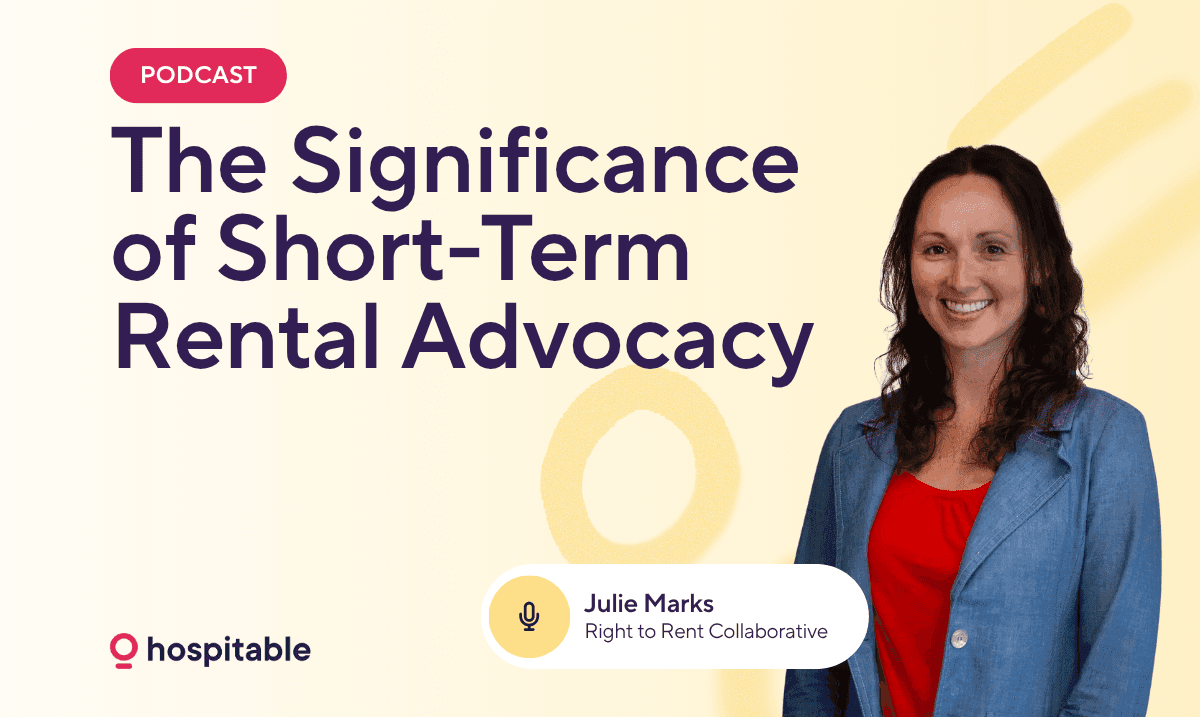

Table of contents
The Right to Rent Collaborative’s Mission
What Do STR Associations Do to Help Hosts?
How R2RC Grant Applications Are Evaluated
How R2RC Collects Money
R2RC and National Advocacy Trends