
OTAs
Airbnb Taxes: What You Need to Know as a Host
Find out what types of taxes short-term rental hosts are responsible for and how to handle them to stay compliant

Turning your home into an Airbnb can be a great way to earn extra income, but as a host, you must also know your tax obligations to ensure compliance and a smooth hosting experience. So, in this blog, we cover everything you need to know about Airbnb taxes.
Airbnb Taxes That Hosts Have to Pay
Understanding and complying with local tax rules and obligations that apply to your Airbnb properties is crucial for your success as a host. It’s also important to treat each of your short-term rentals as a business, which means you may need advanced Airbnb management software like Hospitable to streamline operations and keep on top of your income streams. Our STR super app can help you get organized fast, make your business more efficient, and save you more time as you grow.
When renting out your property on Airbnb, you may be required to pay several types of taxes, depending on your location and the STR laws and regulations in your area.
Income tax. Short-term rental income is generally considered taxable, and in the US it must be reported on the federal income tax return, whether you rent out a private room in your home, an investment property, or a vacation home. However, you may deduct certain expenses related to your rental activity to reduce your taxable income.
Transient occupancy tax. Many cities and states impose an occupancy tax on short-term rentals, which is sometimes called a lodging tax or a tourism tax. The tax rate and requirements for collecting and remitting the transient occupancy tax vary by location. In certain locations, Airbnb automatically calculates and collects this tax, simplifying the process for hosts, while in others, hosts must handle it themselves.
Sales tax. In some regions, STR hosts may have to collect and remit sales tax on their rental income. This tax is charged on the total amount paid by a guest, including a cleaning fee and other additional host fees. Airbnb may handle sales tax collection and remittance in certain locations.
Property tax. Owners must pay property taxes annually based on the assessed value of their rental property. Depending on your location, using a property for short-term rentals may result in a higher tax rate.
Self-employment tax. In the US, if you provide substantial services to guests, such as regular cleaning during stays, concierge features, or meals, and your involvement goes beyond basic property management and resembles a hotel-like operation, your rental activities may be classified as a business. Then, you’ll be subject to self-employment tax, which covers Social Security and Medicare contributions.
Taxes on Airbnb Income: Things You Should Keep in Mind
Hosts are generally required to pay US income tax on their Airbnb earnings. Still, there is an exception—if you rent out your home for 14 days or fewer during a year, you don’t have to report or pay taxes on your Airbnb income.
However, if you exceed the 14-day rental period, then the rental income is considered taxable and must be reported. The good news is that you can also deduct ordinary and necessary expenses associated with running your Airbnb property to offset your rental income.
If you are actively involved in managing your Airbnb rental, you become eligible for more extensive deductions. Under the short-term rental tax loophole, you can claim such deductible expenses as insurance costs, Airbnb service fees, cleaning costs, mortgage interest, maintenance and repairs, utilities, furniture, household supplies, and depreciation on property. Claiming available Airbnb tax deductions can help minimize your tax liability and increase your profit.
How to Handle Airbnb Taxes Effectively
Whether you manage a single Airbnb rental or operate a growing portfolio, you are responsible for understanding local tax laws, and proper tax reporting is part of running a legitimate business. Keeping meticulous records of all your earnings and expenses will help you prepare for tax season and simplify Airbnb income tax filing.
If you manage one or two Airbnb properties, you could probably track your income and expenses on a spreadsheet. However, most hosts benefit from using vacation rental accounting software like QuickBooks, which can simplify your bookkeeping tasks.
Good accounting software can help you categorize your business expenses and rental income and ensure accurate financial records. And if you manage a large portfolio, accounting software is a necessity. It can streamline your financial management, improve your efficiency, help you stay compliant, and make smarter business decisions.
And if you combine accounting software with a robust Airbnb PMS like Hospitable, you’ll have a unified view of all your short-term rental operations. You will be able to take advantage of advanced analytics & reporting tools. Hospitable makes it easy to track the performance of your properties in real time with Metrics Dashboards.
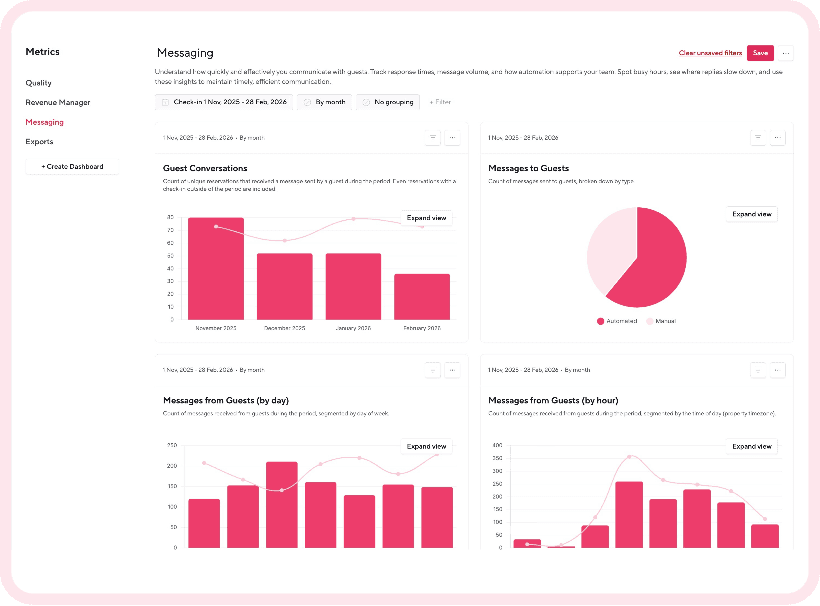
Hospitable allows you to analyze revenue by channel, apply filters to focus on a specific slice of your key data, build custom dashboards, download reports via Exports, and much more. Hospitable also integrates with trusted accounting software tools, including QuickBooks, Clearing, VRPlatform, Topkey, Booking Trust, Ownercenter, and Hostkit.
You can connect your Hospitable account with your account on any of these platforms. Then, Hospitable will feed all your booking data directly to vacation rental accounting software to help you automate the Airbnb accounting process and speed financial reporting.
Reliable vacation rental accounting software eliminates manual data entry, saves your valuable time, reduces errors, and makes it easier to stay organized and prepare for tax season. It can also help ensure compliance with tax laws and regulations and avoid legal issues.
Final Thought
Airbnb taxes can be confusing, but complying with tax requirements is crucial for hosts to avoid penalties and fines. That’s why you should be aware of the various taxes that may apply to your rental, leverage available deductions, and maintain meticulous records. And if you’re ever in doubt, you should seek tax advice from a qualified professional who has experience with short-term rentals.


Table of contents
Airbnb Taxes That Hosts Have to Pay
Taxes on Airbnb Income: Things You Should Keep in Mind
How to Handle Airbnb Taxes Effectively
Common questions
Does Airbnb pay taxes for hosts?
Sometimes. Airbnb automatically collects and remits certain taxes, such as occupancy, lodging, or sales taxes, in some jurisdictions. However, this depends on the location of your property and local tax regulations. Even when Airbnb collects certain taxes on your behalf, hosts are still responsible for understanding their tax obligations, reporting rental income where required, and ensuring compliance with local laws.
Do you have to pay taxes on Airbnb income?
In most cases, yes. Airbnb income is generally considered taxable and must be reported to tax authorities. In the United States, rental income is typically reported on your federal tax return, whether you rent out a room, a vacation home, or an investment property. One notable exception is the IRS 14-day rule. If you rent out your home for 14 days or fewer during the year, you generally do not have to report that income for federal tax purposes.
How do you file Airbnb taxes?
Filing Airbnb taxes starts with maintaining accurate records of your rental income and expenses throughout the year. You then report your rental income according to the tax rules that apply in your jurisdiction and claim any eligible deductions to reduce your taxable income. Because tax requirements vary by country, state, and municipality, many hosts use accounting software and consult tax professionals familiar with short-term rentals to ensure accurate reporting and compliance.
What can I write off on my taxes for Airbnb?
Eligible deductions vary by location, but common Airbnb tax deductions can include insurance, Airbnb service fees, cleaning expenses, mortgage interest, maintenance and repairs, utilities, furniture, household supplies, and depreciation. If you actively manage your short-term rental business, you may qualify for a broader range of deductions. Keeping detailed records is important because deductions can significantly reduce your taxable income and improve profitability.
How do you keep records for Airbnb taxes?
The best approach is to treat your Airbnb as a business and keep detailed records of all income and expenses throughout the year. This includes booking revenue, cleaning costs, utilities, maintenance, insurance, software subscriptions, and any other business-related expenses. Many hosts use accounting software to automate bookkeeping and simplify tax preparation. When combined with Hospitable, accounting tools can automatically receive booking data, reduce manual data entry, improve reporting accuracy, and make tax season significantly easier.