OTAs
Booking.com Pros and Cons for Hosts
Booking.com has a global reach and attracts both leisure and business travelers, so if you’re not there, you could be missing out on potential revenue. Read this blog to learn more about the Booking.com pros and cons for hosts and how you could use this platform for your business.

Offering more than 28 million accommodation listings worldwide, Booking.com is one of the largest online travel agencies, connecting property owners with travelers seeking a place to stay on their trips.
Initially, it was a platform for hotel rooms. Still, it has since expanded to include a wide range of accommodations, such as vacation homes, apartments, guesthouses, cabins, cottages, villas, glamping, boats, and more.
Booking.com has a global reach and attracts both leisure and business travelers, so if you’re not there, you could be missing out on potential revenue. Read on to learn more about the Booking.com pros and cons for hosts and how you could use this platform for your business.
Booking.com Pros and Cons
If you own an Airbnb or Vrbo property and are looking for ways to expand your reach and increase your revenue, Booking.com seems to be one of the most obvious choices. As one of the world’s largest OTAs, the platform has millions of daily visitors, so you can showcase your vacation rental to a massive audience from all over the globe.
Using a multi-channel strategy, you’ll be able to get more bookings and make more money. Although managing your vacation rental across many different sites can be challenging and time-consuming, you can lighten your workload by using technology to streamline your operations.
If you opt for all-in-one short-term rental management software like Hospitable, it can run your daily tasks on autopilot. Hospitable was selected as Booking.com’s Premier Plus Connectivity Partner. Our STR super app offers automation that will save you a lot of time and help you create the life you’ve always imagined.
Many STR host use our tool because it allows them to manage their vacation rentals remotely. For example, Taylor Adams relies on Hospitable to streamline business operations and enjoy a work-optional lifestyle.
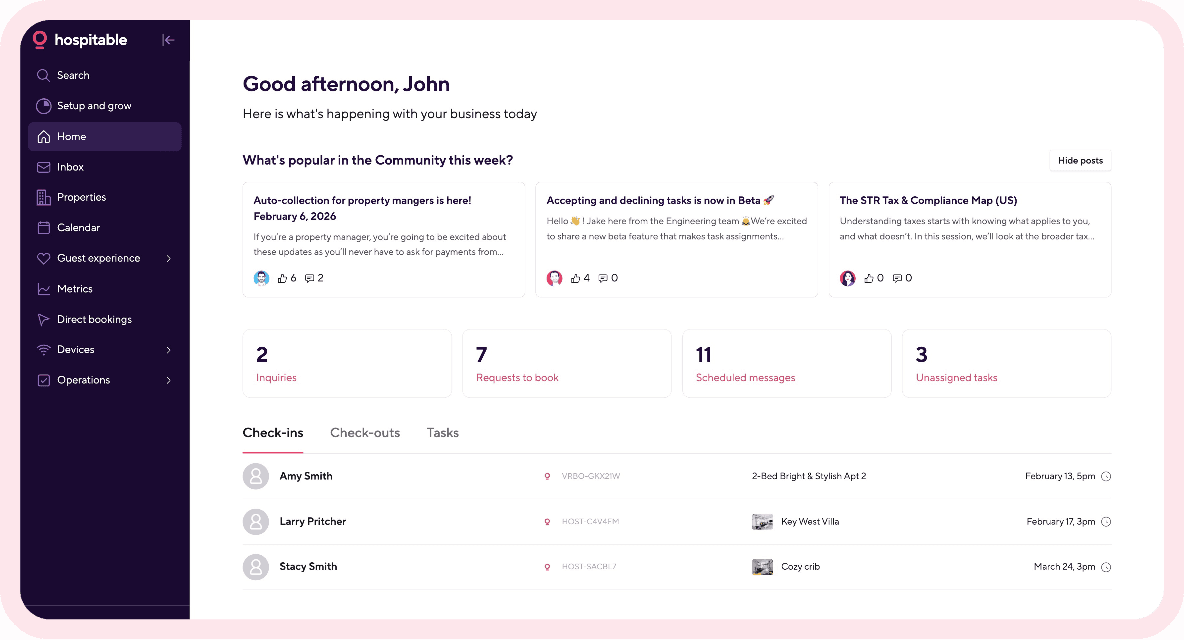
Note: If you have an Airbnb listing connected to Hospitable, you can automatically create and publish a new Booking.com listing directly on Hospitable from your Airbnb listing details. This way, you won’t need to set up everything manually in Booking.com’s Extranet. You can find more details in our help article.
Still uncertain whether you should list your vacation home on Booking.com? To help you make an informed decision, here are some Booking.com pros and cons you should consider.
Pros of using Booking.com for hosts
There are many advantages of listing on Booking.com, so it’s no wonder that more and more hosts and property owners use this platform.
Global reach. Booking.com operates in more than 220 countries, and its website and app are available in 45 languages. It has a massive global audience and can be a good option for hosts looking to diversify their customer base.
Wide range of properties. Although traditionally, Booking.com has always been a website for hotels and resorts, everything has changed in recent years. It has more than 6.6 million listings for private homes, apartments, and other unique accommodations. Travelers can choose from 30 different types of places to stay, including houses, apartments, hostels, B&Bs, farm stays, bungalows, treehouses, boats, and igloos.
Support when you need it. Both property owners and guests can enjoy round-the-clock support via phone, email, or online chat. There is also a dedicated platform for property owners (Partner Hub) where you can find FAQs, detailed manuals, and step-by-step guides.
Innovative features and tools. All hosts have access to the Booking.com Extranet. It’s an administrative dashboard where you can manage your listings, use Booking.com messaging tools to communicate with guests, and track payments. You can also download the Pulse app. It’s an extension of the Extranet that lets you manage your listings on the go—receive booking notifications, check your calendar, respond to guest messages, etc.—on a mobile device.
There are also paid tools that can help you increase your revenue, for example, Visibility Booster. It improves your listing's visibility and helps it rank higher in the platform’s search results.
Marketing. Your vacation rental property will be promoted on search engines such as Google, Bing, and Yahoo, as well as on online maps. Booking.com will also promote your property to travelers planning trips through their 17,500+ affiliate partners. Besides, the company partners with airlines to promote your property to their customers.
Request to book. In the past, all bookings on Booking.com were instant—meaning they were confirmed automatically—and there was no option to make them optional. Although it’s very convenient for guests, it’s less pleasant for hosts with limited control over bookings. You might get last-minute reservations, and coordinating your cleaning or maintenance team just hours before the new guests arrive can be very stressful.
But now, Booking.com hosts can choose how they want to receive bookings—either by letting guests book instantly or by reviewing booking requests before accepting them. The Request to Book feature is available to Booking.com hosts in all markets, giving them complete control over their bookings, and making it easier to manage turnover cleanings and maintenance tasks.
Cons of using Booking.com for hosts
There are also some downsides to listing your short-term rental on Booking.com.
High commission fees. Booking.com charges hosts a commission fee based on the total booking value. On average, the commission is normally 15% and is charged only on the revenue you actually earn from reservations. There are also optional services, such as Payments by Booking.com and the Preferred Program, which can add to your cost per reservation in exchange for additional benefits like increased visibility or managed payments.
Still, Booking.com can help you reach a global audience, providing you with access to entirely new travel markets. Instead of trying to find an OTA with lower fees for hosts, focus on optimizing your pricing strategy to maximize revenue for your property. The easiest way to do so is to use a dynamic pricing tool.
You won’t need to pay for third-party dynamic pricing tools if you opt for Hospitable. Our software includes a built-in Dynamic Pricing feature, free for users on the Host, Professional, and Mogul plans, as it’s included in their subscription plans. If you enable Dynamic Pricing for your property, Hospitable will automatically adjust your rates based on the latest market conditions every 24 hours to maximize revenue and optimize occupancy.
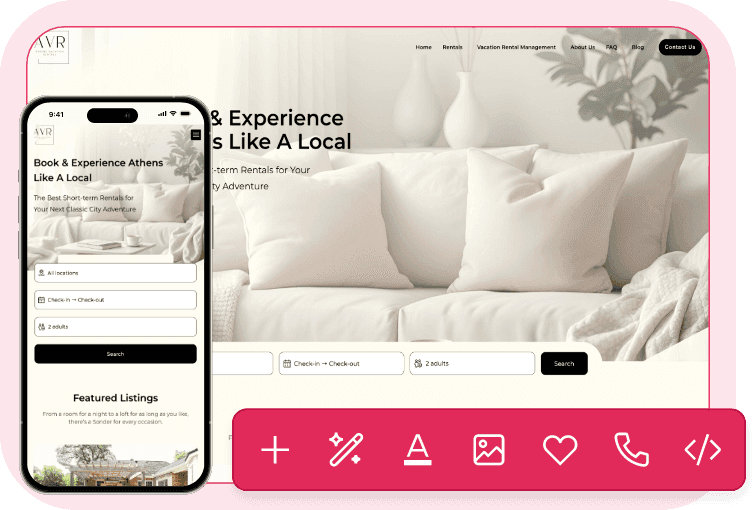
You can’t entirely avoid paying high OTA fees, but you can reduce their impact on your bottom line by building your own website and accepting direct repeat bookings. And the best thing is that you can do it yourself, even if you don’t have any technical skills. With Hospitable, you can create a fully functional direct-booking website using professional, easy-to-customize templates.
We’ll publish your rental properties on Google Vacation Rentals, and travelers will be able to discover them when they use Google to search for stays in your area. You’ll have a chance to get direct bookings without paying high third-party fees.
Insurance protection for hosts. Booking.com offers Partner Liability Insurance (US$1,000,000 in primary liability coverage) and Host Property Insurance (up to $1 million in damage protection from guests, available at no extra cost in select markets). While the coverage has expanded, it remains narrower in scope compared to Airbnb’s AirCover program.
But there’s no insurance protection if a guest damages your property or belongings. For damage to your property caused by guests, you can choose from two damage policy options. You can set a damage deposit and manage the process yourself. If you set up a damage program, Booking.com will facilitate the damage payment process on your behalf. But the payment isn’t guaranteed; you receive it only if the guest agrees to pay.

Final Thought
Booking.com is one of the largest OTAs, so you should consider it when choosing your distribution channels for vacation rental properties. It’s a great choice if you want to attract international travelers. But you should be strategic in your decision and weigh the pros and cons of Booking.com to determine whether it’s the right listing site for your business.
You may also want to check out our blog post about the Booking.com cancellation policy to better understand how cancellations work on this platform and how to handle them as a host.